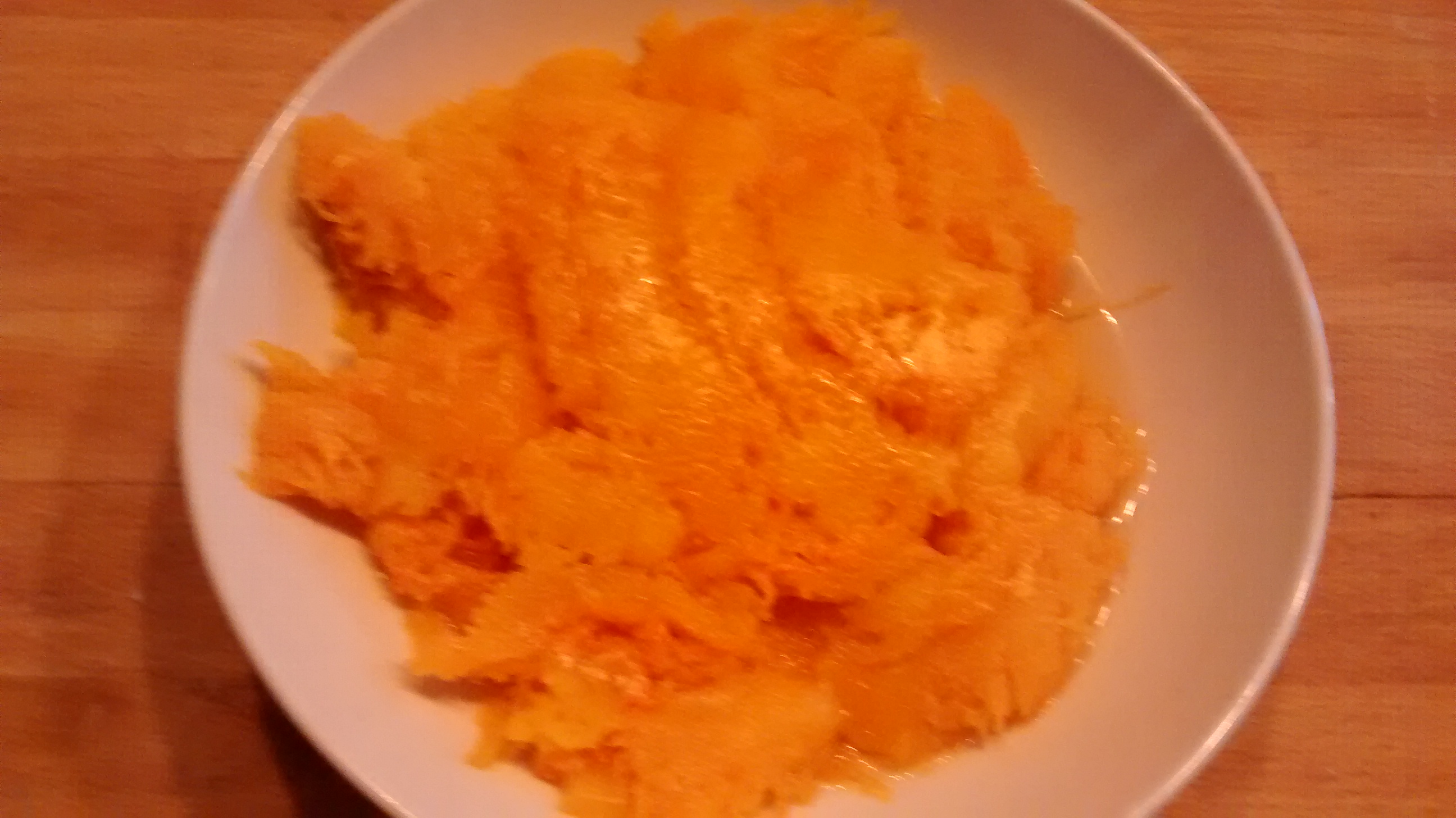
Roasted mashed and cooled seminole squash ready for bread making
I’ve covered before how much I like seminole squash – they taste great, and they store a incredibly long time, and as a plant they resist pretty much any pest… the one drawback is that they take a relatively long time to mature… but with each growing year I’m selecting for earlier maturity.
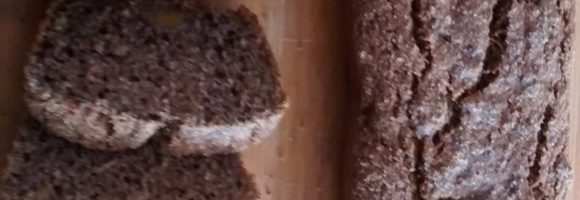
So to take advantage of that great taste one of our favorite recipes is this Seminole Pumpkin Bread. It’s reasonably sweetened rather than cakey sweet allowing the sweet flavour of the pumpkin to shine. As with much of our baking we’re using whole grain flours. My preference here leans towards whole barley flour, but whole wheat is also a nice flavour, ground of course on the homebuilt grain mill. Either of these flour options provide a complexity that goes miles beyond a pumpkin cake loaf served in some green logo coffee shop.
This has got to be one of my favorite loaves – great for sandwiches and just begging to be toasted and topped with some buckwheat honey.
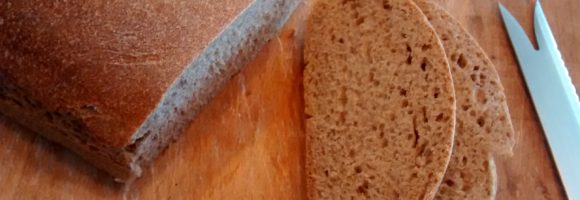
One of the great things about having a grain mill is that it provides you with a big range of flour options for baking – wheat, corn, rye, barley, oat, triticale, spelt, and more can be purchased cheap from farm stores in 50# bags and stored for the long haul either in the bag themselves or in 45 gallon drums to be ground as you need. That makes producing “artisanal” loaves such as this light rye a breeze and a cheap one at that.
Sourdough rye bread ready for the oven
With a bit of tang from the sourdough and the full extraction rye flour cut with some white this loaf is an easy sell for most folks.
Even better, while it takes a bit more forethought the actual time required to work the loaf is minimal – especially if you have a stand mixer.
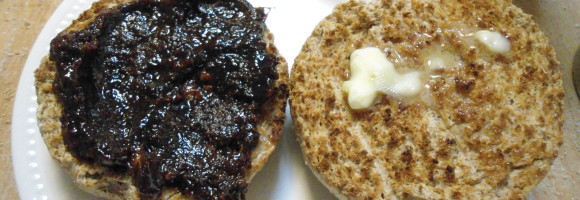
Pumpernickel bread is one of my favorite breads, rich and complex in flavour it’s a great accompaniment to sharp cheese, toasted and slathered with butter and a strong honey or as the foundation for a great sandwich.
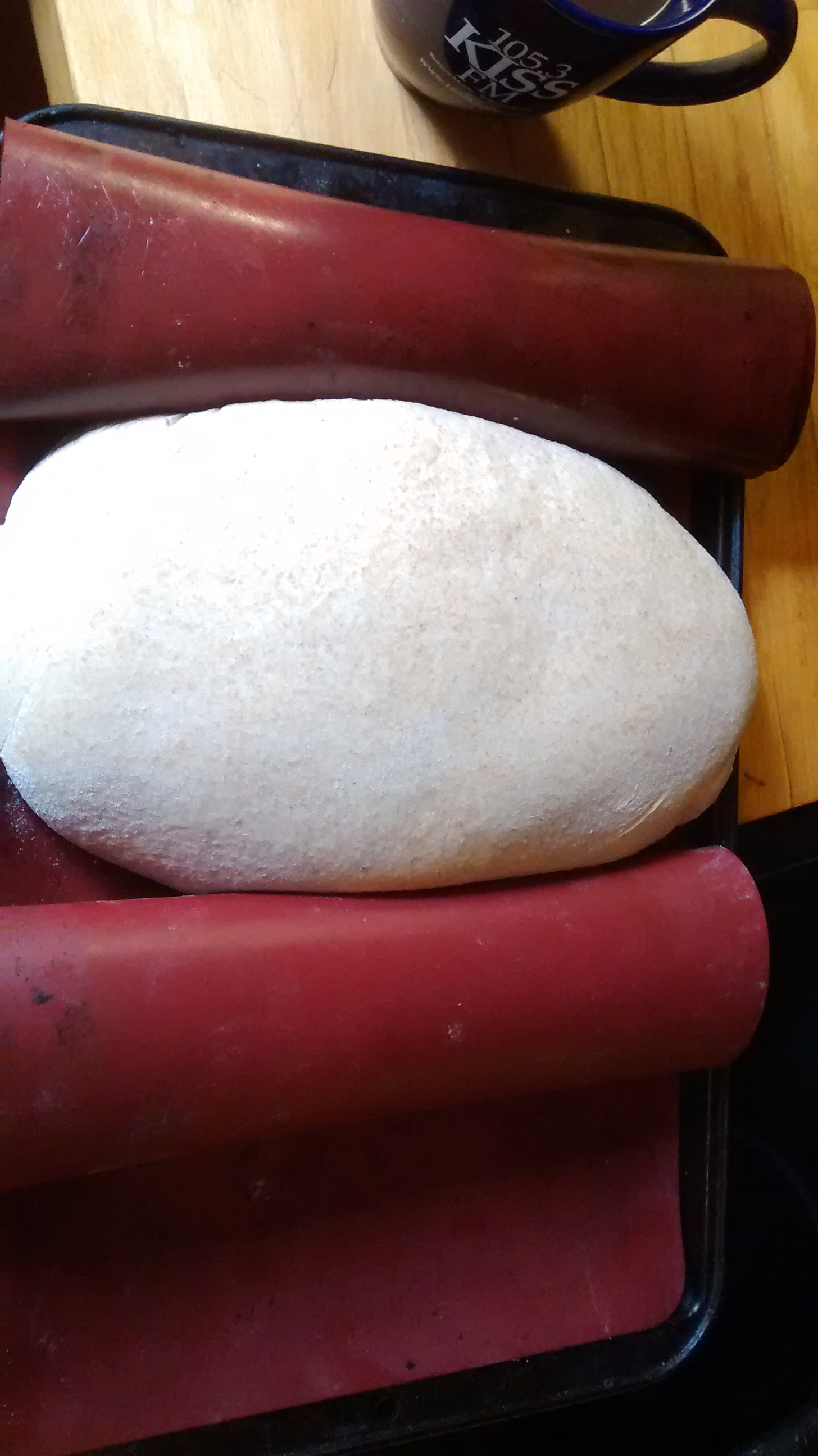
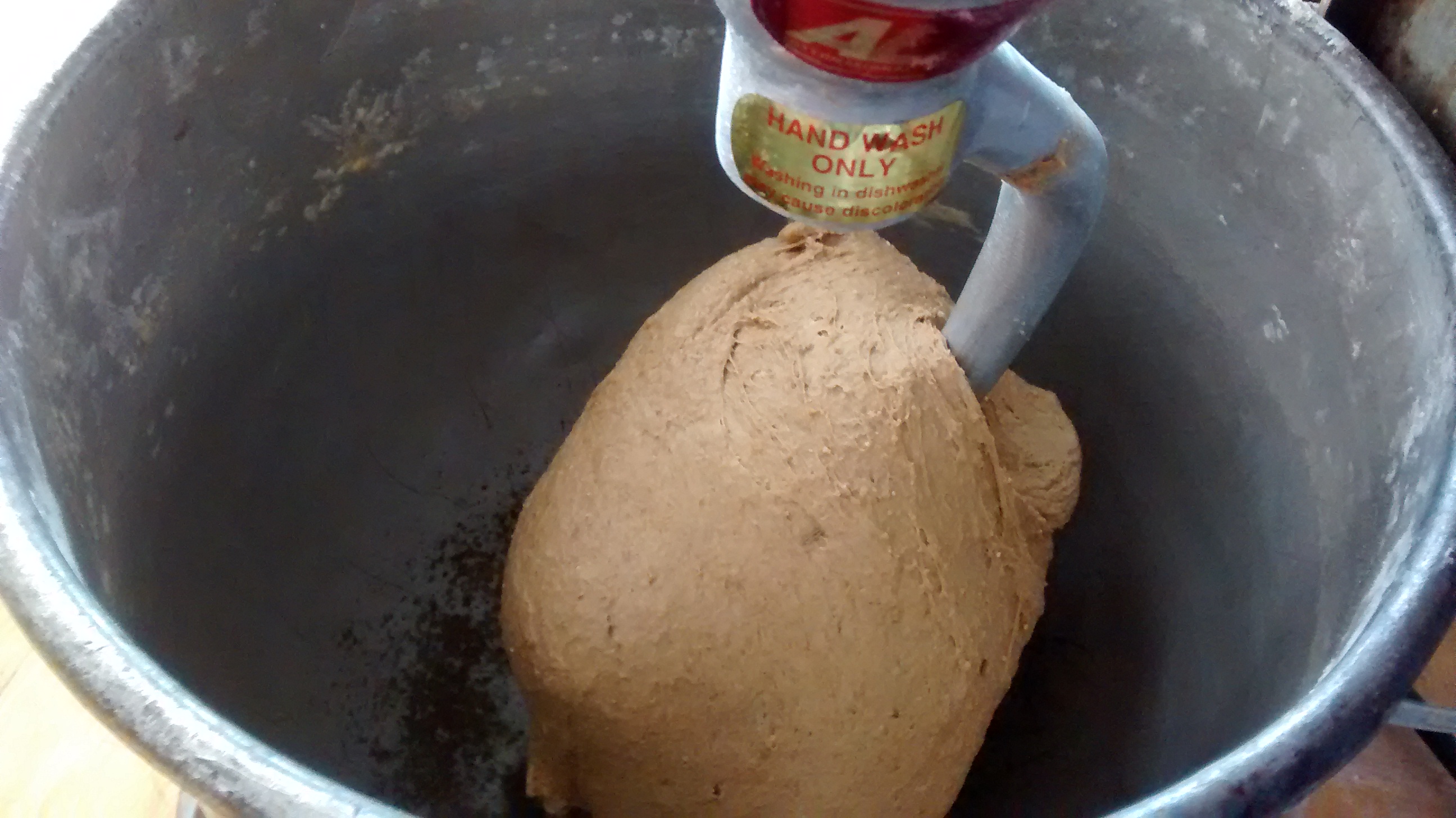
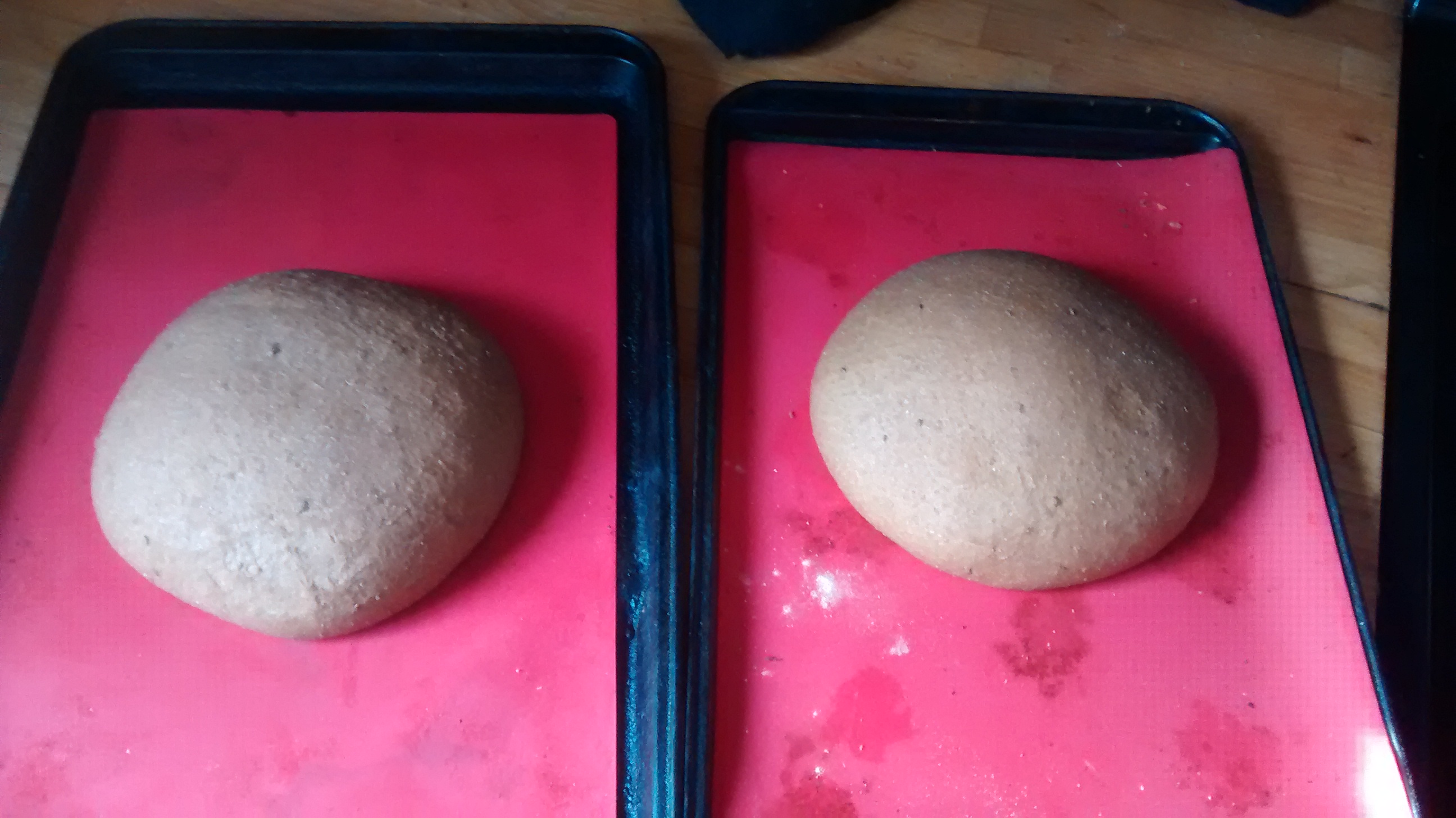
Sourdough pumpernickel loaves formed and ready to double in bulk.
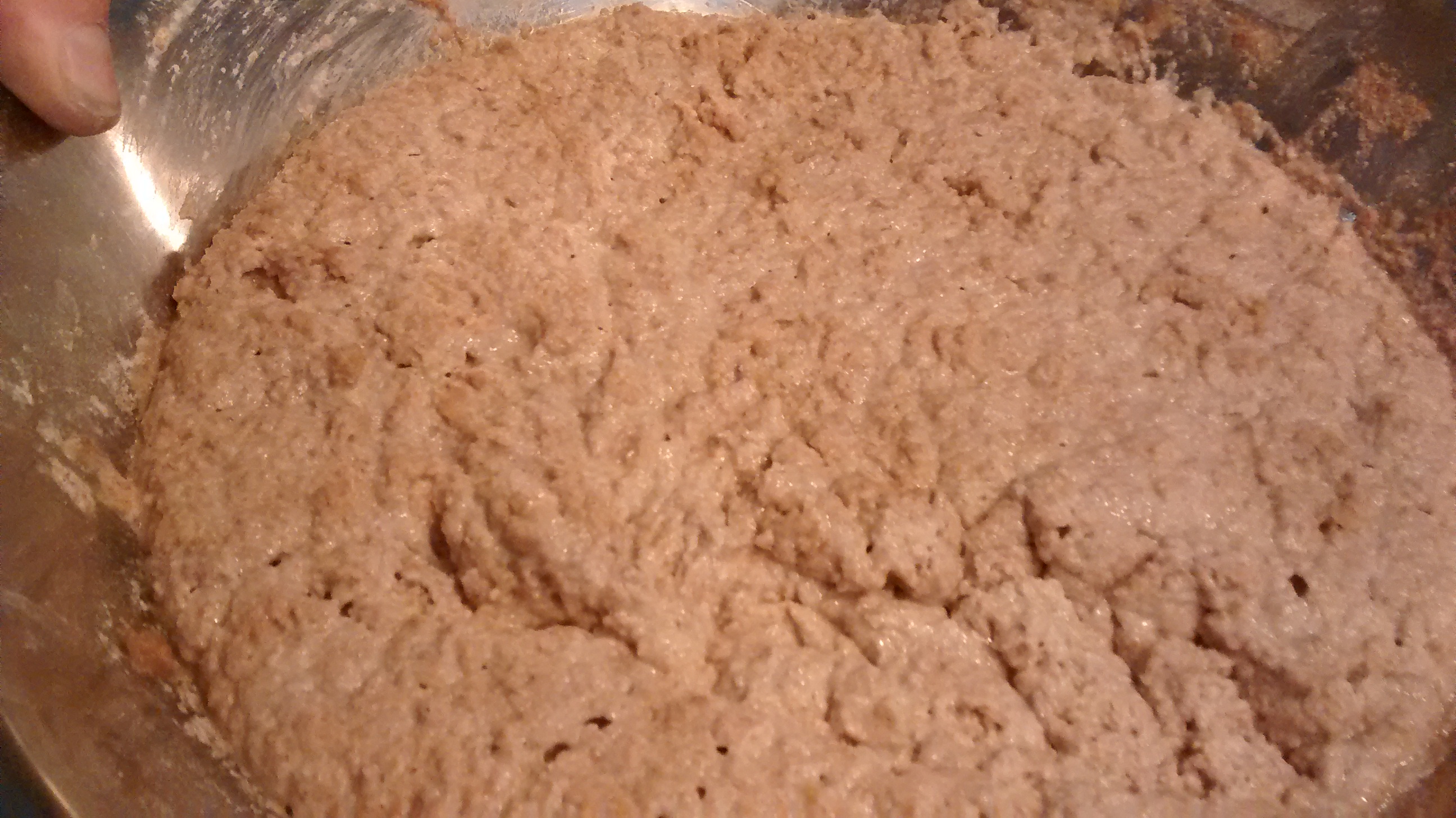
The overnight sponge takes a bit more time, but the long hydration period is a perfect match for whole grain baking, and while you can substitute dry yeast for the sourdough, the latter offers an additional complexity that is a great compliment to the other flavours.
I’ve been using a variety of sourdough starters for a couple of decades, it offers both great flavour for your breads – that particular sour tang, while also giving you a more resilient method of leavening bread compared to commercial yeast.
Those starters – some of which were home made, starting from commercial yeast, from airborne cultures, from those on grapes or rye, and others which were purchased both dry and liquid or shared from others – varied in quality. Compared to the King Arthur starter some were more sour but none matched the effectiveness at leavening bread.
Using sourdough is a great and low cost means to produce great beads at home, and the starter from King Arthur is probably the easiest way to boost your chances of success.
I enjoy making this bread whenever I have leftover mashed potatoes that need to be used up. BUT, I will make mashed potatoes specifically to be used in this bread when I’m going to be making toasted bacon and tomato sandwiches.
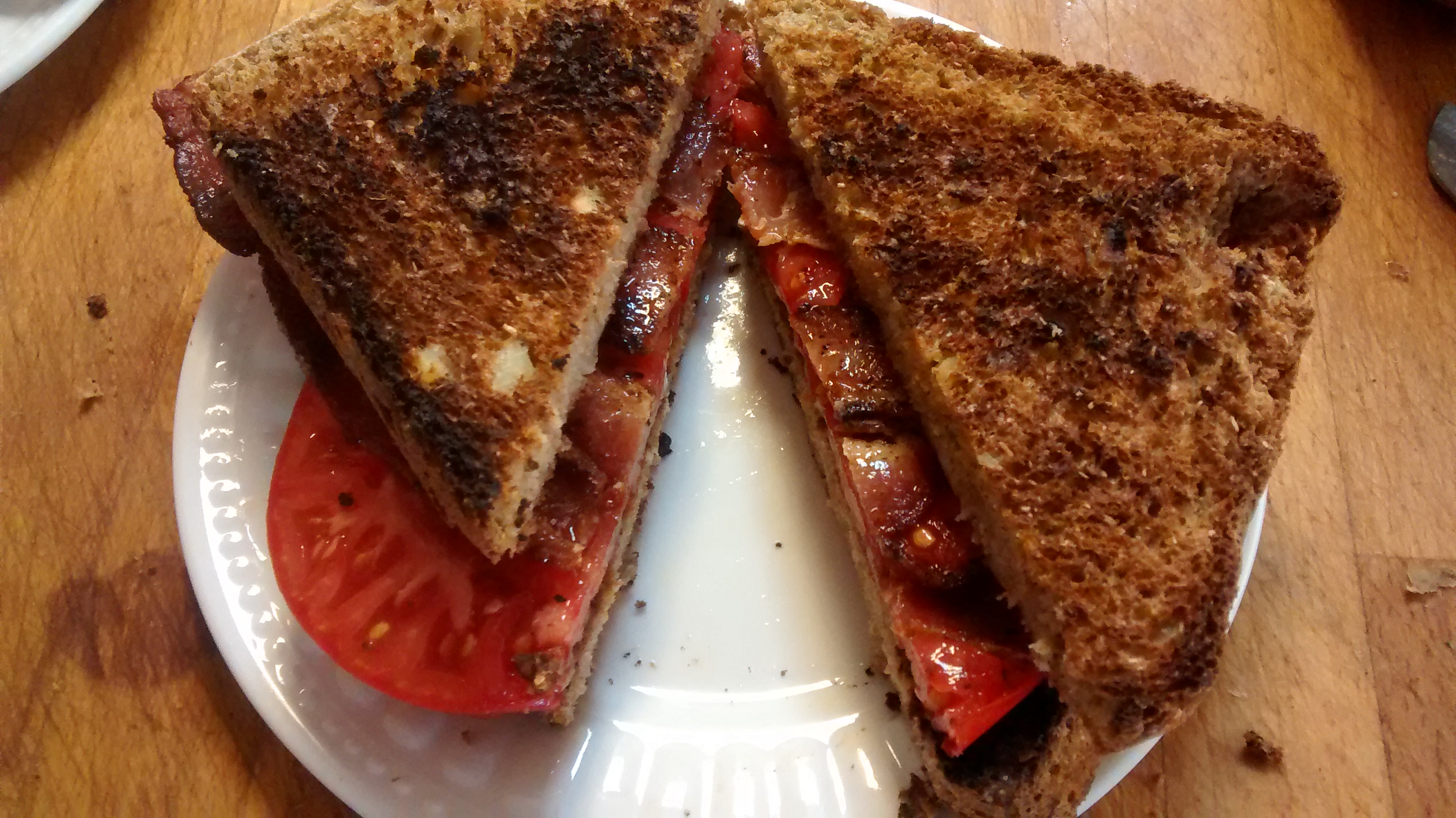
Toasted Bacon and Tomato Sandwich on Whole Wheat Potato Bread
Fundamentally all we are doing is swapping a cup of whole wheat flour for a cup of mashed potatoes from our standard whole wheat bread recipe.
The mashed potatoes do a couple of things. First off since they don’t contain gluten we get a somewhat denser bread. I say somewhat because it is nowhere as dense as a rye, triticale, spelt or barley loaf. The reduction in gluten is to some extent mitigated by the easily converted starches that give the yeast an extra boost. At the same time we get a moister loaf. The combination makes for a great toasting bread – and great toast is the foundation of a great bacon and tomato sandwich!
Originally potato bread was used to stretch more expensive wheat flour but today the bread merits being included in your baking rotation on its own merits alone. That said, it remains a great way to put that little bit of mashed potatoes remaining after some meals to good use in your daily bread!
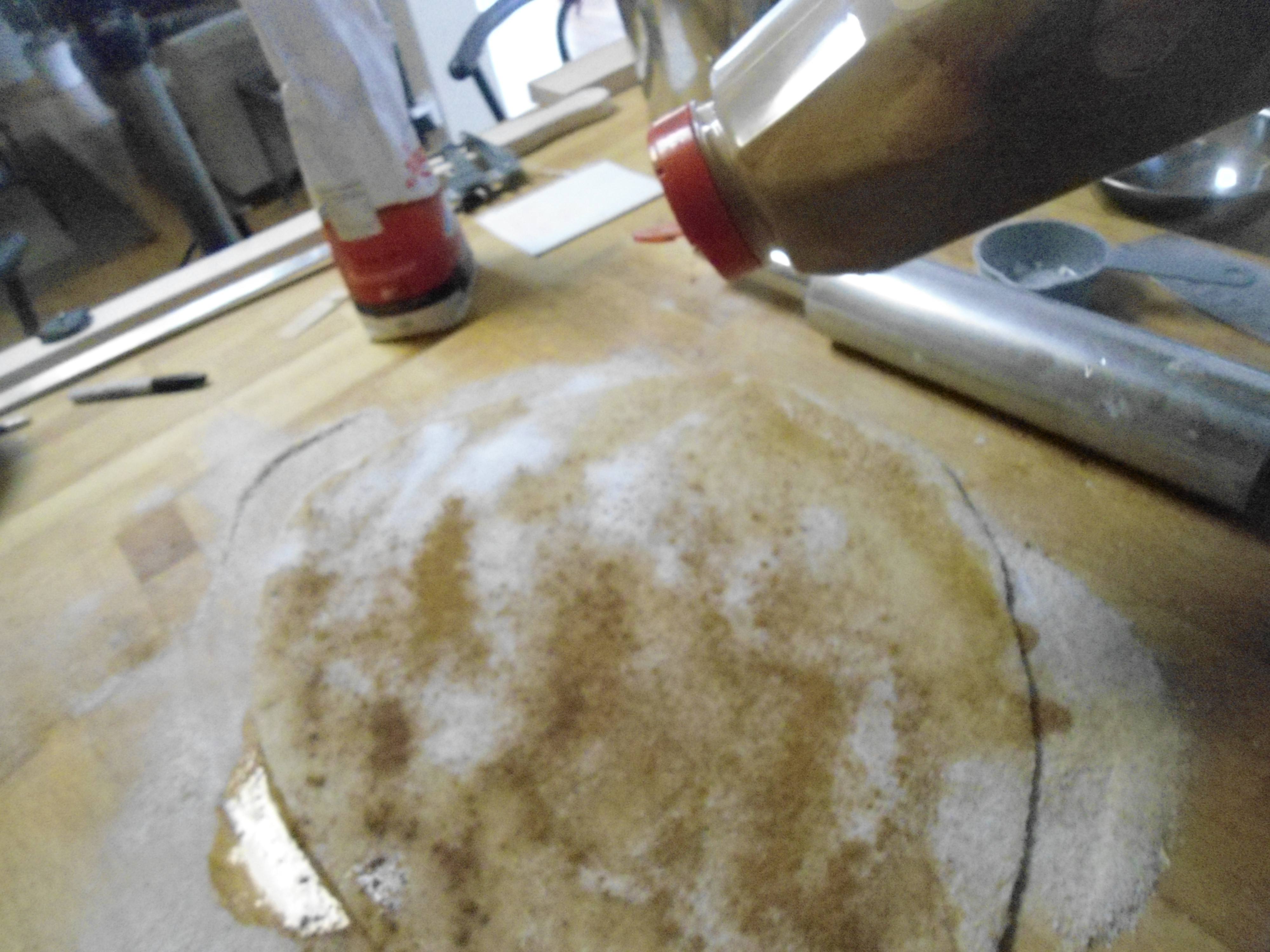
Bread Dough rolled out, oiled and sprinkled with sugar and cinnamon and ready to be rolled up
It’s telling that a whole franchise – and a rather successful on at that – can be built on one very narrow product – cinnamon buns. I guess, upon further reflection I guess that isn’t so unique, but it may be a bit telling as to how easily many of us part with cash that we’d be willing to pay such a premium for what is really a very simple bread product.
If you haven’t made cinnamon buns at home you should. The process is really very simple – and the bread machine takes all of the real effort out of the process.
This is one more case where silicon bakeware really shines. Cleanup of any sugary “leakage” from the buns is easily snacked on or washed up.
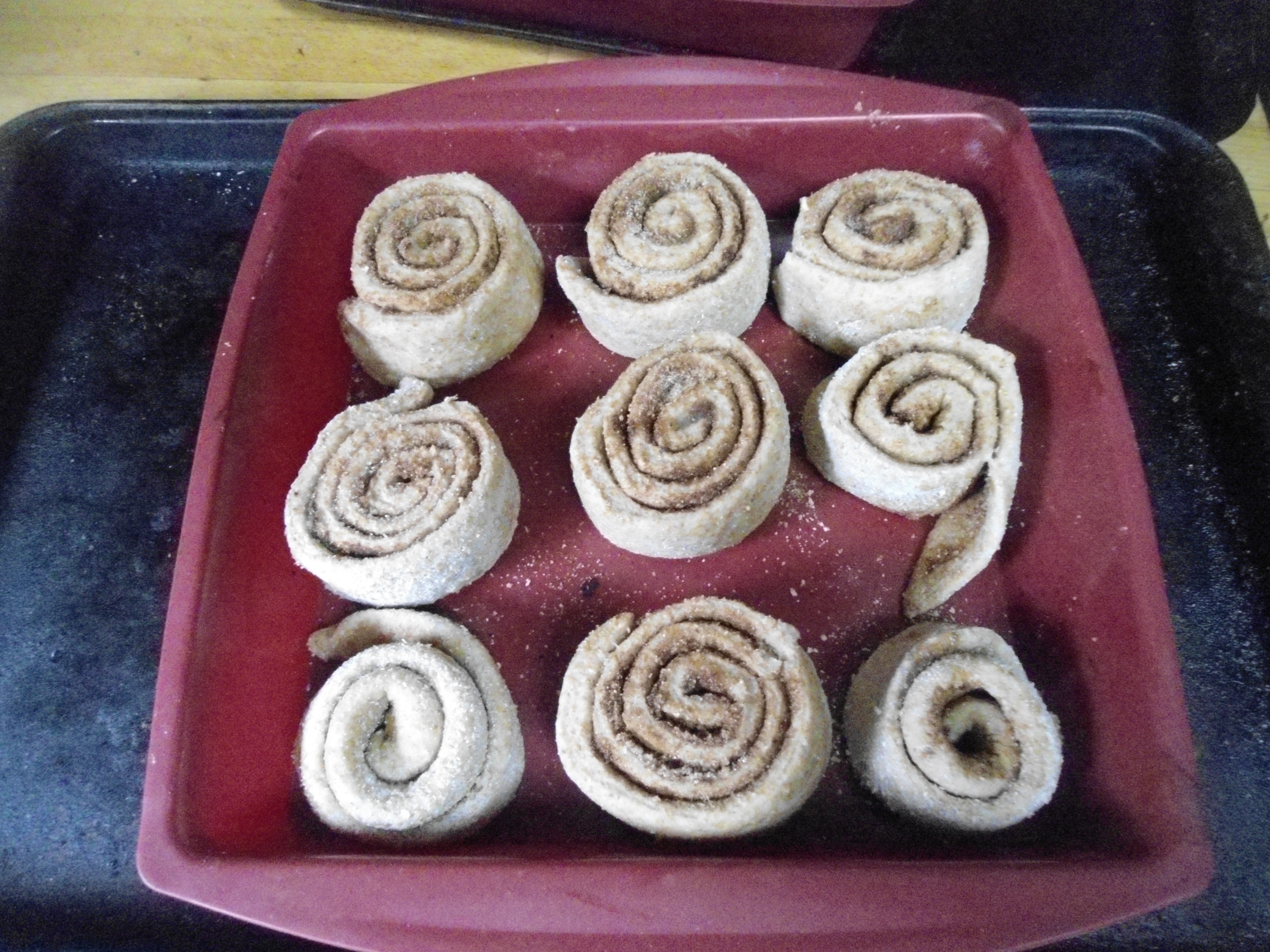
Cinnamon buns ready for second rise before going in the oven
For soft sided buns put the dough into a pan so that when doubled in bulk the buns contact each other, if you want harder outer crusts place them on a baking sheet with separation between the buns.
I always find it cool how changing even a single variable can significantly change the outcome. That is as true in baking as it is in many other domains.
English muffins are a great example of this. They are just regular bread dough that is cooked on the griddle rather than baked in the oven… simple enough right – but would you have guessed how easy their preparation was before now?
Certainly they are sold in stores at a premium – but you can turn them out easily at home.
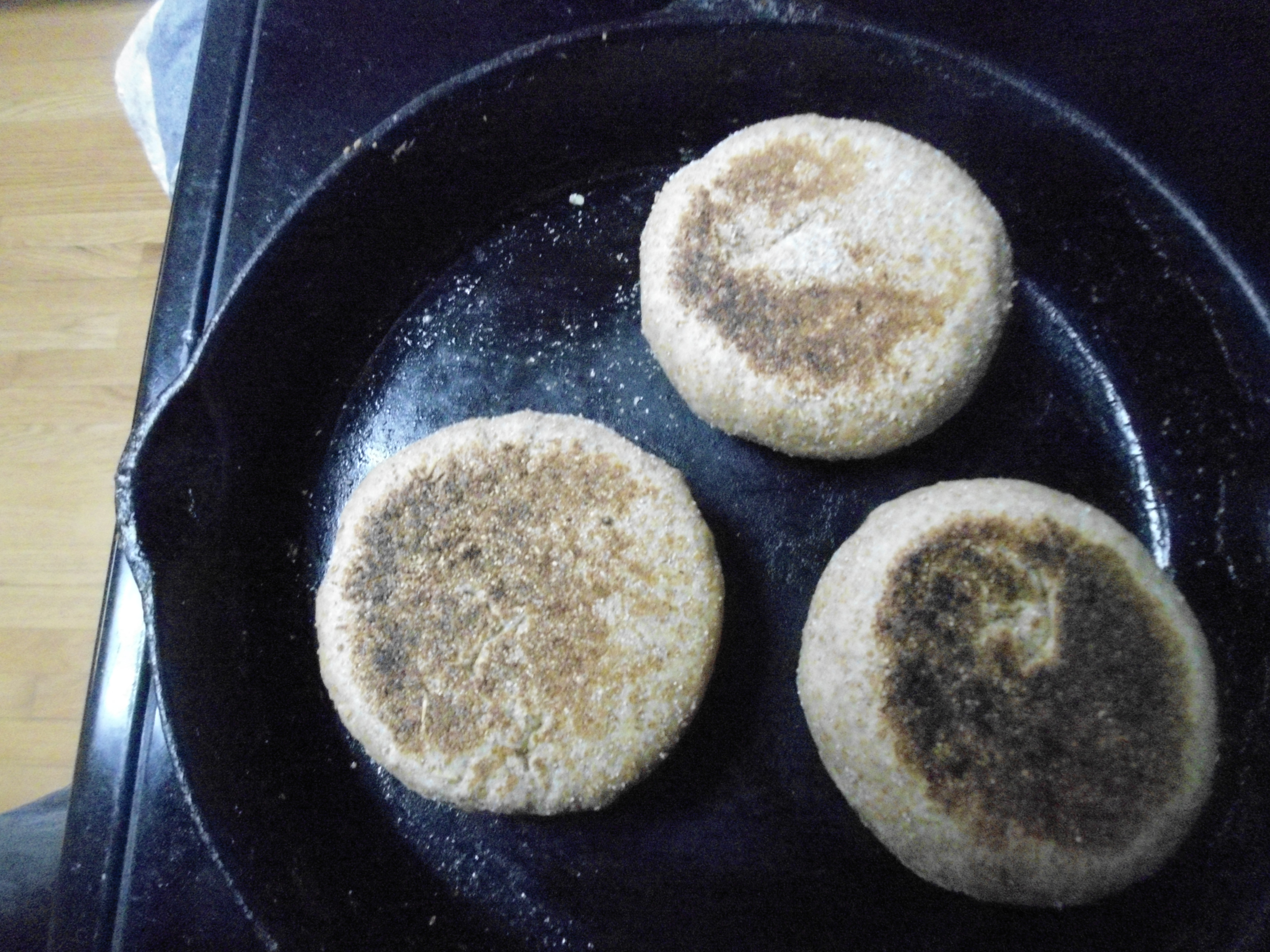
Whole wheat English Muffins in the frypan
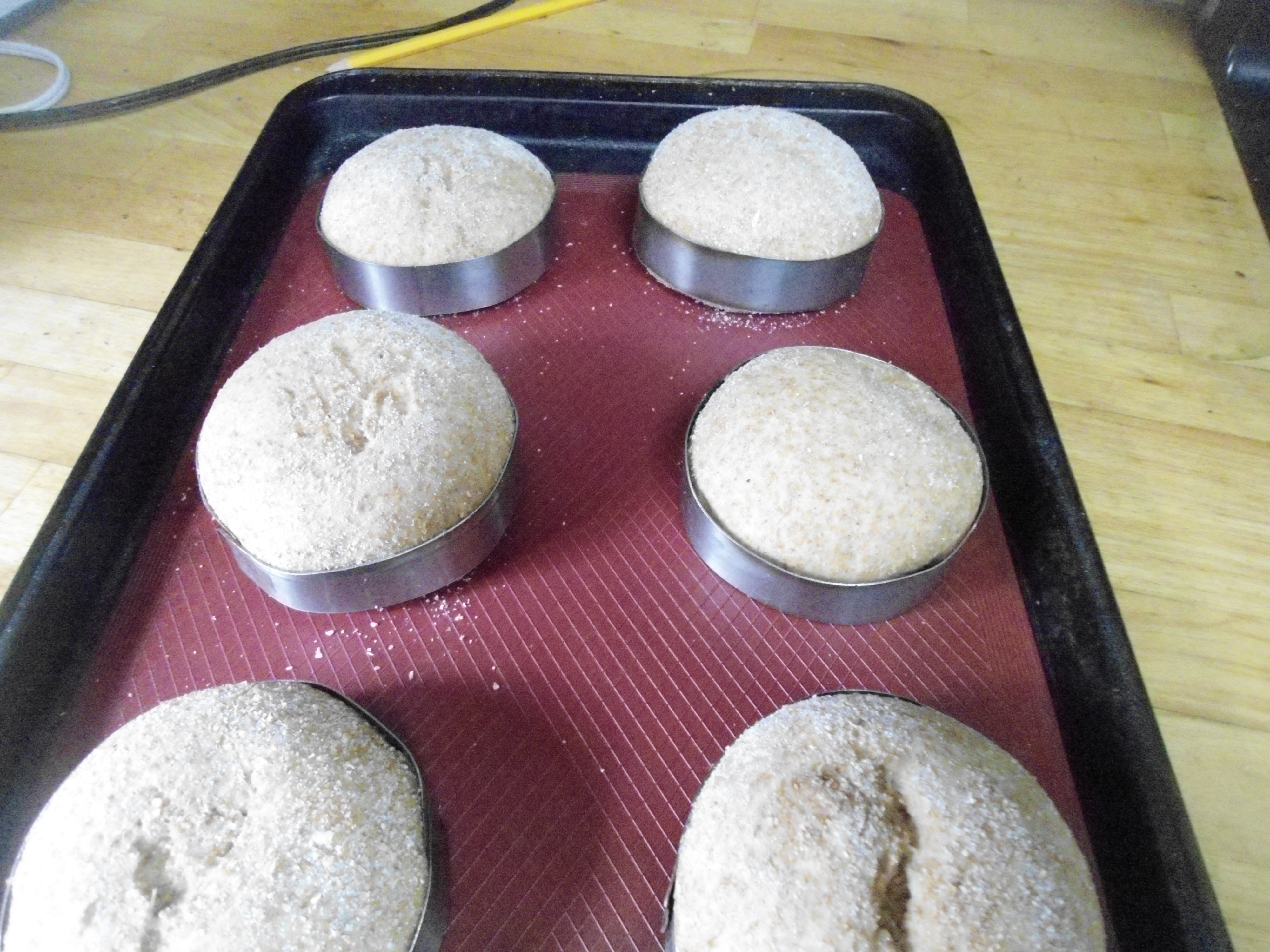
English muffin rings are certainly not necessary, and personally I would never have purchased them. Rather I have two dozen that I made up from salvaged stainless steel sheets. They are nice in that they give uniform muffins, but the real reason I enjoy using them is that I get a kick out of having fabricated them myself from scrap.
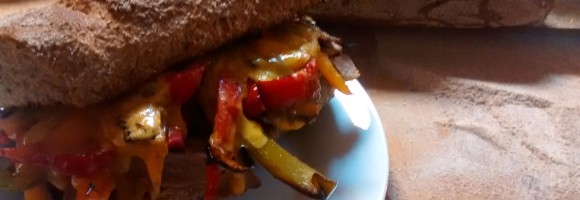
Some ingredients make wonderful combinations – steak and cheese is just one such marriage that yields dividends for the taste buds, combine roasted sweet peppers and caramelized onions on a hearty whole wheat loaf and you have a meal that will see you cooking extra steak just so that your next meal can be this great combo.
Toasted Whole Wheat Cheese Steak
My favorite bread to support a sandwich of this scale is my standard whole wheat baler twine bread – but made as dough and then laid out in a double french loaf pan. These pans are great – making it easy to get a great loaf.
Let your steak cool to reabsorb the juices before you slice it. I like to use the broiler to melt and brown the cheese, and of course make sure you’ve got loads of onions and sweet peppers.
So it’s probably pretty obvious that I grind a lot of whole grain flours and do a considerable volume of baking with them. I’ve learned a couple of secrets over time.
1. You need fine flour to get something that is acceptable quality, you can do that on the home built grain mill or a good quality one you purchase.
2. You need a really good recipe to make a whole wheat breads that is something folks will be happy eating day after day.
3. You need to ensure there is adequate moisture in the dough at when it is just starting out to compensate for the slower
Desired moisture level in whole wheat dough at the start of the cycle
absorption of the liquid into the whole wheat flour. This is something I always monitor at the start of the bread machine cycle and add water as necessary to achieve the consistency I am looking for. While the consistency is always the same the amount of water can vary depending upon the moisture content in the flour and things like the size of the eggs.
You want the dough at the start of the cycle to look considerably more moist than you would want to achieve with a white dough.
I shot a video to give you a better idea of what you are looking to achieve.
Publisher of high quality how-to books for homesteaders and preppers which help you gain the skills and tools needed to help empower your independence.