

By

Tattler Reusable Canning Lids – Great But Tricky

Tattler Reusable Canning Lids

Tattler Reusable Canning Lids

I’ve been canning for years – small batches when I lived with my parents that then grew to be a bit larger when I got out on my own, and by a bit I mean I’d do things like I’d use my big outdoor gas burner and converted stainless steel keg to make 10 gallons of marmalade, jam, canned fruit or other preserves whenever some product became available for a great price.  Enough to share with friends and family and last a couple of years.

All of that processing was boiling water bath canning and quite often I would reuses the rubber gasketed steel lids for several batches – until it appeared that they were deteriorating or they failed to seal.  That worked very well for me and saw a minimum of new lids purchased every year.

Tattler lid and gasket on a jar of apple pectin

Tattler lid and gasket on a jar of apple pectin

But then I picked up an All-American pressure canner – the really big one.  It’s a great tool and has been great for making homemade low cost convenience foods.  The value derived from being able to can up turkey stock alone has been huge.

However, there is no way that you can reuse a metal lid from a pressure canned jar.  The vacuum is so great that inevitably they are bent enough that the risk of failure were they to be reused is great enough that it makes more sense to recycle them once the jar has been emptied.  Doing that saw me needing to buy quite a few boxes of lids.  That’s when I decided to try Tattler lids.

Tattler lids are basically a modern incarnation of the old glass lids with rubber gaskets – reusable time and again even after pressure canning.

So, what’s my verdict after about five years of using them?  Great but there is definitely a learning curve associated with their use.  They aren’t as easy to use as conventional metal lids – but once you get a feel for how to use them your failure to seal rate should be pretty close with either boiling water bath or pressure canning methods.

Check out the video for more on my preferred technique.  But until you get the process down I’d suggest you continue to do batches with the majority of the jars topped with metal lids to reduce your frustration.

There is no mistaking a jar properly sealed with a tattler lid

There is no mistaking a jar properly sealed with a tattler lid

Some folks have complained about the lack of ease in figuring out if the jar is sealed – sure you can’t push on the top of the lid and see if it has been sucked down but if you remove the ring you’ll see very quickly if the jar is sealed.  Really the danger is if the jar looks to be sealed but isn’t – that isn’t a problem with the Tattler lids – even with boiling water bath canned one litre jars the vacuum is great enough to allow you to hold the lid and suspend the jar – there is no guessing needed.  It is readily apparent if the jar is or isn’t sealed.

In terms of price – well I bought my first case of lids [and I have standardized with regular mouth masons jars] at regular price directly from Tattler and they do pay for themselves very quickly if pressure canning – less so if you are boiling water bath canning and can reuse the metal lids.  After getting hooked on them Tattler had a crazy special where they were offering their lids for around half price – and that’s when I purchased a couple of bulk bags of lids and gaskets – so I expect that I’ll be using Tattler lids for the the rest of my canning life.

Now I can principally with the Tattler lids – the steel tops are reserved for jars which will be given away with no expectation of return.

If you probably should give Tattler lids a try – play around with them a bit and I am pretty sure you’ll end up hooked on them.


By

Goodell Bonanza – the best homestead apple peeler

In good years I tend to pick put up a lot of apples – several hundred pounds – and much of those need to be peeled and cut.

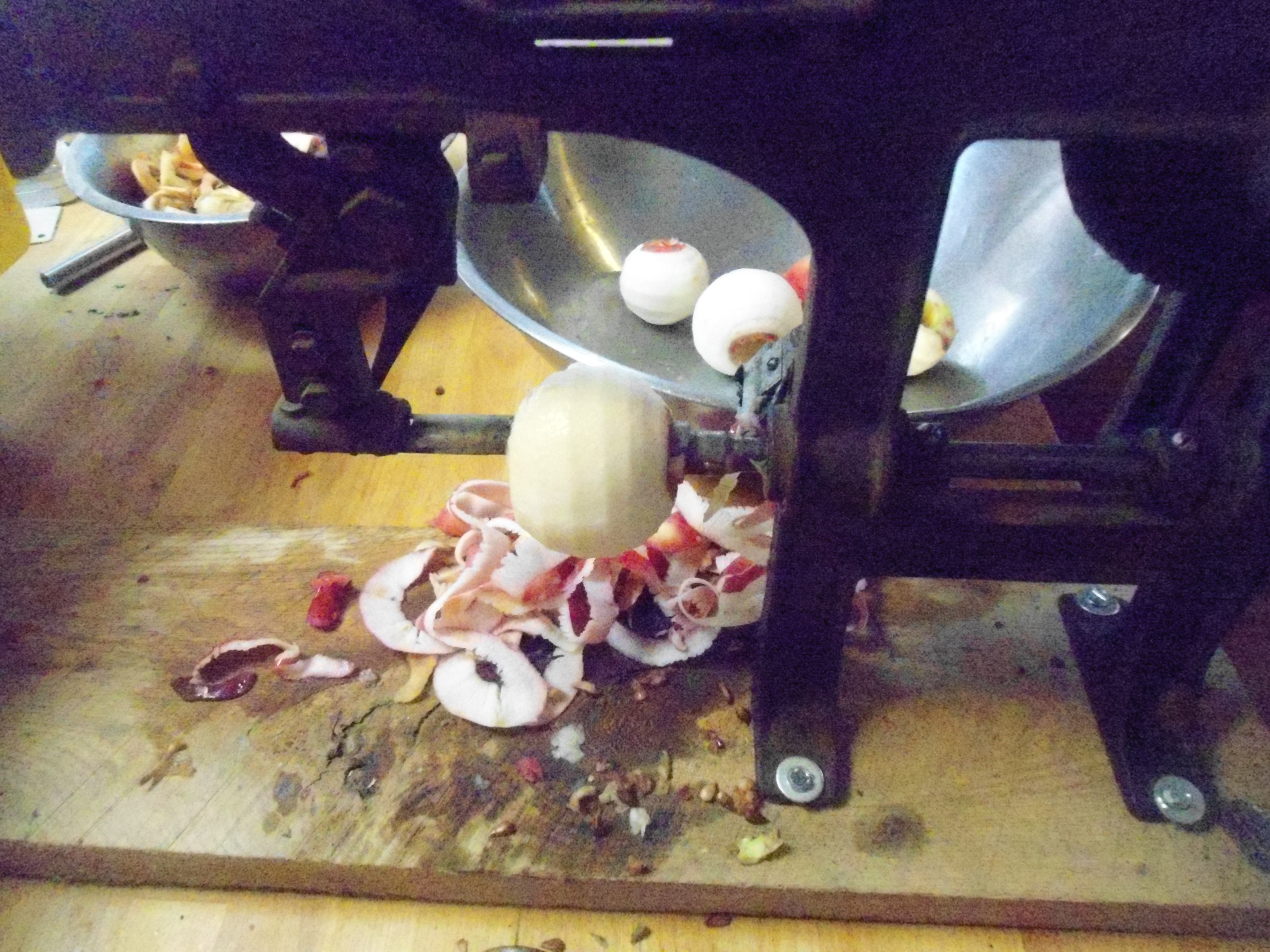
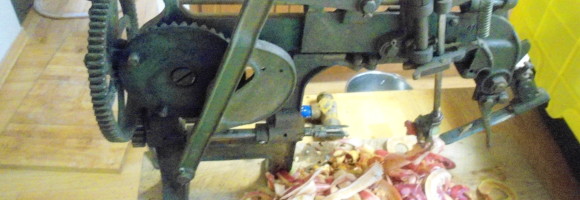
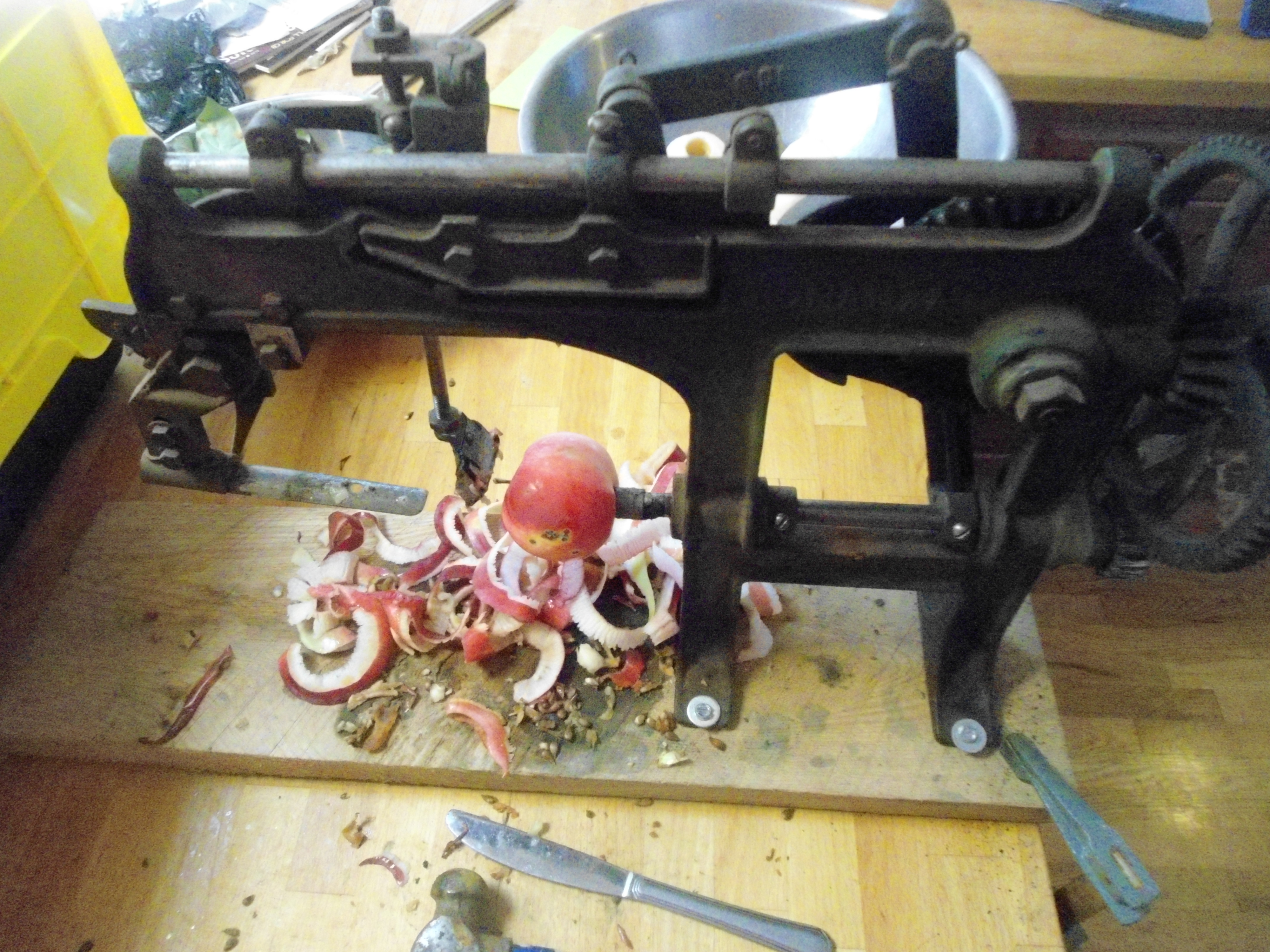
Goodell Bonanza about to start peeling an apple

Goodell Bonanza about to start peeling an apple

Over the years I’ve used a few different styles of apple peeler including the modern hand cranked unit that seems ubiquitous – and frankly for it’s low price is a pretty good deal.  What really sucks on it is the attachment – suction cup stink.

I’ve also used the Reading 78 peeler which is a design dating back to 1878.  It does and ok job but at the end of the day isn’t in my view significantly better than the much cheaper modern design.

Neither of these really are production units but they do get the job done.

But, let’s be honest,  when the opportunity presents to pick and process bushels of apples the processing side needs to be fast and easy and that is where the Goodell Bonanza apple peeler comes in.  I think this has to be the best homestead apple peeler by far.  It peels and cores an apple in about a second and then is ready to go for another.  That type of production rate makes taking advantage of the opportunity to pick and process loads of apples realistic.

One second later the apple is peeled and the coring is nearly complete

One second later the apple is peeled and the coring is nearly complete

Perhaps then it’s reasonable for these units to routinely sell for many hundreds of dollars – nothing comparable has been produced in many decades and these are awesome pieces of kit.

But,  here’s where having some skills can really come in handy.  I was able to pick my Bonanza up for a fraction of the price that they usually change hands for because of a couple of cracks in parts.  I know that these faults scared away most other bidders – but I was confident that I could braze any broken cast iron parts or machine new ones if the cracks grew.  As it turns out that hasn’t been necessary even with the heavy use the unit has seen.

Already this season three bushels of early apples have been passed through this unit and since this is a great apple year – compensating maybe for the complete blueberry crop failure and the near failure of the strawberry crop in our area – its only the start having the Bonanza makes the process not just reasonable but pleasurable.


By

Essential Power Tools – The Jig Saw

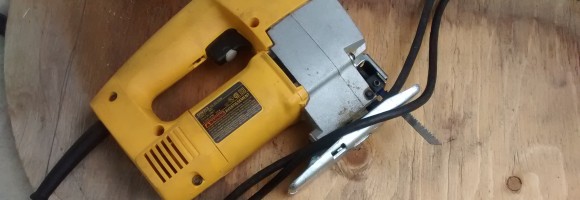
The Jig Saw - an essential power tool

The Jig Saw – an essential power tool

If a scroll saw – or maybe a bandsaw – hooked up with a circular saw the resultant offspring would likely resemble a jig saw. This tool has some of the attraction of both tools – and some of the disadvantages of each.

Like the circular saw the jig saw as a handheld tool is able to go to the material rather than then other way around – this makes it infinitely easier to cut segments out of large sheets of plywood, or store the tool away in a small space if you don’t have a proper shop space.

Like a scroll saw or bandsaw it can handle free form cutting.  Got a curve to cut – it can do the job.  Of course as with any tool intended to cut curves you’ll have to select a blade of shallow enough depth to allow it to turn within the curf you are cutting.  At the same time you don’t want to select one too shallow since blade longevity and cutting speed is generally better with a deeper more solid blade.

You can also make acceptable cuts in light metals – either sheet metals or thicker light alloy materials such as aluminum.  It’s not the optimum tool to do much of this work – an angle grinder is faster at making straight cuts in ferrous metals and sheet material is better handled with a hand held powered shear – but the point is sometimes is more one of what is available – or what tools that are already paid for – that can be pressed into service to complete the task rather than which tools with complete it most efficient – and here the jigsaw is a can do piece of kit.

The Homebuilt Stainless Steel Wood Fired Pizza Oven

The Homebuilt Stainless Steel Wood Fired Pizza Oven

Showing just how much you can do with relatively little kit is part of what we’re interested in demonstrating here, which is one reason why instead of pulling out the metal shear to cut the stainless sheet for the wood fired pizza oven we stuck a metal blade in the jigsaw and forged right ahead after having used it to cut out our curved plywood patterns.

This isn’t a fast tool – which can be a downside – if you are cutting straight lines using the circular saw will be much faster.  BUT, as I said in the previous  piece on the scroll saw being a slower cutting tool can be a big advantage when you hand a tool over to less experience folks of any age.  Like the scroll saw the jig saw is on the friendly side of the power tool spectrum both in appearance and reality.

As we’ve proceeded through this list we started with some very reasonably priced [and sized] tools – ones anyone should be able to afford and store – but they we got into some more expensive and unwieldy pieces of kit.  Tools like the mill-drill, lathe and even the table saw add a lot of capacity to your shop – but they may exceed your monetary and space constraints.  The jigsaw fits firmly into the former category – low cost and small – making it an everyone tool.  So if you don’t have one in your shop consider adding one today.

By

Baked Maple Custard – Cottage Recipes

Preparing the baked maple custard

Preparing the baked maple custard

Ah summer… it’s the time that you least want to congregate in the kitchen – and that’s saying something considering I really like cooking.  But come on, sun, sand, deck, bbq.. let’s try to save wear and tear on our kitchens and instead work on quick and easy recipes.

So my summer cooking and baking rules – especially for the cottage – Super Quick, Super Good and Super Simple.

This baked maple custard fits the bill in spades – and since it uses ingredients you should always have around it’s a great last minute desert option.


By

Harbor Freight Spot Welder Review

I generally really like Harbor Freight products – and I have a lot of them.  I’ve got some of the largest of their tools – the 2hp mill-drill  and their 9×20 metal lathe, some of their smaller tools including the 170A mig welder and 9″ angle grinder as well as a bunch of their hand tools. Pretty much all hands down wins in terms of bang for the buck.

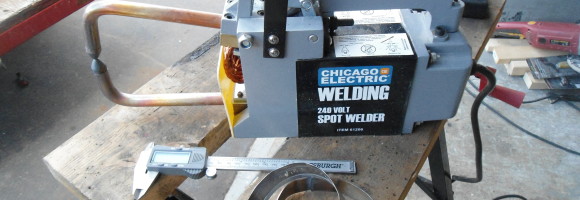
So when I decided that I was going to fabricate a wood fired pizza oven from stainless steel I figured I would pick up the very reasonably priced HF “Chicago Electric” spot welder.

Harbor Freight "Chicago Electric" spot welder

Harbor Freight “Chicago Electric” spot welder

Spot welding was my first introduction to welding when in grade 7 metal shop classes at Shaftsbury High School in Winnipeg where we built wind chimes and the galvanized steel top section was joined by spot welding.  It was a real shop, and a real shop class, with a real shop teacher – who my father and I bumped into from time to time when we were out hunting upland game.  As a pretty good student (not just in shop class)  I got a bit more latitude in the class which was great.

Anyway,  my memory of using that spot welder was that it was a pretty useful piece of kit, which influenced my decision to go that route for joining the segments for the pizza oven.

Of all of the HF tools that I have, the spotwelder comes the closest to failing to deliver to my expectations, and that’s probably because I set my expectations too high.

The unit handles joining 0.0200 stainless steel pieces just great, it can’t handle 0.0400 pieces.  The other issue is that the points deform rather quickly and there is only one more set included with the welder.  Replacements are available for the miller welders but those are pretty expensive – as in $30 at my local welding shop.  If you have a lathe you can machine your own but it is a major hit that Harbor Freight doesn’t have replacements on the rack.

I guess my feelings towards the spot welder are colored by the fact that when I couldn’t weld the parts for the pizza oven I decided to try my hand at OA welding the stainless… which I had initially discounted as too hard (doooh stupid move that?).  I discovered that my Henrob torch was totally suited to welding stainless – with really no more difficulty than welding carbon steel.

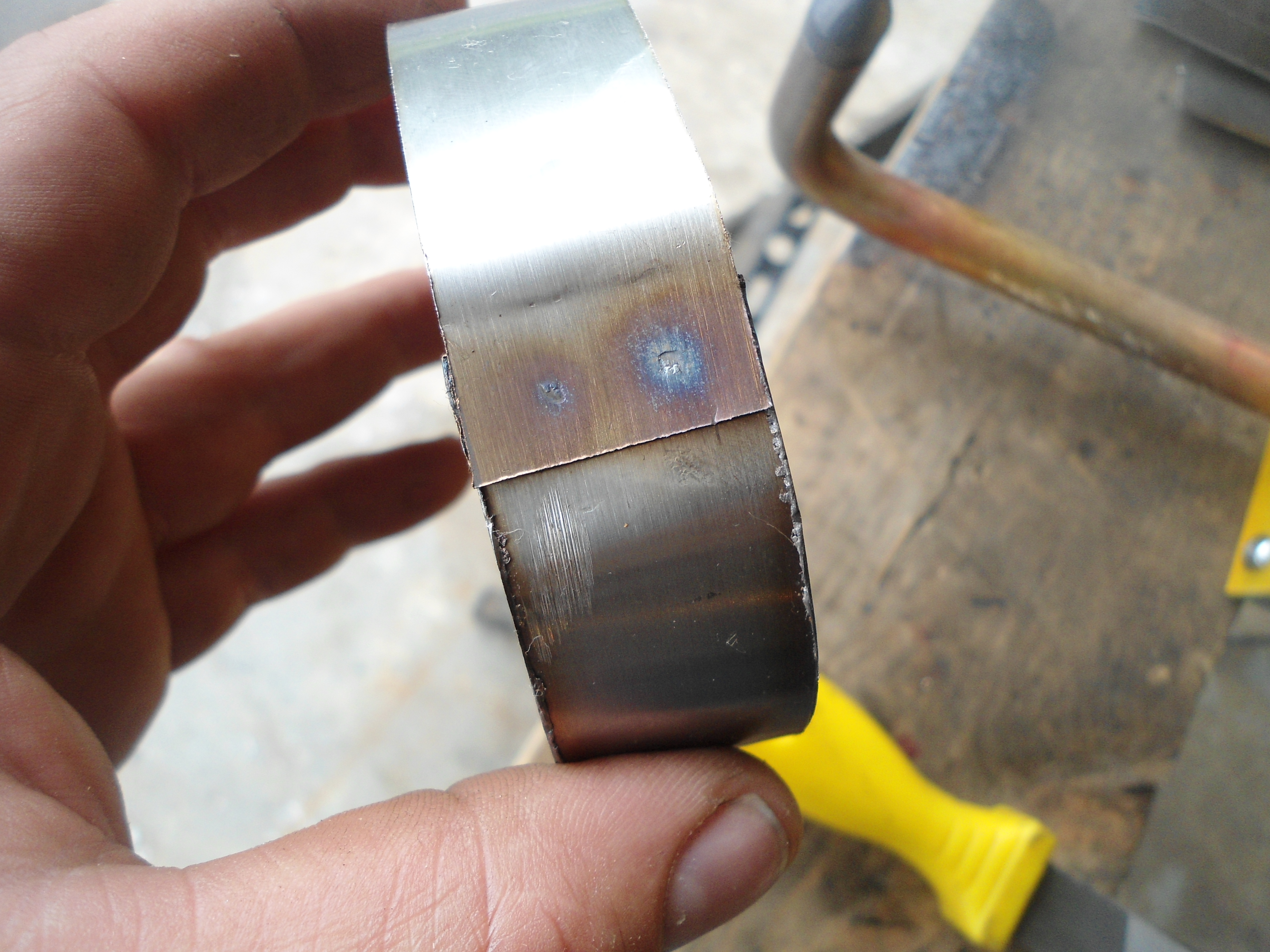
Completed spot welded stainless steel English muffin rings

Completed spot welded stainless steel English muffin rings

So,  with light materials and for a couple of quick welds it’s a good bet.  I really liked it for the English muffin rings I put together.

I also think it’s a good option for teaching kids basic metal working – which is basically what it was being used for when I was first introduced to it.

So, take home message… it’s limited in capacity so it’s probably the last welder I’d get but it looks just as solid when you acknowledge its limitations as the other HF kit I’ve grown to love.

By

Essential Power Tools – the table saw

We’re onto tool number five this week and that’s where the table saw fits in for me.  If you are working wood – and you should  – and are doing a lot of cutting or require a significant level of accuracy the table saw stands well above the circular saw that holds the number two spot on  the list.

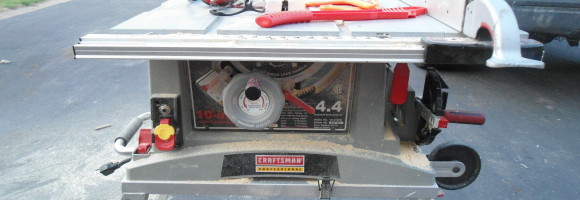
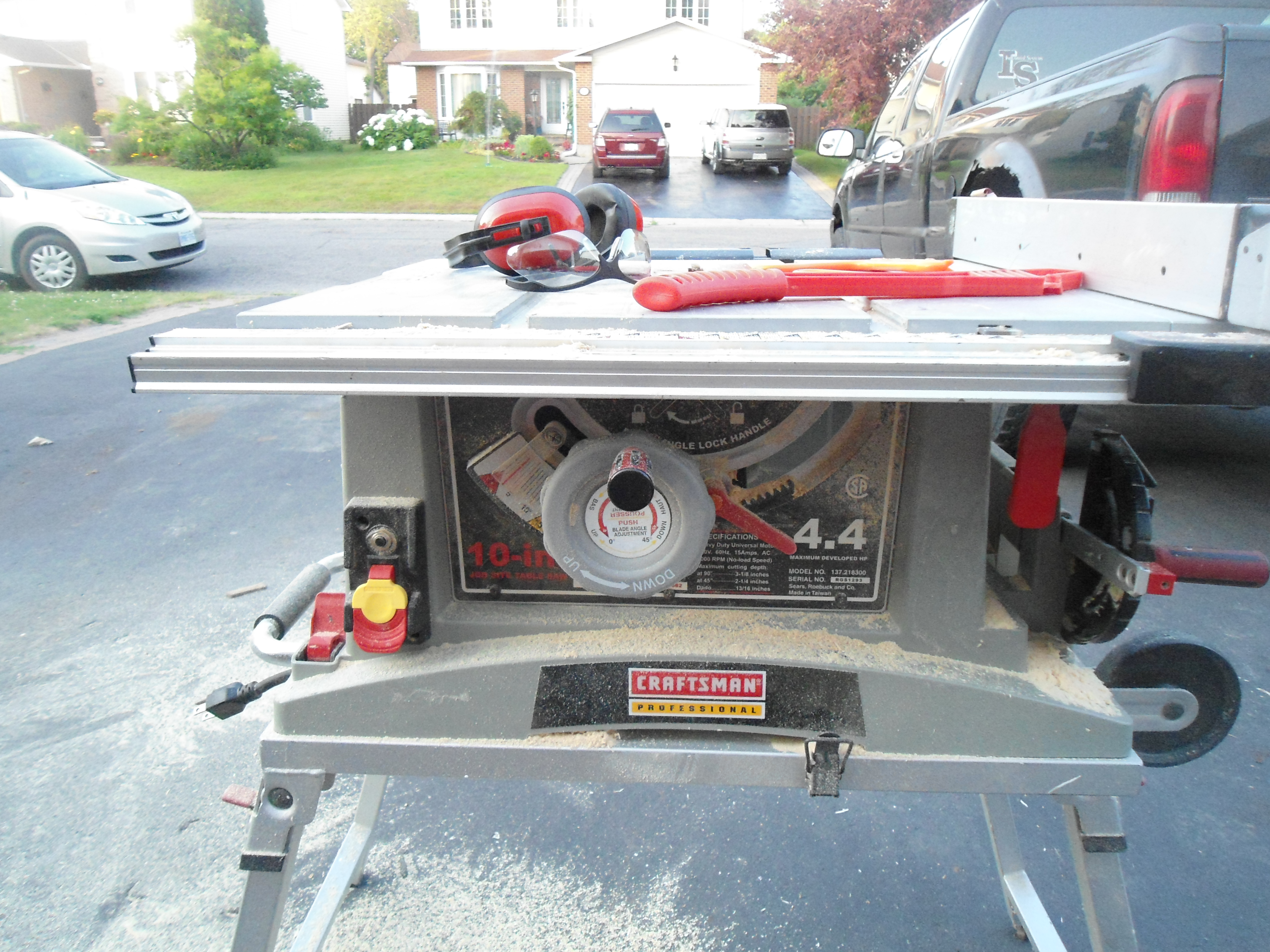
Craftsman contractor table saw

Craftsman contractor table saw

Now my table saw is a  craftsman contractor saw model.  Now, I chose the “semi” portability of the contractor saws because in the winter it sits in my basement workshop but as soon as the weather improves it gets moved into the garage – and when it’s getting used is placed in the driveway putting the dust outside.  It’s also been taken to projects at other homes.  I say semi-portability because it is awkward and is a good lift.  Now if you only need to roll it around on its wheels – it really is an easy move.  BUT, the heft does equate to some really solid construction – and that is key here.  DON’T bother cheaping out and getting a small wobbly table saw with a crappy fence – stick to your circular saw until you can afford to get a good saw.  As a reference point, the Craftsman I have runs something north of $400.  For my purposes it is the best compromise between accuracy, portability and price.

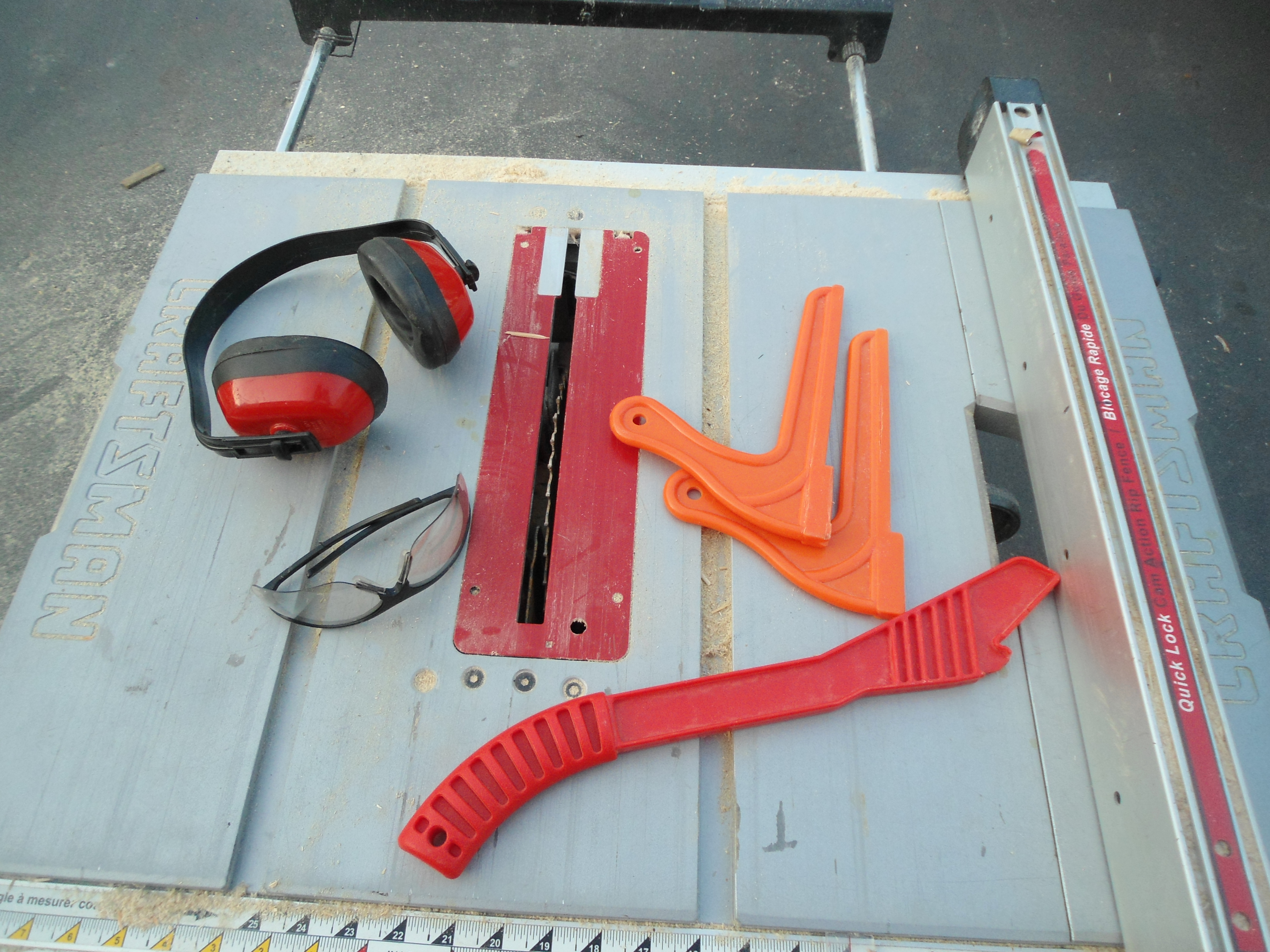
Push sticks, hearing and eye protection - not optional parts of your kit

Push sticks, hearing and eye protection – not optional parts of your kit

Now there are a few not so optional accessories you need along with the saw – the hearing and eye protection you should already have – but you will need some push sticks.  Push sticks are essential when you are working close to the blade.  You can cut these yourself, but purchased plastic ones are cheap and I particularly like the ones that have a grove in the lower surface which allows me to get better purchase on the material.

Now,  you’ll note that I don’t have the blade guard in place in the photo’s and videos.  Having an unguarded blade is a risk that I am willing to run – and it is a risk.  I run it in part because a significant amount of my work involves cutting blind groves in material.   That said, I am very careful around the saw, and don’t work with it when I might be tempted to be complacent or in a rush.  If you aren’t doing that type of work and prepared to accept the same elevated risk profile leave the blade guard in place.

Combination roller stand - a near necessity to go with your table saw

Combination roller stand – a near necessity to go with your table saw

If you are working with longer or larger materials – sheet goods or lumber you should probably get a roller stand that will allow you to avoid struggling with acquard material – and you don’t want to make a risky move around a saw blade.

My saw has found use building furniture, buildings and of late has seen a lot of work cutting materials to produce bee hive woodware.   It wasn’t cheap, but it certainly is a pleasure to use good tools – and it has paid for itself several times over.

If you don’t already have a table saw consider investing in one to add to your workshop as a means of empowering your independence.

By

Grinding Cornmeal with the Homestead Grain Mill

Homemade Grain Mill

Homemade Grain Mill

One of the great advantages of having your own grain mill is being able to grind a huge assortment of grains – and grind them as fine or coarse as you want… You get to make the choices!

The homestead grain mill is great for grinding corn for cornmeal or corn flour – but not masa… it’s a dry mill and not intended for grinding nixtamatal.  If you are going to do that – and you should – pick up a masa mill – they are very cheap.

Freshly Ground Cornmeal (R) beside Whole Wheat Flour (L)

Freshly Ground Cornmeal (R) beside Whole Wheat Flour (L)

But back to grinding corn for cornmeal or corn flour.  Now compared to grinding small grains there is one tweak you need to do in order to have a reasonable production rate.  You need to start with a greater gap between the burrs to accommodate the larger grain size.  That’s it… really that simple.  So add some whole grain corn to your larder and start using it in your baking.

So if you don’t have a mill, why not consider building one – it’s going to be much easier than you probably are contemplating, and it will leave you with the skills to tackle loads of additional projects that will likewise yield independence dividends around your home and homestead.


By

Making Icing Sugar at home

I’m probably not the type of neighbor that would be coming over to borrow a cup of sugar.   I usually have more that enough on hand to handle a season worth of not only preserving but also stimulating and then fall feeding for the bees.

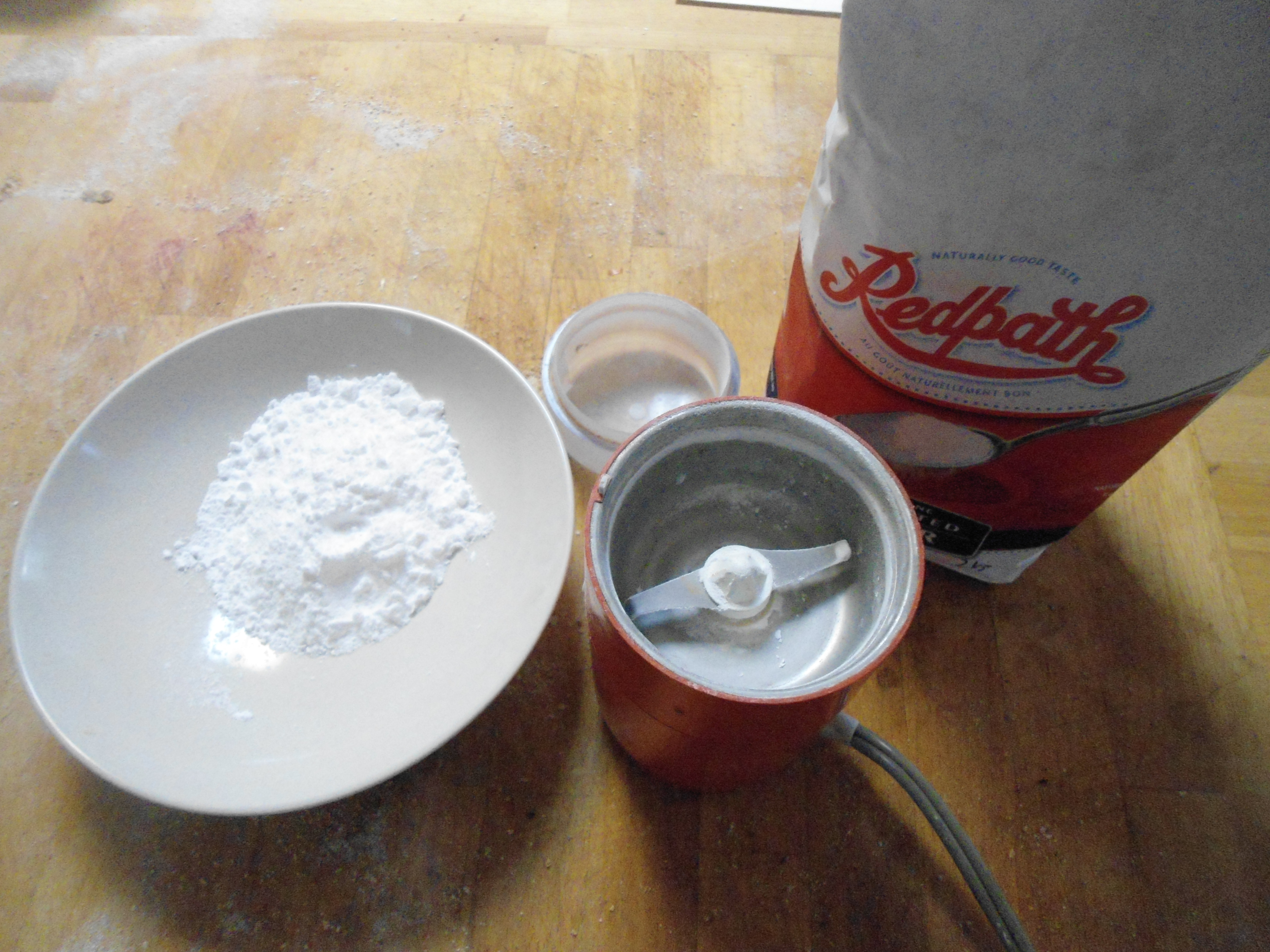
Granulated sugar, the "coffee grinder" and the resulting fine icing sugar (R to L)

Granulated sugar, the “coffee grinder” and the resulting fine icing sugar (R to L)

But,  I do run out of icing sugar… or rather I usually don’t maintain a stock of icing sugar.  But, one of the reasons I don’t really consider that a big deal is because I can produce my own icing sugar at home.

Of course icing sugar isn’t anything special, it is just regular granular sugar which has been reduced to a very fine powder.

You can do that same particle size reduction in an electric coffee grinder in your own kitchen.  Don’t overload the little hopper with granulated white sugar and a few pulses will reduce to something that is nearly as fine as the powdered icing sugar you would buy.

It’s really an easy way to simplify what you maintain stocks of, simplify your life (no longer do you need to run out to pick up icing sugar), and save money by doing the value added transformation at home.

https://youtu.be/KRm_aWQ135g


By

Essential power tools – the angle grinder

Welcome back to another “Tool Tuesday”.  Featuring prominently in the number three spot on our list of must have power tools is the angle grinder.

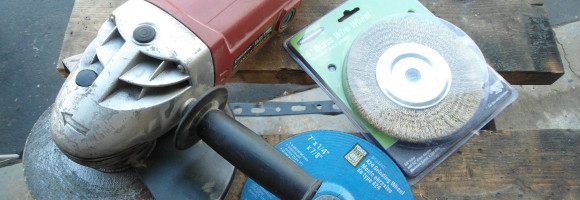
9" angle grinder and accessories

9″ angle grinder and accessories

The angle grinder is the power tool version of the hacksaw, the file and the wire brush all in one.  It is quite simply the most important tool to have in your shop if you are going to be working with metal (after the all purpose corded hand drill that was featured as the top must have tool of course).

There are multiple ways to join metal that are easy to accomplish including using pop rivets, metal screws and bolts – but before you start joining you need to have been able to form to shape and that means cutting and grinding and this is where the angle grinder shines.

You’ll want to pick up 1/8″ thick metal cutting disks, 1/4″ thick metal grinding disks and wire wheels (which make removing paint and rust a breeze).  If you are going to be cutting brick, concrete or tile you can pick up masonry cutting disks as well.

Now, you’ll find grinders come in a variety of sizes, from the 4 1/2″ models up to the beefier 9″ units.  While I have a smaller 5″ grinder my go to unit is a 9″ and it’s backup is a 7″.  For cutting and grinding disks I’ve pretty much standardized on 7″ diameter disks which I’ve found to be more common (and on sale more often) than the 9″ ones.  I also appreciate the extra power offered by the larger units.

That said,  the smaller ones are nice if you’ve got to work in tight spaces – such as under a vehicle or aren’t quite as comfortable with the heft and power of the larger ones.

Of course part of the process of determining what makes this list and where it ranks is price.  To give you an idea of the price these run between $20 and $65 at Harbor Freight as of now – without using one of their 20% off coupons they frequently circulate which would knock the price down to $16 to $52.

So if you don’t have an angle grinder yet pick one up today along with a selection of disks.

By

English Muffin Rings – easy welding projects

Stainless steel strips cut with angle grinder

Stainless steel strips cut with angle grinder

English muffins are great and so easy to make.  While not necessary, if you want to have all of the English muffins come out the same size you need to use rings.

Now you can buy these.  I checked and there are a bunch on Amazon for $6 for 4 tin plated steel rings.  You’ll need three sets to take care of a batch of dough, bringing the total to about $20.  That’s not crazy,  but you can make them for close to free.

I had quite a bit of stainless steel pieces left over from making the wood fired pizza oven – the materials for that build of course coming from old BBQ’s.

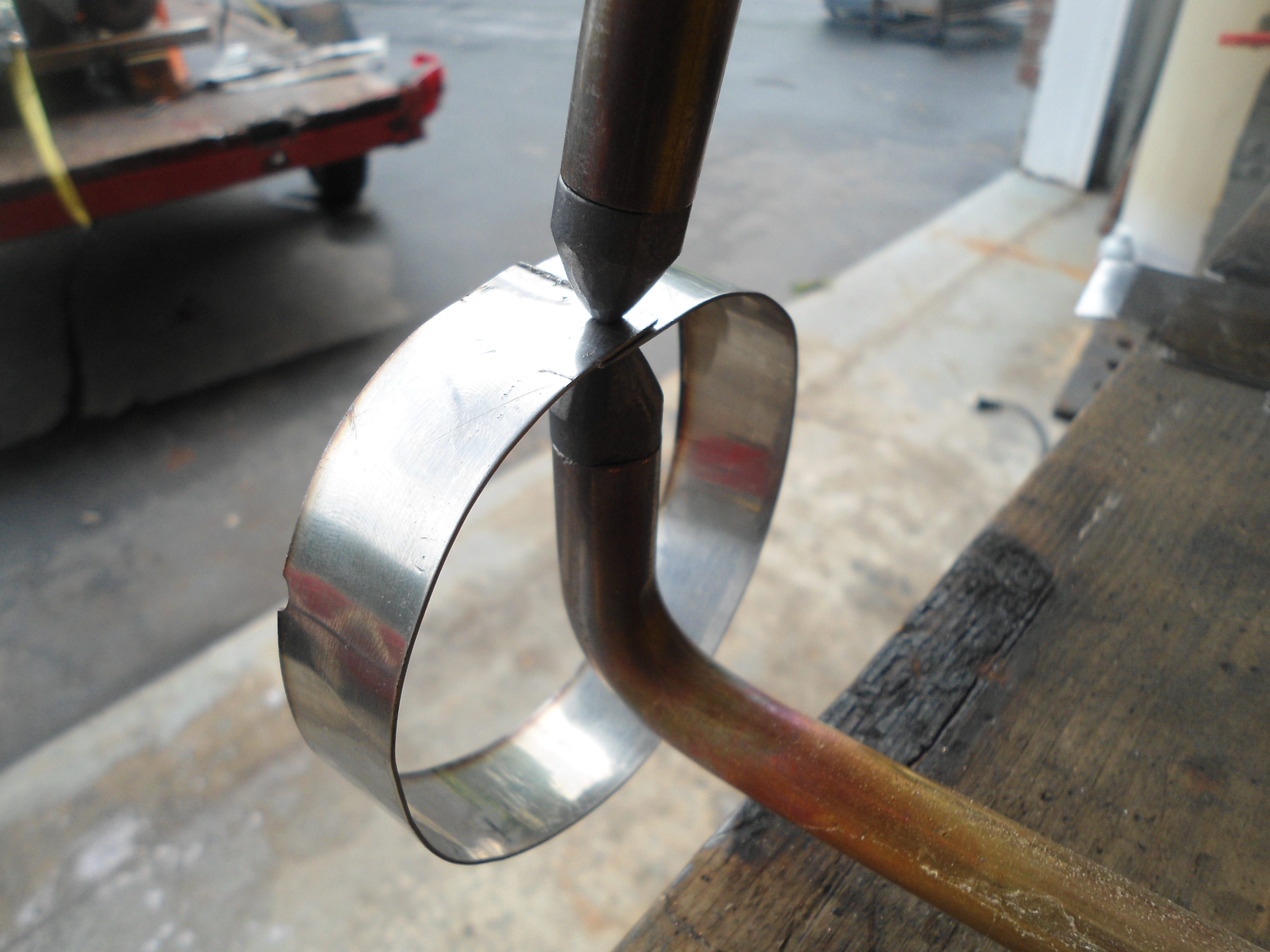
Spot welding the rings

Spot welding the rings

Strips 1″ wide and 12″ long were marked out and cut out with an 1/8″ thick cutting disk on the angle grinder.

The strips were cleaned up with a file to smooth the edges and then cleaned with soapy water and stainless steel pot scrubbers.

These were hand formed into rounds with approximately 1/4″ overlap and then given two spot welds.  Now that worked very well for the thinner material 0.0200″ thick, but not the heavier material.

For the heavier segments, which were 0.0400″ thick the spot welder just wouldn’t cut it… which was a repeat of the performance I experienced when building the pizza oven.  For these I switched over to using the Henrob OA torch.

So for relatively little effort and very little expense I managed to save $20 and get some more metal working practice.