

A Grain Mill Power Drive
Adding a simple power drive to a grain mill – be it the homestead grain mill you can build yourself or a good quality commercial mill like the Grainmaker or the country living mill – is nearly as essential as the mill itself. The reason is simple. Even a small electric motor can make grinding flour at home from whole grains nearly effortless.
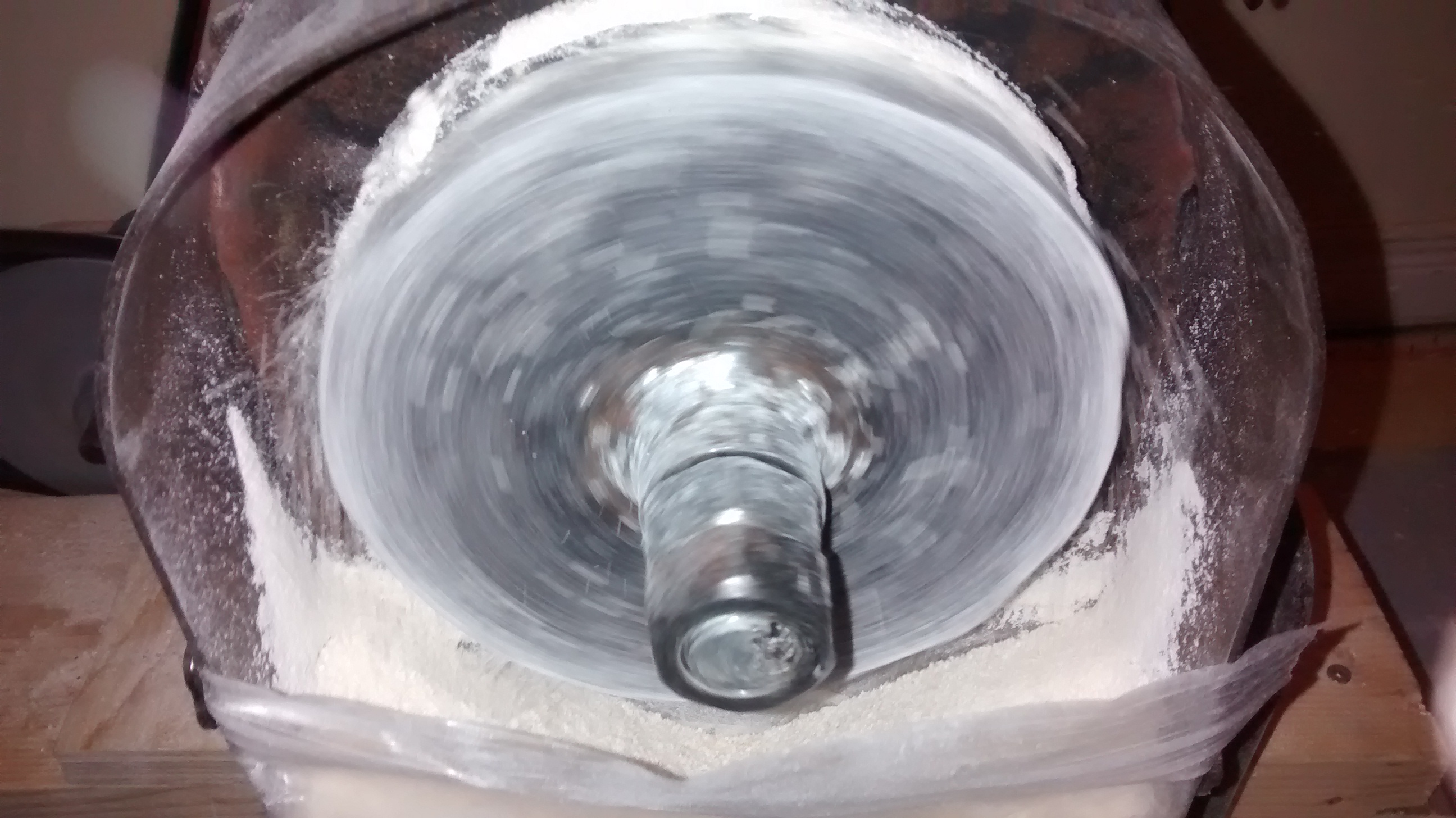
Whole grain flour without effort using the power drive
That means you will grind the grain into flour and in turn use that flour to produce your own baked goods regularly rather than relegating the mill to a dusty corner of your pantry and leaving buckets of grain in the corner of your larder. Shouldn’t that be your goal – live better today – and fresh baking using whole grain flours is a nice component of that philosophy.
If your grain mill is of any size, and if you intend to use it, it should be large – the homestead grain mill for instance features 6″ burrs – it will take quite a bit of torque to turn those burrs as you will no doubt have discovered if you’ve hand cranked one.
This means you will need to step down the speed of an electric motor which increases the torque. You can do this with a worm gear speed reducer, with a gear drive speed reducer – either one integrated into the motor or separate – or the most easy route with belts and pulleys.
I’ve used all three routes, employing the first ones on my previous iterations of the homestead grain mill as I worked to perfect the design. But the design is now much better (and simpler) and I have settled on a correspondingly simple power drive using pulleys and belts.

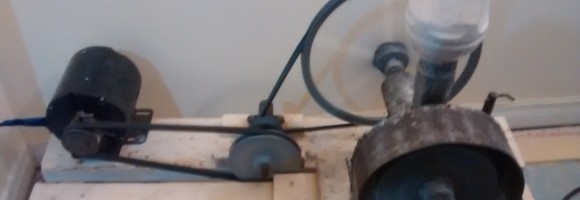
Grain mill power drive – view from the top
There is an intermediary pillow block to allow me to slow the speed of the vintage 1/4hp motor down from 1725rpm to about 45 rpm on the mill. The belt design is also allows me to quickly clamp the mill to the power drive setup and is forgiving of slight miss-alignments – my previous mill used a chain drive that would rip the mill from the mounting blocks if the alignment wasn’t close to perfect.
As discussed in an earlier post you can’t expect to bake fine products with coarse flour – so I always grind to pastry flour fineness. By hand that usually takes three passes with the burrs progressively closer together. With the power drive I tend to do that reduction in four passes. Not being quite as aggressive ensures that the drive system isn’t inclined to stall out – though it sometimes does need a pull on the pulley mounted to the mill to get started.
I use a couple of super magnets to hold plastic bags to the mill shroud to catch the flour.which works wonderfully.

Build a grain mill
I wouldn’t give up the hand crank – I think it’s essential not only to ensure that you can produce flour if the lights go out, but more importantly I think cranking out the flour to bake a loaf of bread every once and a while really increases your appreciation of how great mechanization can be. However, just as I think a bread machine is a nearly essential kitchen appliance because it makes baking easy I think the same can be said of the power drive for a grain mill. Make things easy and it’s more likely you will actually incorporate them into your life.
While my setup for the power drive isn’t part of the Building the Homestead Grain Mill book, I should have a supplement done up shortly that will be in new copies of the book and will be sent to those who have already purchased a copy.
So if you already have a grain mill that isn’t motorized – motorize it. If you don’t yet have a grain mill – you should probably get one, either by building it yourself or by purchasing a quality mill – and when you do motorize that one.
