

By

Building the wood fired pizza oven – cutting and forming part II
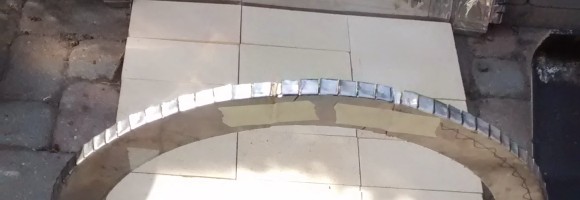
We left off the wood fired pizza oven construction at the point of having finished the back of the inner shape.

Now, we have to produce the back of the outer shape and the front of the oven.  We’ll start with the back of the oven.  This is pretty much like the production of the back of the inner shape but the larger dimensions presented me with some issues.

Laying out back segment of the pizza oven across two pieces of stainless sheet

Laying out back segment of the pizza oven across two pieces of stainless sheet

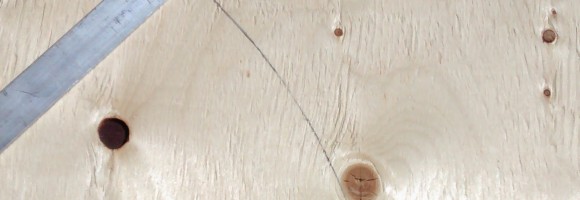
The outer back segment is really much like the inner back segment – except that with the materials I had available to me I had to use two pieces.  So my first step was to trace out the outer curve from my template.

Marking out outer curve to provide for tabs

Marking out outer curve to provide for tabs

Then as we did previously we are going to mark out another curve 1″ outside of the curve you just traced from the template.

Cut along this line with a metal cutting jigsaw blade.  Once that is done,  you want to cut out the tabs.

Rear segment cut to shape - ready for the tabs to be cut.

Rear segment cut to shape – ready for the tabs to be cut.

For the back portion I didn’t bend over the tabs, preferring to wait until I had welded the two sides together into one piece.

The front piece is a bit different.  While the back inner and outer pieces will be joined only to the inner or outer curved segments respectfully, the front piece serves to link the inner to the outer curved pieces.

Not enough material to make the full curve with one or two pieces of sheet.

Not enough material to make the full curve with one or two pieces of sheet.

Somewhat like the back outer piece the front segment for me required three pieces to create the full segment.  So the first thing I did was trace out the inner and outer curve from the template.  Then you’ll need to mark out a 1″ line beyond each side of the curve and then cut along these lines.

First front segment clamped and ready for the tabs to be bent down.

First front segment clamped and ready for the tabs to be bent down.

Just as with the other segments you’ll need to mark out the tab segments and cut those with the angle grinder.  Unlike the back segment I bent over the tabs after having clamped the pieces to the pattern.

Middle segment showing overlap portions without tabs

Middle segment showing overlap portions without tabs

Now,  the third piece I needed to use to fill the gap between these two I followed the same practice, but trimmed the tabs off from the areas where the linking segment would be under the other two pieces.

With these done we’ve completed curved segments and are ready to move on to the next steps of the fabrication process including the roof segments that will go between the front and back pieces.

Front along with inner and outer back segments cut out and placed in relation to the fire brick

Front along with inner and outer back segments cut out and placed in relation to the fire brick
 

By

Simple Whole Wheat Pizza

Everybody loves a great pizza.  Making them at home can save you a ton of money.  I fill my freezer with mozzarella  when stores advertise it at a lost leader price – here it’s usually $4 for a half pound bar.  There’s always lots of pepperoni – home cured from the offcuts I accumulate from doing butcher work.  There’s even plenty of tomato sauce if fresh tomatoes aren’t available and our homemade sauce has run out.

Homemade whole wheat pizza slice

Homemade whole wheat pizza slice

While you can use a much simpler recipe for pizza dough especially if you are using high gluten durum flour, when I use full extraction whole wheat I often tend to default to my tried and true baler twine whole wheat bread dough – which allows me to make a full batch and split it for buns, cinnamon rolls or something similar for the next day if I only want a single pizza.

This dough gives a nice chewy crust.  Load it up with toppings and you’ll get the pizza you want at a fraction of the price of delivery or even store bought frozen product.


By

Building the Wood Fired Pizza Oven – Laying out the material

With a stack of flattened stainless steel sheets my next task was to figure out dimensions for the pizza oven.

I started with dimensions for the commercial units I liked which was 27″ x 27″ for the interior dimension.  Recall that as an insulated stainless steel unit there is both an inner and outer. shell.

Laying out the template for the wood fired pizza oven.

Laying out the template for the wood fired pizza oven.

The standard fire bricks I am using are 9″ x 4 1/2″.  So three bricks placed long way wide gives 27″  and six bricks deep makes 27″.

To get a handle on what I could accomplish using the materials at hand I labeled each piece of stainless steel and measured them up and then set about with a pencil and pad of paper figuring out designs.

The oven shape is simple enough- half circles.  The formula for the circumference of a circle is 2 x 3.14 x radius, so the half circle shape amounted to half that or 3.14 x radius.

So, long story short,  the material I had to work with dictated that the inner shell have a diameter of 27″ wide by 22 1/2″ deep.

The outer shell would have a radius 3″ greater to provide a gap for insulation between the inner and outer shell.

Getting ready to cut out the templates with the jigsaw

Getting ready to cut out the templates with the jigsaw

To make layout work a bit easier I grabbed a piece of 3/4″ thick plywood to make a master pattern with.  To draw the half circle I picked a piece of aluminum flat from my scrap pile and drilled a bunch of 1/8″ holes in it.  The first near the end would serve as the pivot point – when placed over a finishing nail tapped into the plywood – and other holes were drilled 13.5″ and 16.5″ further out from this point – the inner and outer curves respectively.

I used a jigsaw to cut the plywood curve out.  This then served as the template for laying out the back inner wall, the back outer wall, and the front curved piece.  One thing to take not of is that I marked out the initial curve described by the template but then added another inch to use to make tabs to bend over to provide additional structural support as well as give a place to spot weld the backs and fronts to the flat outer pieces…

Stay tuned for the next steps as we work towards a  really cool pizza oven made from stainless steel scrap.


By

A Homestead Wood Fired Pizza Oven – Getting the material ready

Taking the BBQ’s apart turned out to be pretty easy – for the most part.  The segments were joined by spot welds, rivets or screws and bolts.

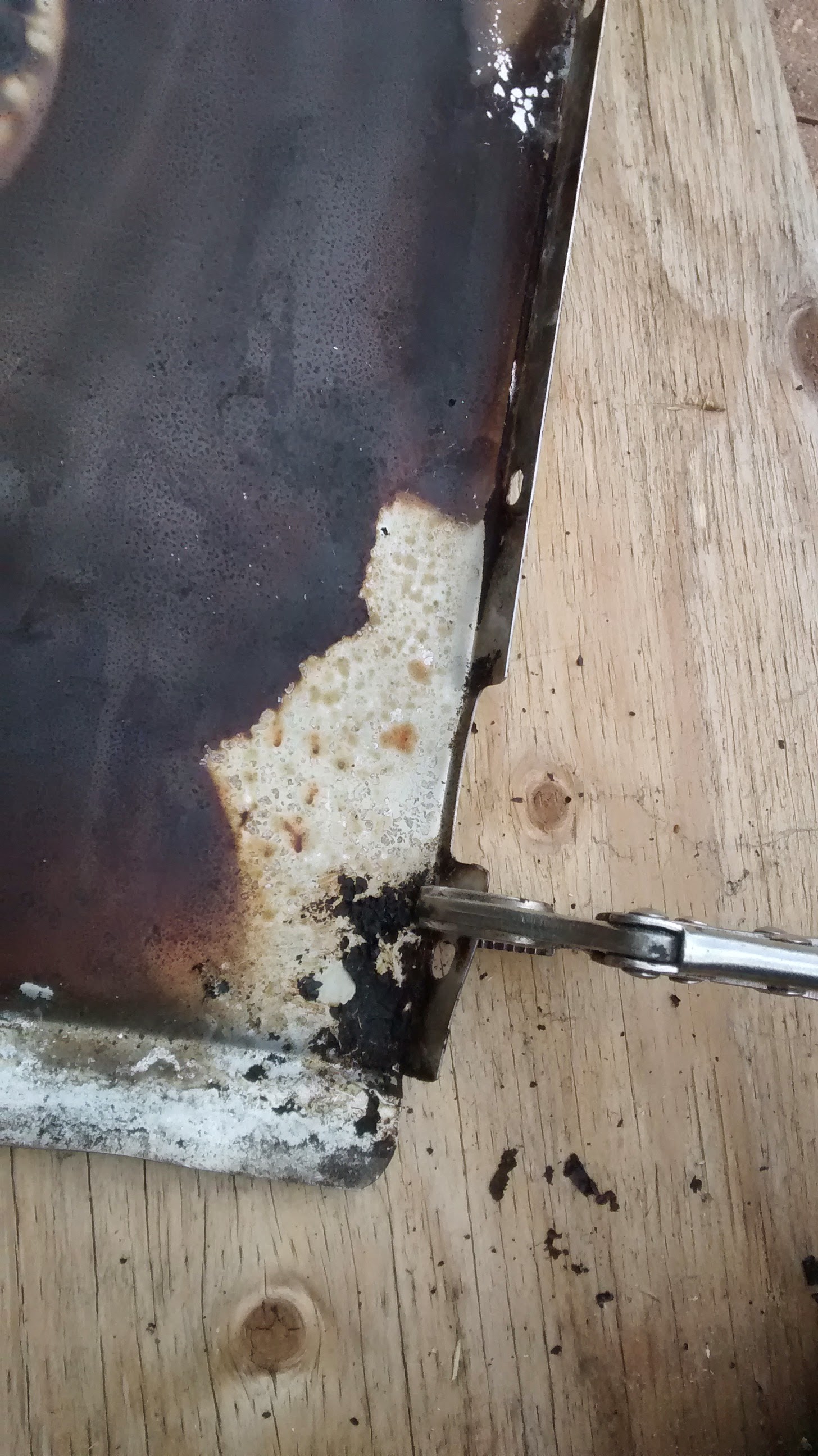
Bending tabs flat with vice-grips

Bending tabs flat with vice-grips

I had been worried that the latter – the screws and bolts would create a problem, but for the most part the were made from stainless steel and disassembled easily enough.  A few of the screws were stubborn and needed to be ground off but those were the exception.

The rivets were handled by using the angle grinder to remove most of the head and then driving the remainder out.

Finally the spot welds were broken by progressively working a flat bladed screw driver into the gap until the weld broke.  In some cases this resulted in a bit of tearing of the material but for the most part a pretty clean break resulted.

The next challenge was to get the material back into flat sheets so that a proper inventory could be taken and choices made as to how to cut the pieces made.   To start I used vice grips to bend the tabs flat.  Then I simply stepped on them … and this did flatten them out enough to make further work on them more reasonable.

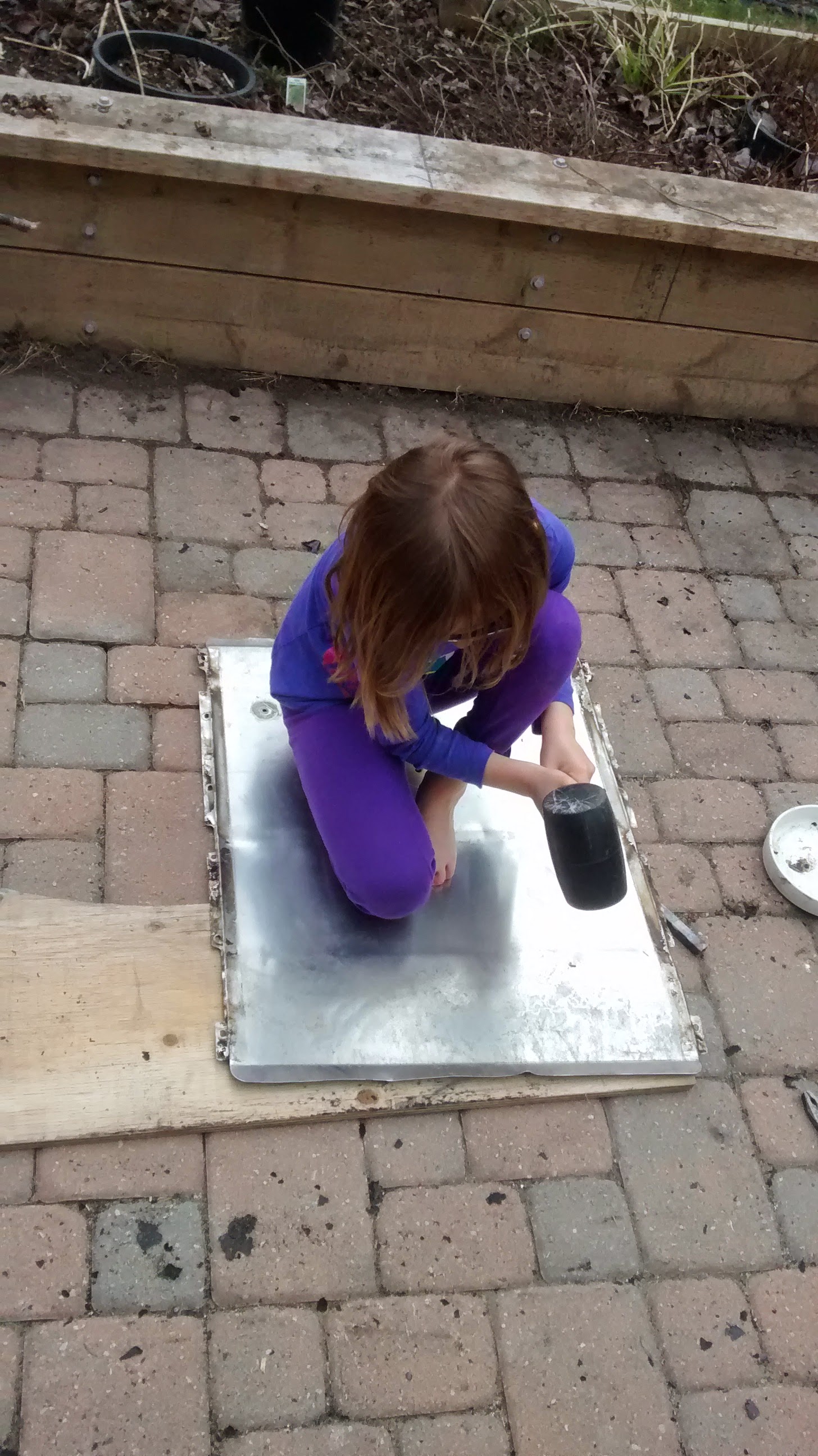
Minion 1 at work - safety glasses check... footwear?

Minion 1 at work – safety glasses check… footwear?

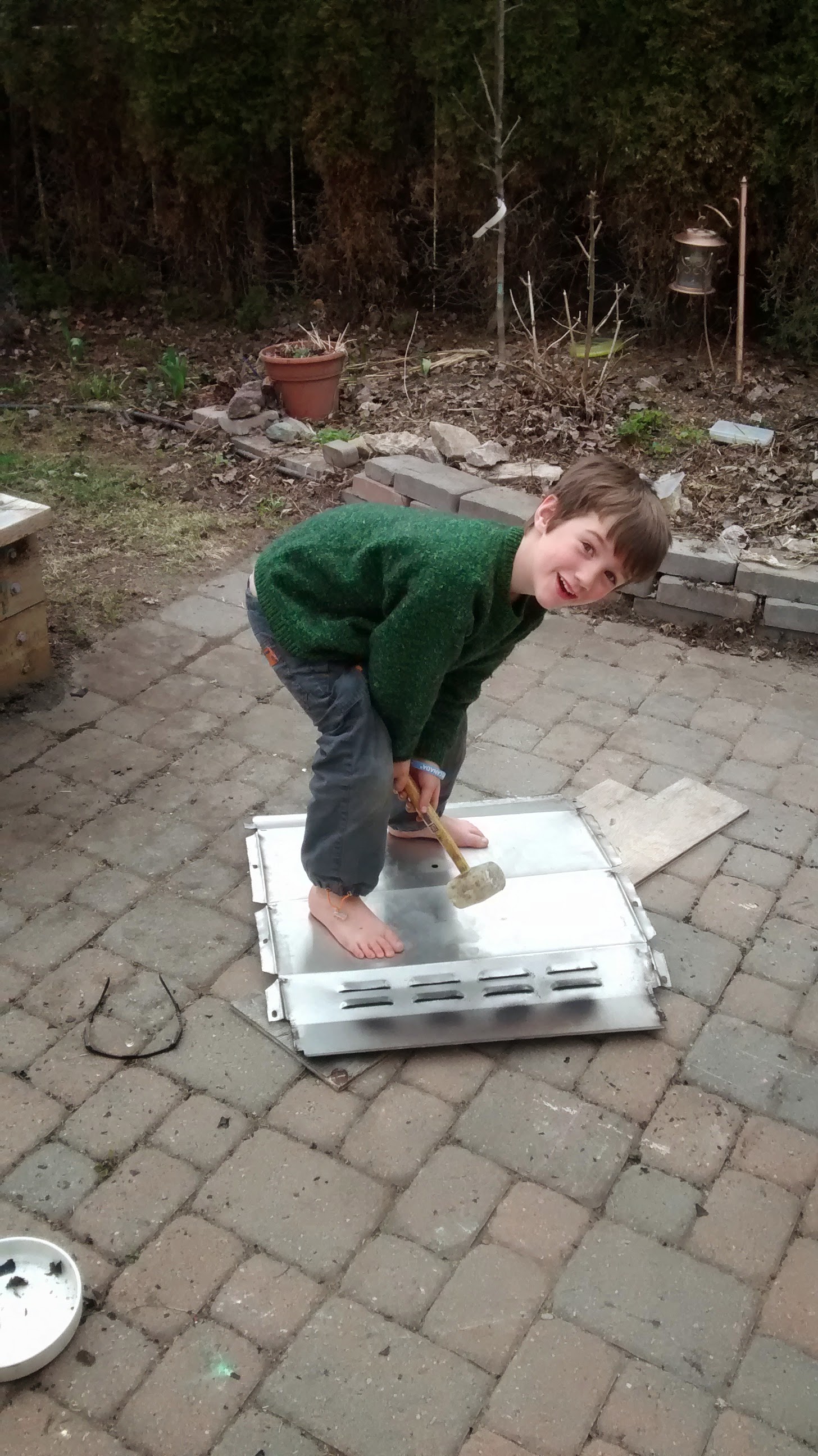
Minion 2 at work... pizza and fire - it's gonna be fun!

Minion 2 at work… pizza and fire – it’s gonna be fun!

I next attempted to finish the process with rubber mallets – assisted by the minions who are also hungry for wood fired pizza – that got us further along but not far enough.  I tried to follow up by using a ball peen hammer either directly or indirectly though a wood block… no dice.  Using the hammer directly left ugly marks and started to stretch the material – a counterproductive action, while using the wood block as the intermediary didn’t serve much more after we’d already used the mallets.

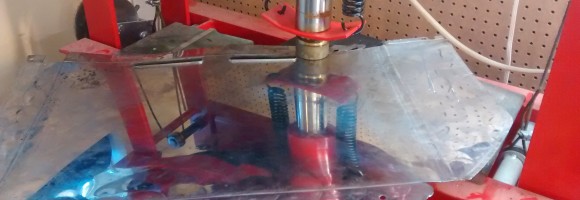
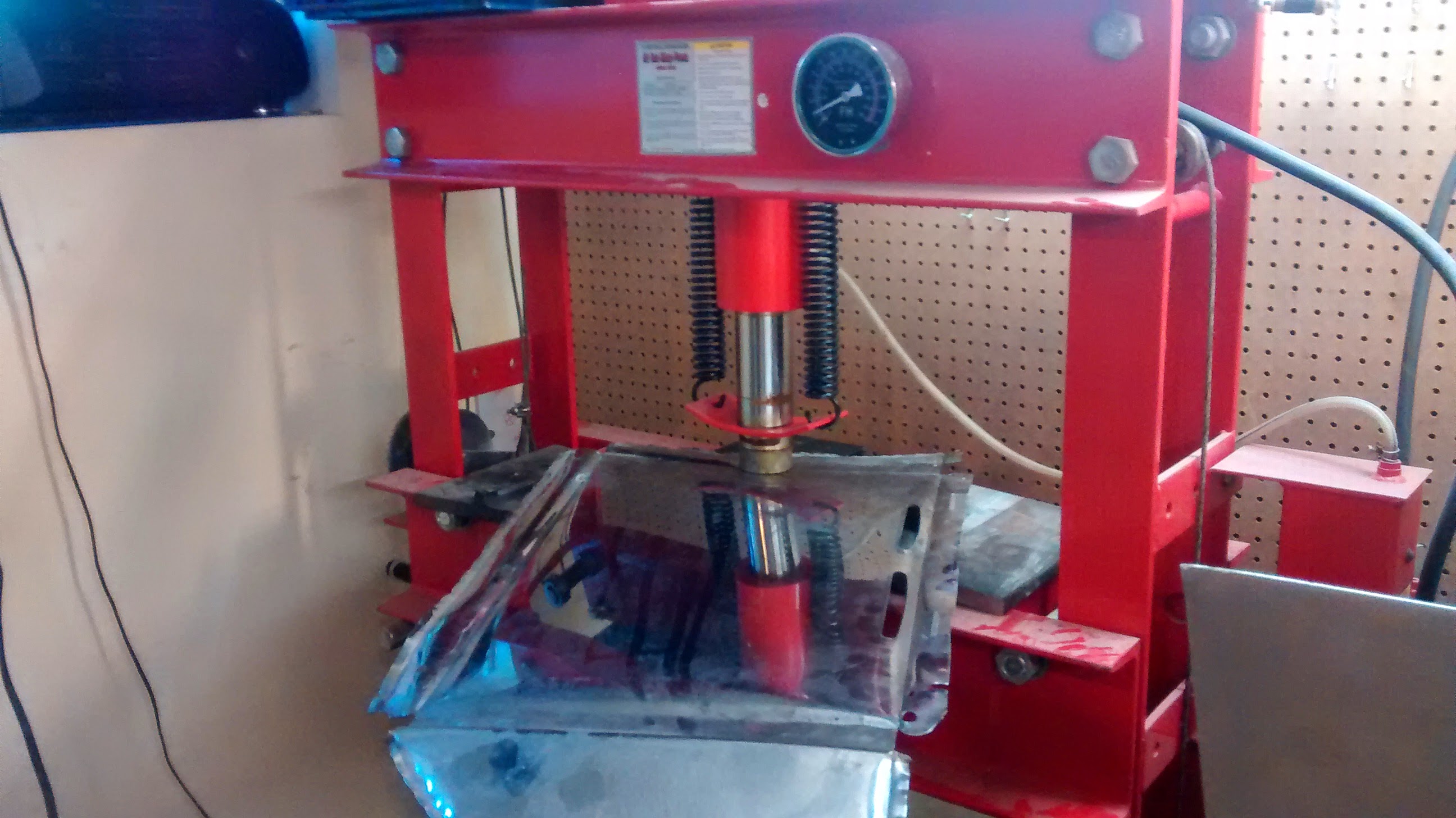
So then I hit up the 50 ton hydraulic press and it worked great.  I only used about 5 tons of force so using a jack under say a car might be an option for those without this advantage.  But hydraulic presses are reasonably priced and you certainly don’t need a 50 ton unit to accomplish this.  The sheets came out nice and flat, the seams were still visible but flat so layout should be easy after this.

Using the hydraulic press to reclaim stainless steel sheets

Using the hydraulic press to reclaim stainless steel sheets

So now I have a nice pile of flattened stainless steel sheets – mostly heavier gauge – some a bit light… some square, some rectangular and some oddities.  So my next step is to figure out what size of unit I have material enough to build… Stay tuned for more.