
By

Sweet Sorghum in Canada
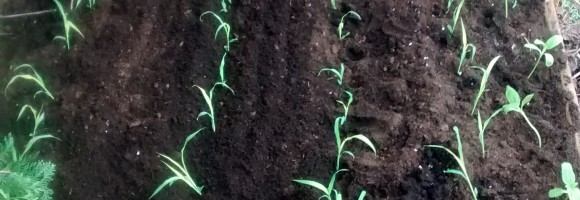
Sweet Sorghum - Dale on the Left and Simon on the right.  Dale is 3 weeks ahead.

Sweet Sorghum – Dale on the Left and Simon on the right. Dale is 3 weeks ahead.

I’ve been growing varieties of sweet sorghum for more than 20 years.  Now sweet sorghum or even grain sorghum for that matter isn’t a typical crop for Canada let alone Eastern Ontario.

But, the description in the Peter’s Seeds and Research catalog for Northern Sugarcane tickled my fancy enough to order and trial it.  I should be honest and say that the threshold to tickle my aggie interest is pretty low – but this sounded like a really cool plant, and indeed it was.

It grew well, and later towards the end of that company’s life Tim Peter’s was kind enough to send me a sample of the John Coffer refined Dale variety in spite of it no longer being listed in his catalog.   I’ve since obtained a host of different varieties to trial including a number from the USDA ARS seed bank – which included some pretty cool varieties from India with high sucrose contents – which would allow regular crystalline sugar production and not only liquid syrup yield.    I also received a few varieties most graciously from Morris Bitzer from the University of Kentucky including Simon which is supposed to be 21 days earlier to harvest than the regular Dale variety.

Now, I’ve never had an issue having any of the varieties of sorghum I have tried reaching maturity save for a few varieties which are daylight sensitive and grew wonderfully but never headed out.  The successes include Dale, Sugar Drip, Mennonite, and a bunch of ARS varieties.  But,  given how much earlier Simon is supposed to be I wondered if a cross might be in order… not only to allow for a hedging of agronomic bets, but also in order to allow for a staggering of harvest dates for processing.  So I’m interested in trying a cross between my John Coffer Dale and Morris’s Simon.
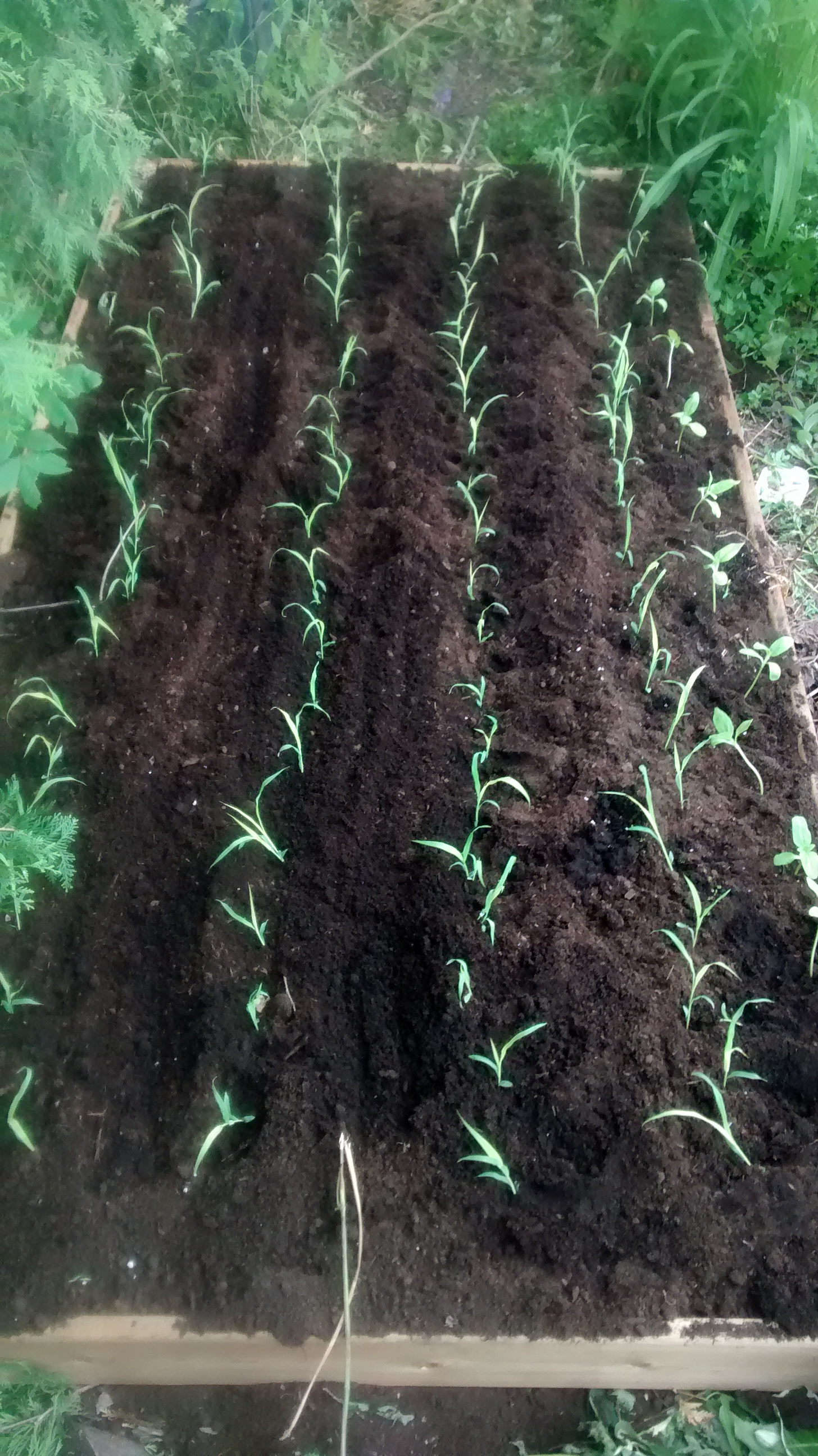
Sweet Sorghum planted out

Sweet Sorghum planted out

Anyway,  this year I decided I wanted to boost my seed stock and plant enough that the syrup harvest wasn’t just sucking on the stalks.  So I started the seed in trays – the Dale three weeks ahead of the Simon in the hopes that i might be able to overlap their flowering period – and committed to building three 4’X8′ raised beds along the back hedge.  It’s not the best of spots, not receiving full sunlight but will have to do.

Those were completed this past weekend so I transplanted the sorghum along with a bunch of AC Sierra Sunflowers fronting the beds.  Now Sierra is a cool variety in itself.  It is an open pollinated dwarf oilseed sunflower that was bred to allow farmers to harvest the crop without needing special headers on their combines.  That lowering of the capital risk bar created markets for oilseed sunflower whose development led to a transition to more productive hybrid varieties.  But for smaller scale production, I still think open pollinated varieties where seed can be kept and evolved to better suit local conditions has a lot of allure.  but I digress.

Anyway,  this year my goal is to grow out a significant quantity of Dale and Simon seed, try my hand at making a cross and also build a small sorghum press.

The Little Wonder Sorghum Mill - Inspiration for the impending build

The Little Wonder Sorghum Mill – Inspiration for the impending build

Why build a press?  Well for starters sorghum syrup isn’t a typical Canadian product – that would be maple syrup – nor is it even a northern US product meaning a fairly long trip south would be necessary to get to where Sweet Sorghum was more common.  Don’t overlook the “was” in that last sentence either – sorghum mills aren’t like one of my letterpresses or machine tools which were common and still viable commercially into the 1970s, and hence are today “obsolete” but not yet rare, sorghum presses fell out of fashion long long ago.   Moreover, I’d really like to get the three roller horizontal units rather than a vertical roller one more suited to having the mule on the walking pole, and those especially the smaller ones that are still around appear to be in very high demand.

Fortunately I happen to have a whack load of metal working tools that are always eager to be put to work – funny how that function stacking works out eh?.  So much like with the homestead grain mill build it looks like I will be engineering a modern rendition of the small end of the commercial horizontal mills over the course of the summer.  With the sorghum in the ground I’ve got to get moving… (of course there are always a few projects vying for attention but the need to be ready for a harvest is a pretty good incentive to set a solid pace).  Stay tuned…
 

By

Building the Wood Fired Pizza Oven – Laying out the material

With a stack of flattened stainless steel sheets my next task was to figure out dimensions for the pizza oven.

I started with dimensions for the commercial units I liked which was 27″ x 27″ for the interior dimension.  Recall that as an insulated stainless steel unit there is both an inner and outer. shell.

Laying out the template for the wood fired pizza oven.

Laying out the template for the wood fired pizza oven.

The standard fire bricks I am using are 9″ x 4 1/2″.  So three bricks placed long way wide gives 27″  and six bricks deep makes 27″.

To get a handle on what I could accomplish using the materials at hand I labeled each piece of stainless steel and measured them up and then set about with a pencil and pad of paper figuring out designs.

The oven shape is simple enough- half circles.  The formula for the circumference of a circle is 2 x 3.14 x radius, so the half circle shape amounted to half that or 3.14 x radius.

So, long story short,  the material I had to work with dictated that the inner shell have a diameter of 27″ wide by 22 1/2″ deep.

The outer shell would have a radius 3″ greater to provide a gap for insulation between the inner and outer shell.

Getting ready to cut out the templates with the jigsaw

Getting ready to cut out the templates with the jigsaw

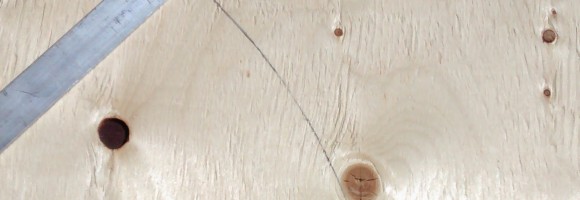
To make layout work a bit easier I grabbed a piece of 3/4″ thick plywood to make a master pattern with.  To draw the half circle I picked a piece of aluminum flat from my scrap pile and drilled a bunch of 1/8″ holes in it.  The first near the end would serve as the pivot point – when placed over a finishing nail tapped into the plywood – and other holes were drilled 13.5″ and 16.5″ further out from this point – the inner and outer curves respectively.

I used a jigsaw to cut the plywood curve out.  This then served as the template for laying out the back inner wall, the back outer wall, and the front curved piece.  One thing to take not of is that I marked out the initial curve described by the template but then added another inch to use to make tabs to bend over to provide additional structural support as well as give a place to spot weld the backs and fronts to the flat outer pieces…

Stay tuned for the next steps as we work towards a  really cool pizza oven made from stainless steel scrap.


By

A homestead wood fired pizza oven – the build begins

A few years ago I enjoyed pizza in a backyard wood fired oven at the Little City Farm B&B and since then have flirted with the idea of getting just such an oven.  That one was a Cobb oven and although the simplicity tempts me I just don’t think that material would survive for very long in Ottawa with the abundance of rain, loads of snow, and lots of freeze thaw action especially given I don’t want to build a shelter for it.

That leaves three alternatives.  Masonry stoves, but with these you get a very permanent installation that is going to cost a pretty penny. Then there is regular steel… cheap, easy to work with… but this material will rust and burn out. Then there is stainless steel… Looks good, it’s  durable and won’t rust or burn out, it should spot weld easily, but it is fairly expensive.

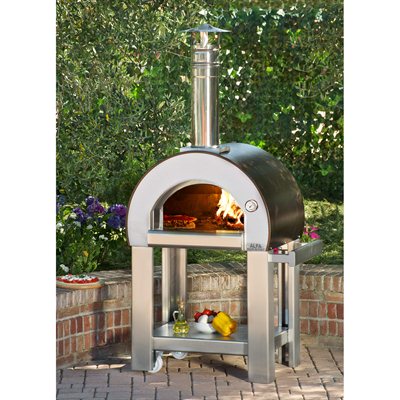
The lovely commercial mangiafuco wood oven

The lovely commercial mangiafuco wood oven

Oh, and did I mention that the Mangiafuoco oven I like is selling for $3,500 before tax? Cool oven but, uh, yeah, no. I think the oven is lovely but I don’t really want it that much…. plus truth be told it, there is an added coolness factor is having something that you’ve built yourself, and I haven’t done much work with stainless steel yet so it should present a good learning opportunity.

So, last summer I collected a load heavier gauge of stainless steel that folks were throwing away… in the form of BBQs.  See, here’s the crazy thing.  Way back when, propane gas grills were pretty much all cast aluminum painted black.  The burners would rust out and need to be replaced but the body would last and last… and if a neighbor happened to decide to upgrade and drag their old one to the curb… well those bodies made for an easy source of aluminum to cast in the home foundry.

Now though, most gas grills seem to fall into the single season (or maybe two) low end units made with regular carbon steel painted black OR much nicer and more expensive stainless steel.  I’ve  got one of the higher end models that is completely stainless steel that I managed to snag at the end of the season clear out with a further discount because it had a ding in the back of the lower housing.  With it plumbed into my natural gas supply I never need to worry about running out of fuel which is great.  I expect that I will have to swap in new burner tubes and covers at some point but apart from that can expect it to last decades.

But, it seems that there are a fair number of semi-stainless BBQs out there.  They have the visible parts like the lid and maybe the doors fashioned in stainless but the rest is made of regular cheap but rustable carbon steel…. which means… those pieces of stainless steel sheet get rolled to the curb when the bottom burns out and the owner decides to buy a new one.  So last summer I started grabbing these lids and doors when I happened to see them…. now it’ time to start the transformation from waste to that $3,500 pizza oven.

Stay tuned as the transformation progresses.  Did I mention that the  $3,500 price tag was before tax?


By

Get your tools to pay rent…

So I am being slightly facetious here but I think it is underlain by a solid point.  Tools are cool, be they for your shop, kitchen or garage – but are you getting your money’s worth?

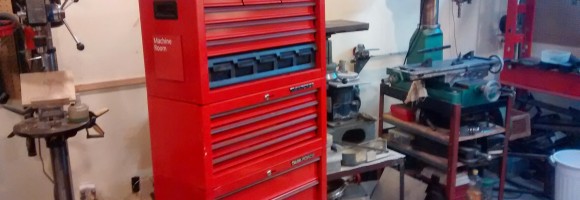
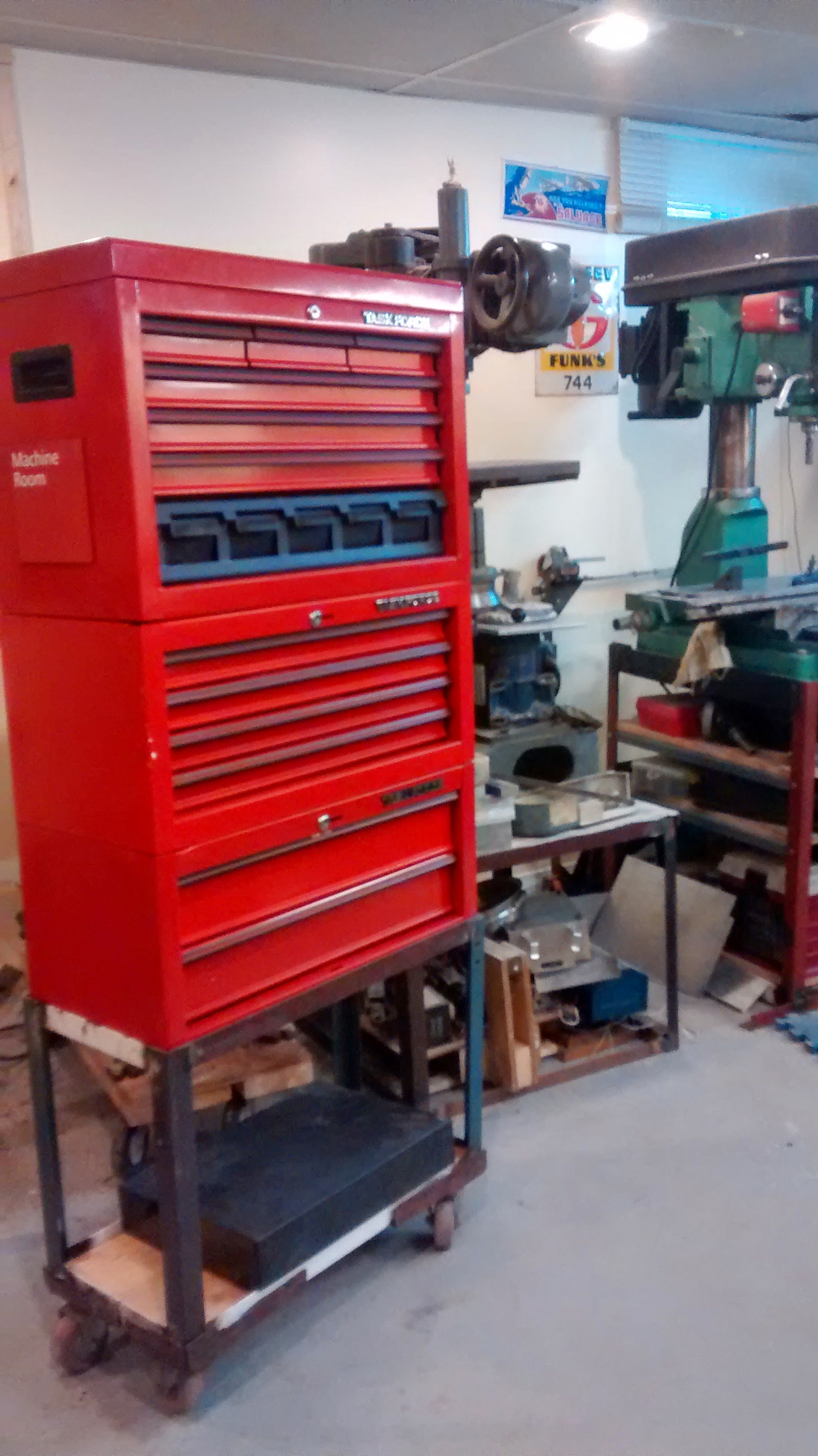
Rolling tool cabinet in the shop on its welded base

Rolling tool cabinet in the shop on its welded base

If you aren’t using your tools you aren’t just not getting the value from the kit – you aren’t getting the experience of how to use them that you should.

Now, you don’t need to necessarily do some big projects to get the tools to pay their rent.  That said, doing something like building your own grain mill for $40 worth of materials when a comparable unit is pushing close to a grand pays a lot of rent.

In my experience though, some pretty good rent payoffs can come from pretty quick and easy projects that capitalize on presented opportunities.

Case in point my $23 rolling tool cabinet. While down visiting my brother at Christmas we took a trip to Lowes to price out materials for one of his projects and a couple of employees dropped off a bunch of tool boxes in the as-is section – one was a bit dinged but the others were fine – the price $7, $7 and $9 for the upper cabinet.  Now these aren’t terribly of much use without a rolling base.

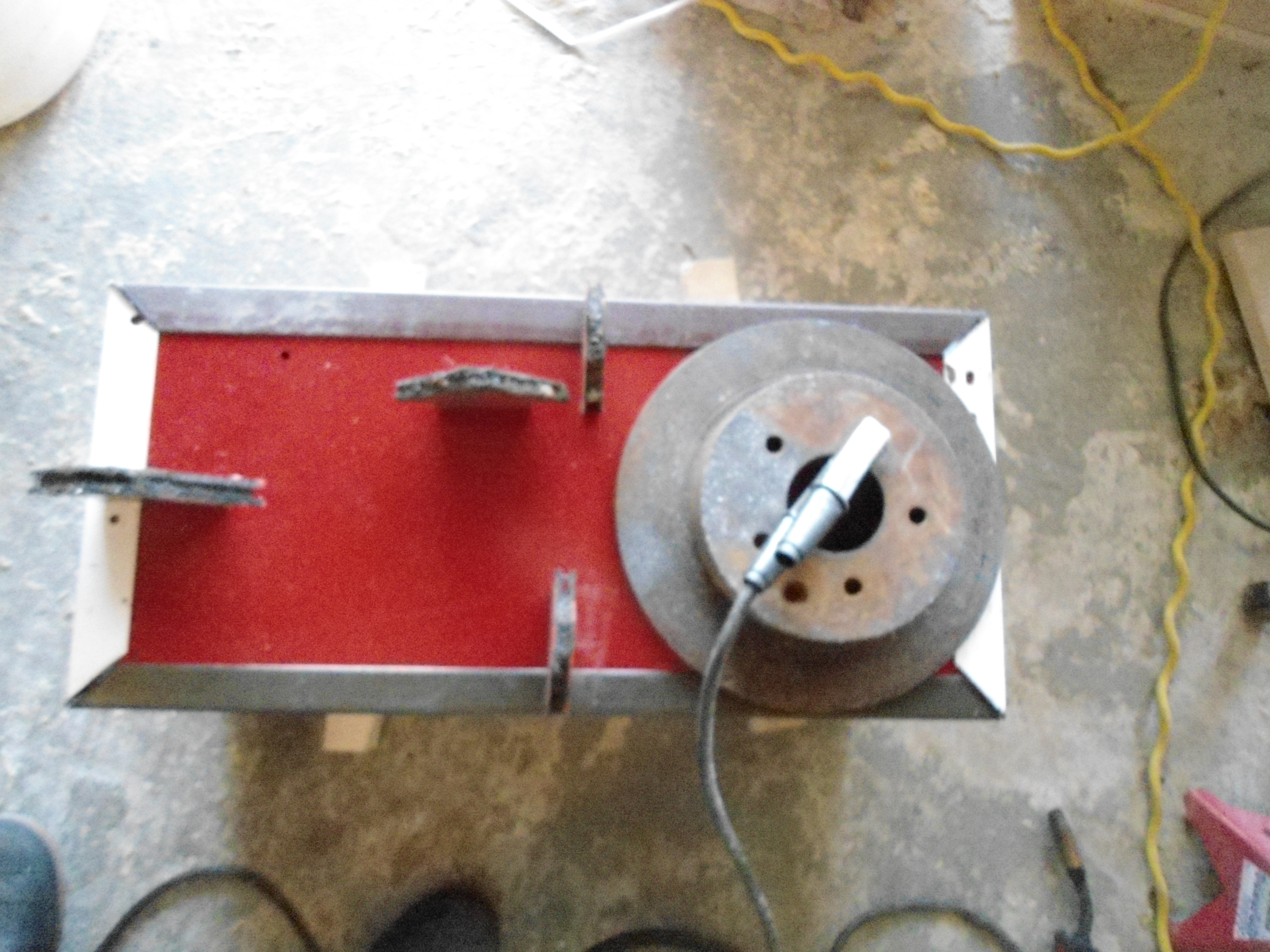
Rolling base for tool cabinet set up for tack welding

Rolling base for tool cabinet set up for tack welding

So I fabricated one from angle iron salvaged from old bed frames and a few old castors.  It was a quick job with the cutoff saw followed by some welding.  The end product wasn’t perfect but for $23 it was a pretty solid step to organizing the shop and a good payoff.

So the chop saw and welder paid their rent for at least the month… and now I’ve got to figure out how that new rolling tool chest is going to start making it’s rent payments.

By

Build a grain mill, grind flour at home

There are some great grain mills out there that you can purchase.  Both the Grainmaker and the Diamant look like great mills.

So, why would you want to build one?  I think there are a bunch of reasons.

First off, you get a great mill – one I think you’ll find is equal to those other two great options you could buy.  I don’t think you give up anything in terms of performance.  Fundamentally that is what you are after right.

The cost of the materials though is a fraction of what it costs to purchase one of the commercial mills.  Even if you have to purchase the tools – the principal ones being a welder, an angle grinder and a 3/8″ drill you’ll still likely find yourself ahead financially.

Build a grain mill

Build a grain mill

If you build more than one grain mill or already have some of the tools you’ll be even further ahead – and you’ll have the start of a nicely equipped metal working shop.

But more than that you’ll have gained the experience and insight needed to use those tools productively, and that is a pretty cools skill set to have in my book, and you’ll have gained those while building something very useful.

Now if you are a true novice to metal working you might want to tackle the tortilla press first.  You’ll use many of the same skills but turnaround is much faster.  It should serve as a good confidence builder.