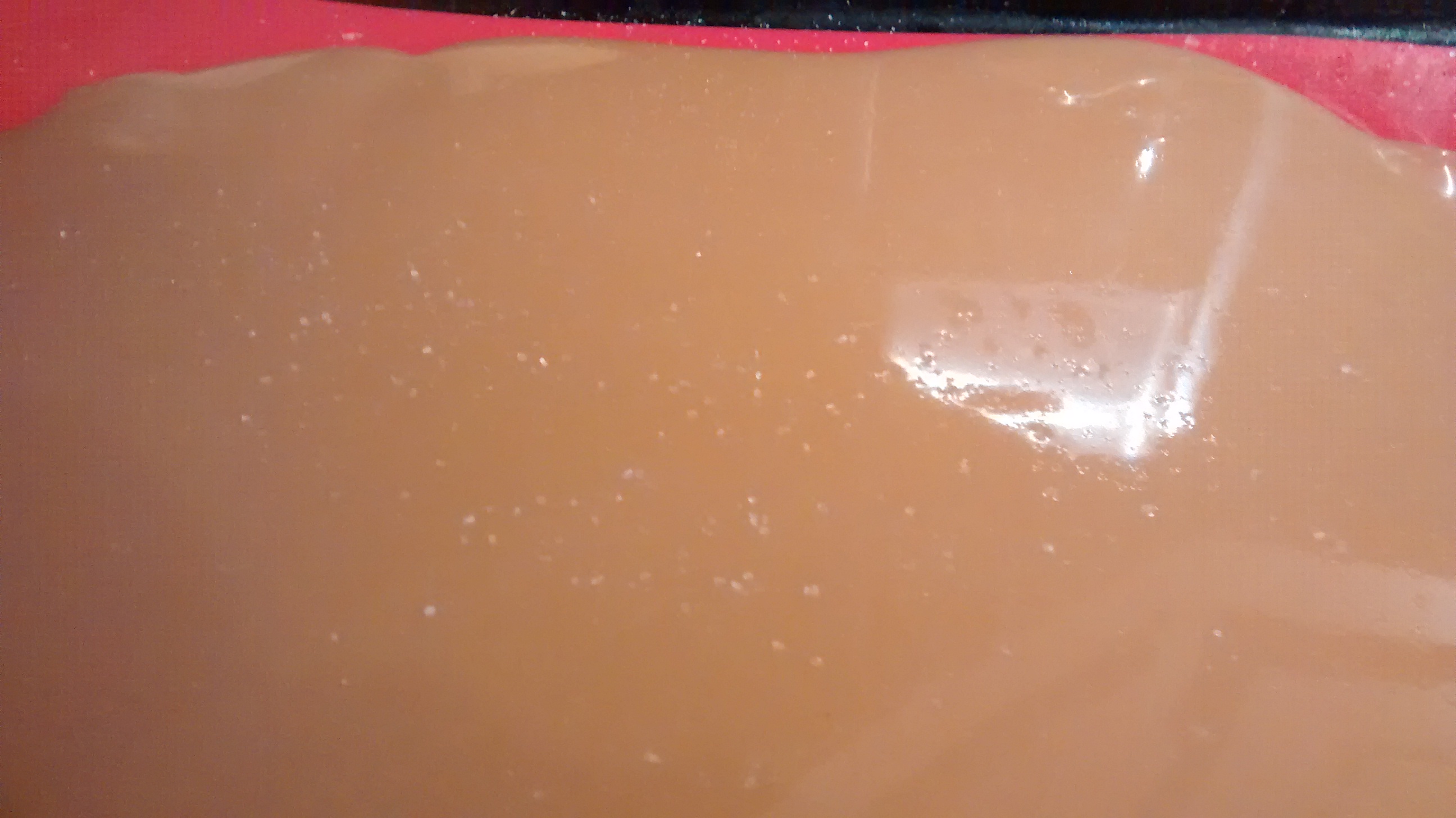
Butter toffee has to be one of the best candies out there – growing up I had a mild addiction to Macintosh toffee – if I had the choice between a candy bar and one of the Mack tartan box I’d jump at the hard and chewy later option every time. Corporate consolidation saw the Canadian version I had in my childhood disappear a while ago, and while a modern version came back out after a few years it just doesn’t measure up in my view. Fortunately homemade butter toffee has to be one of the easiest candies to produce in your own kitchen. Simple ingredients, quick to produce and no pulling required.
So if you’ve missed that original tartan candy or never experienced it – give this recipe a try.
The three stages, 1. Print, 2. Cut and Score, 3. Glue to finish
For the last several Christmases we’ve gotten a bit creative with our letterpresses – first the kids have to do their own lino-cut suitable printing block for our Christmas cards, and secondly I design, carve and print up a box to hold the homemade candy we’ll give to family, friends, colleagues and neighbors.
I find the box making to be a fun and creative process that also makes the homemade candy stand out – or at least I think so!
Christmas Tree Candy Box Template
So this year I came up with a Christmas tree design box. It actually just fits on a 8 1/2 x 11 piece of paper – so tight that the upper flap has the corners missing – but since it gets stapled closed that doesn’t really detract from it – and I wanted the maximum volume for the candy – so it seems a fair trade off.
While you might not have a letterpress you can produce these boxes for yourself. Download the image and print it out on cardstock. As a heavier weight it works well for making these boxes, regular printer paper is OK for demos but won’t stand up when filled.
Cut out around the external solid line and then score along the internal solid lines in order to allow for easy bending. Fold and glue the tabs to the back of the tree sides and your box is complete and ready to be filled.
Jigs are commonly used in industry to speed production of repeated assemblies, and there is no reason why you shouldn’t be using them in your own shop to make your life easier too.
Plywood jig for welded T’s
Now one of the key things whenever you are undertaking a project is to assess the tolerances required – I think that’s becoming less of a factor in industry with computer controlled equipment, but if you shop is like mine – pretty manual, then tolerances are a key factor. Keep that in mind when you produce the jigs. In this case I’m welding up parts for an iron and oak shelf for my brother and sister in law. It has to be square but doesn’t need to be super precise – so a quickly put together jig made from scraps of plywood is just the think to make the repeat assemblies quickly and accurately.
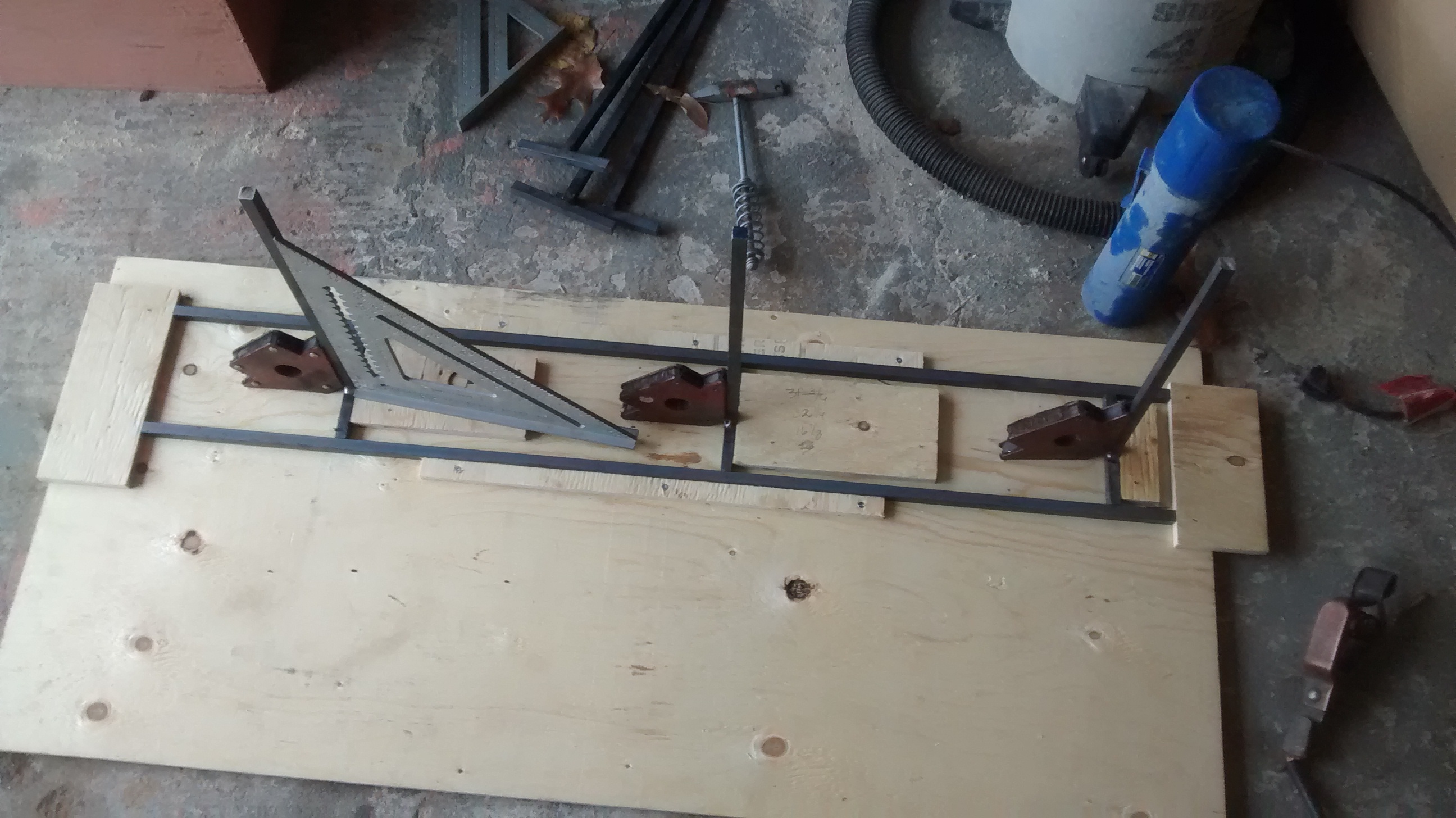
Plywood Welding Jig for table legs
While there are six T’s those are fitted into two larger leg assemblies – while there isn’t a whole lot of repeatably required with only two assemblies quickly assembling a jig to ensure that the parts get put together and are square and in the right spots is well worth the ten minutes it took to screw the plywood pieces together. The end result is that the leg assemblies were identical – and I ended up saving a lot of time and cursing because they made holding the elements in the correct space without having to double and triple check.
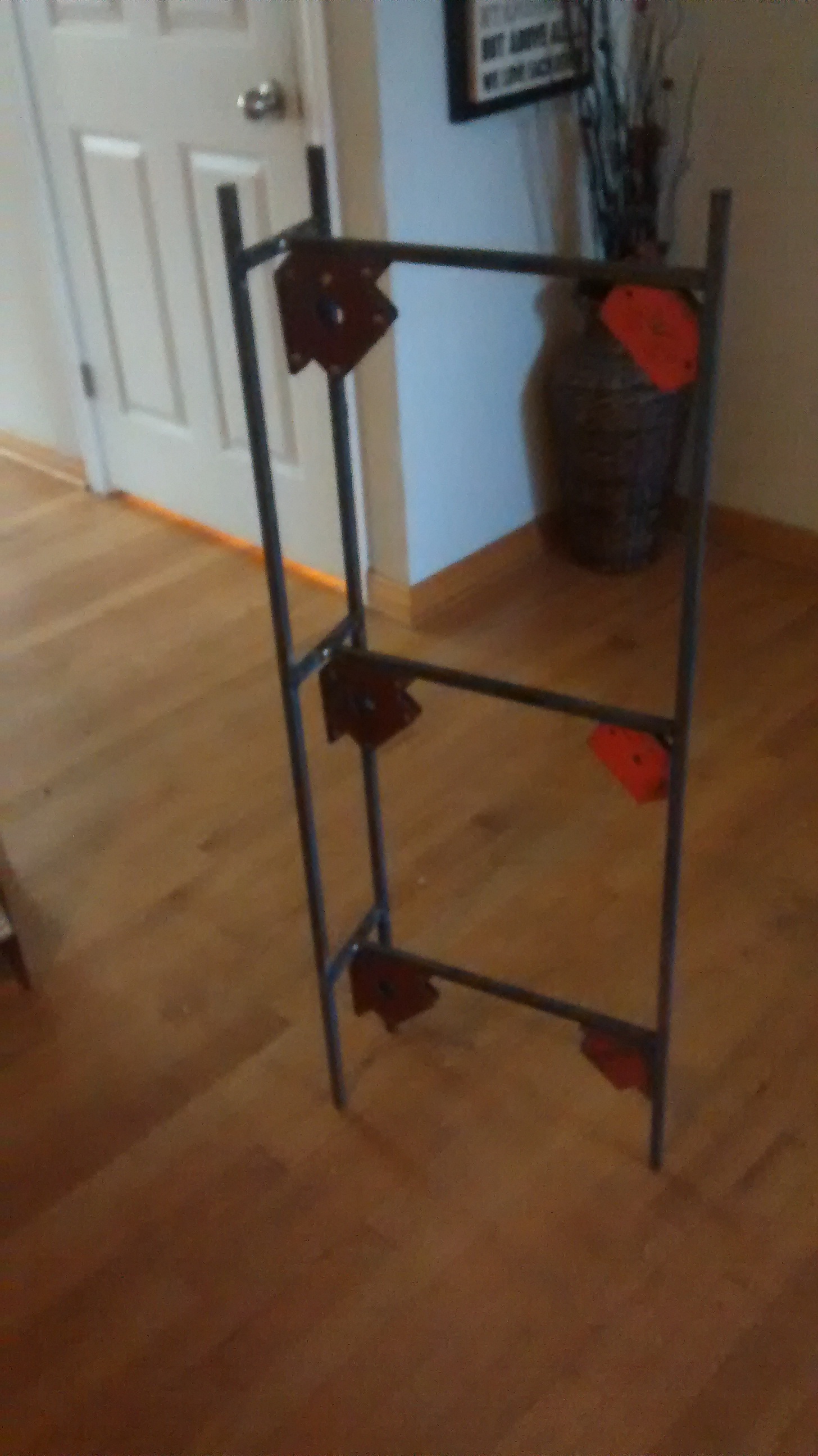
Tack welded table leg, making sure it stands square before final welding
Now, wooden jigs for welding are not necessarily long lasting given wood deteriorates when heated to a temperature that will melt metal. Sure, but you probably aren’t turning out hundreds of assemblies so this is a bit irrelevant, and the speed, ease and low cost offered by using wood more than offset the limited life-cycle of flammable jigs.
So, next time you have a welding job consider using jigs in your setup if it’s appropriate.
I was recently asked for a proposal on how to increase the amount of nut milk expelled from a mix of the remaining nut pulp after the free liquid had drained off.
Nut milk press concept
Here’s my first go at a design formulation. The key here is to apply pressure to the pulp to force out the remaining liquid. There’s a couple of ways to go about that but a lever is probably the easiest and most sanitary with out special provisions. There are alternatives though – you could for example use a car jack for greater pressure – but I’d tend to want to strip off the regular grease and then grease the screw up with a food grade product.
First I’d start with the press basket – a tall stainless steel container. Tall containers offer the same volume as wider shallower ones but because the press disk will be smaller in size the pressure applied to the disk will be greater. Think Pounds Per Square Inch (PSI) – bigger disk more square inches therefore less pressure for the same force. There could be some tall mixing bowls or maybe one of those stainless steel kitchen cutlery containers.
Now the press basket needs holes in it to allow the expressed liquid to leave the vessel. Holes can be a pain to drill on a round surface – a much faster route is to use a dremel type tool with the small abrasive disks to cut slots along the side of the basket – I used settled on this technique when building the electric countertop brewing system after struggling with drilling.
A press disk – preferably some good hardwood – oak or maple would be my choices. Cut the disk so it fits into the press basket – shouldn’t be a tight fit.
Then the frame for the press – probably 2x4s – two frames held appart with other pieces of 2×4. A press pin in the back – probably 3/4″ steel pipe. A lever – preferably hardwood but for a start go with another chunk of 2×4. have the lever press on a block – probably a 4×4 (or two pieces of 2×4 screwed together) that sits on the press disk. You may need a couple of lengths of these depending upon how much you get your material to compress and the travel of the lever.
The press basket should sit in a pan or pot to catch the expelled milk – maybe on a wooden riser, and that pot should probably be supported with some pieces of 2×4 between the press frames.
The only question here would be if the unit would move too much with the pressure from the lever – I don’t know how much effort would need to be applied. If the lever didn’t work I’d move to a car jack from the junk yard cleaned up.
There are loads of different ways to start a fire – but one of the neatest ones has to be with a fire piston. Matches and lighters are well known, using electricity… well that isn’t that unusual and flint… well that is pretty well understood too, but starting a fire with compression – especially the compression that you can generate with only your own force – well now that is different. That latter method – compression is exactly the means that a fire piston uses.
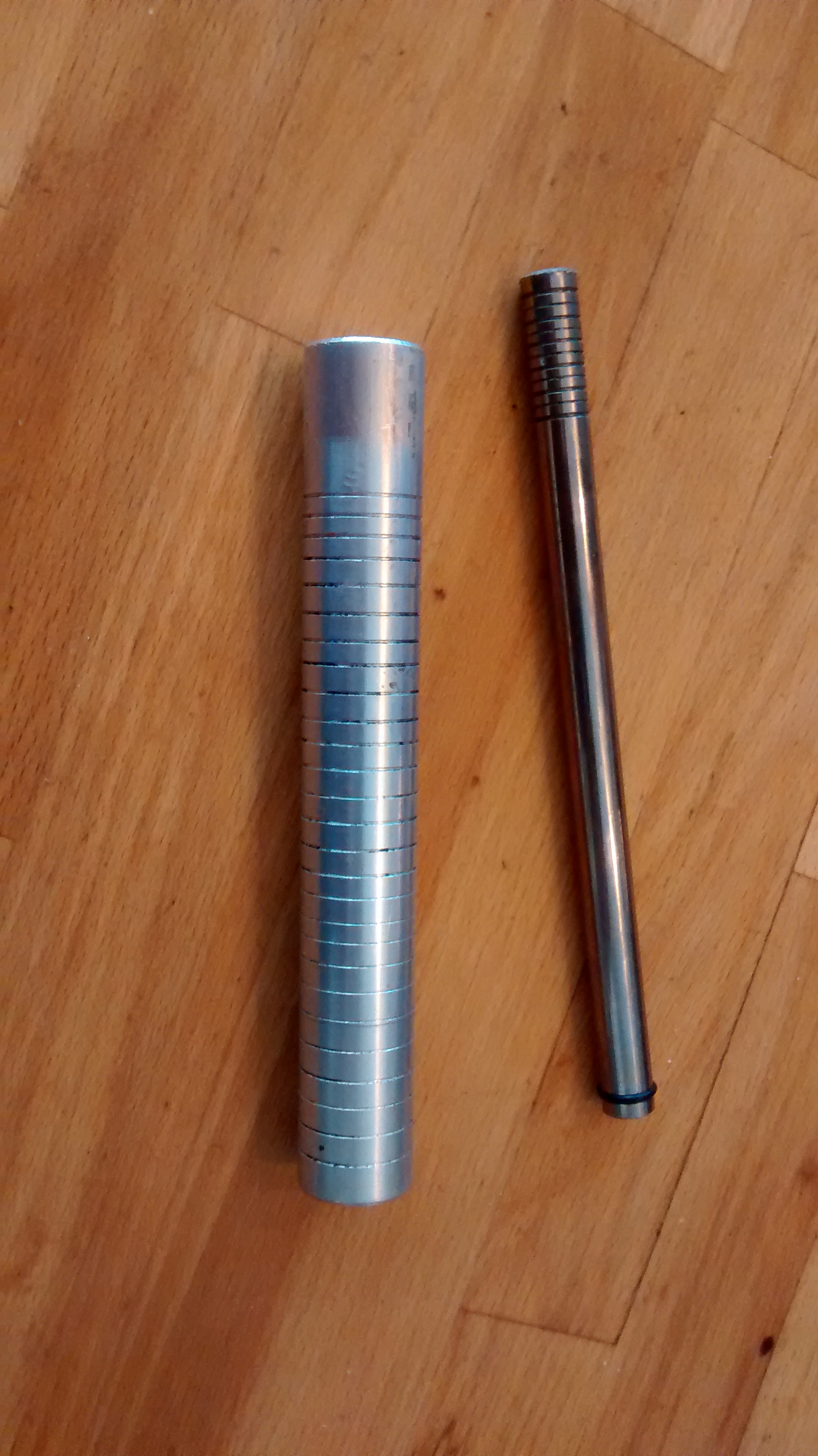
If you’ve got a few tools you can easily make your own setup in a couple of hours. I used an aluminum round for the body and bored it out so that a rod fitted with an O-ring to improve the seal would just fit. The piston has a small cup machined in the end to hold char cloth and that’s it.
For those not familiar with char cloth it’s cotton that is carbonized to become great tinder. It’s simple to make too. Wash out a tin can put in some old cotton material – like bits of t-shirt, put the top in if you have it and then cover it all with aluminum foil. The idea here is to keep air out – you want to char not burn the cotton. Put it on a BBQ burner or in a campfire and keep heating it until smoke stops emanating. Then cool it before removing the foil.
Notice cup in the end of the fire piston for the charcloth
Now when you use the fire piston you’ll put a bit of the charcloth in the cup of the piston, slide the piston just into the cylinder and then holding the cylinder slam it down on a hard surface to drive the piston up. Quickly remove the piston and you should find the char cloth has an ember ready to be gently fanned into the start of a fire.
It’s a cool way to start a fire, and a good way to come to appreciate the value of a lighter! Have fun and safe machining.
Fresh pasta is a feature of high end Italian restaurants – and with good reason its flavour and texture blows away the dried competition. Underlying that foundation to a great meal though is the reality that making pasta at home is easy, quick and fun.
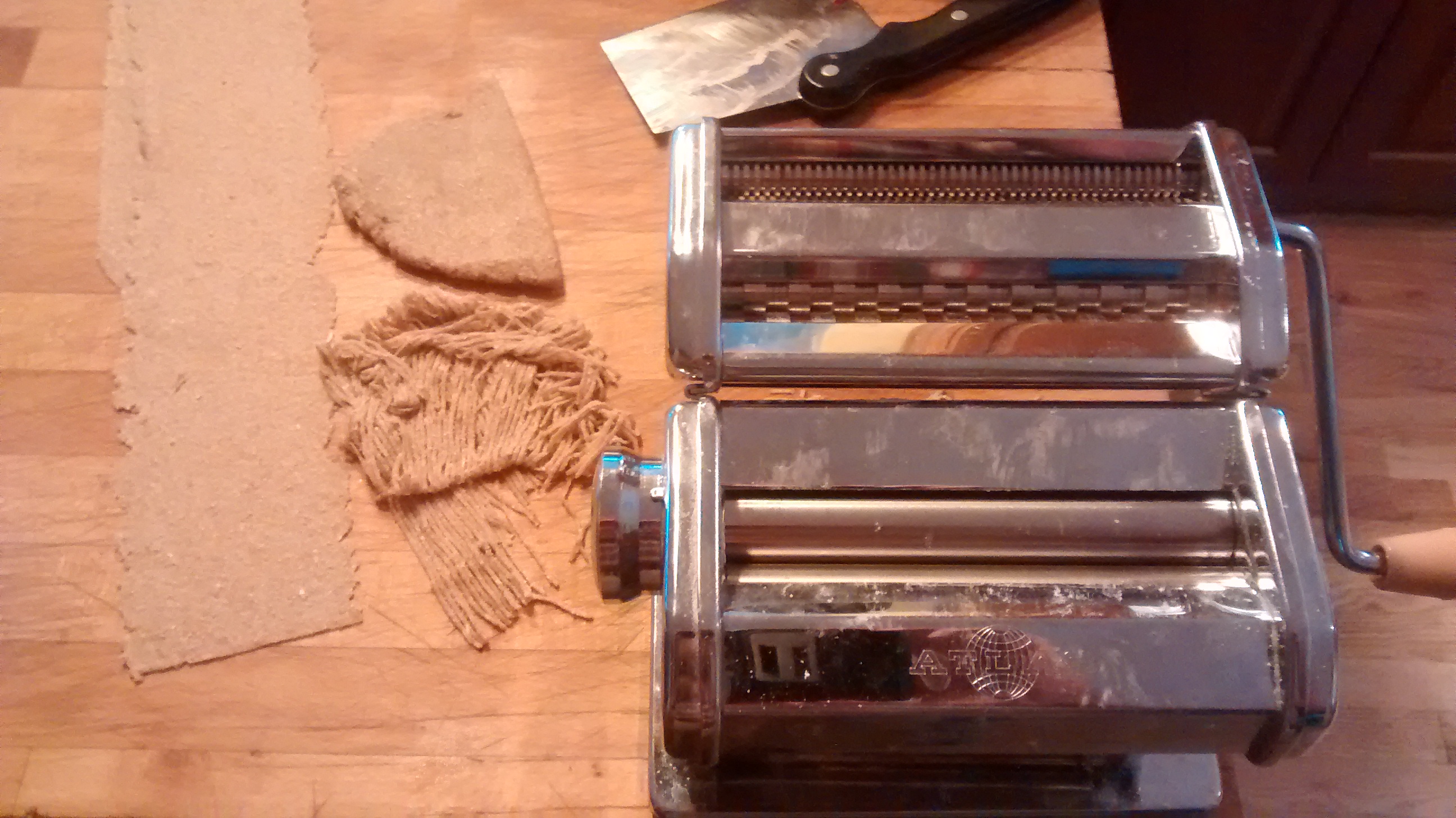
You’ll need a pasta machine – here we’re making rolled pasta not the extruded sort (that’s for another day). These are low cost, I picked up one recently for the cottage on special for $20 and generally come with the main rolls whose gap can be adjusted as well as spaghetti and linguine making rolls.
To use whole wheat flour – I grind mine in the homestead mill for the freshest flavour – you’ll need to increase the hydration compared to using most commercial flours – so this recipe adds an additional egg to the dough. While you can do the kneeing by hand a stand mixer makes life very easy and I would find it hard to go back to living without one in my kitchen.
Homemade whole wheat pasta with garden fresh sauce
The other thing to bear in mind is that while the overall process doesn’t take much time from you (particularly if you have a stand mixer) it can’t be rushed. For the dough to be rolled out easily it needs to be left for a couple of hours in the fridge. So make the dough in advance and toss it in a ziplock in the fridge – for a few hours or a couple of days.
When you are ready for your fresh spagetti or linguini put your salted water on the stove to boil and generally I find that by the time the pot is boiling – under ten minutes for me – the pasta is ready to be dropped in.
Cooking time for fresh pasta is significantly less than for the dry version so keep that in mind when timing the other components of your meal.
I love the slow cooker. It makes great meals incredibly easy. If you are busy you need a slow cooker, or a couple. There are many great recipes producing tender melt in your mouth meals from cuts of meat that would otherwise be tough.
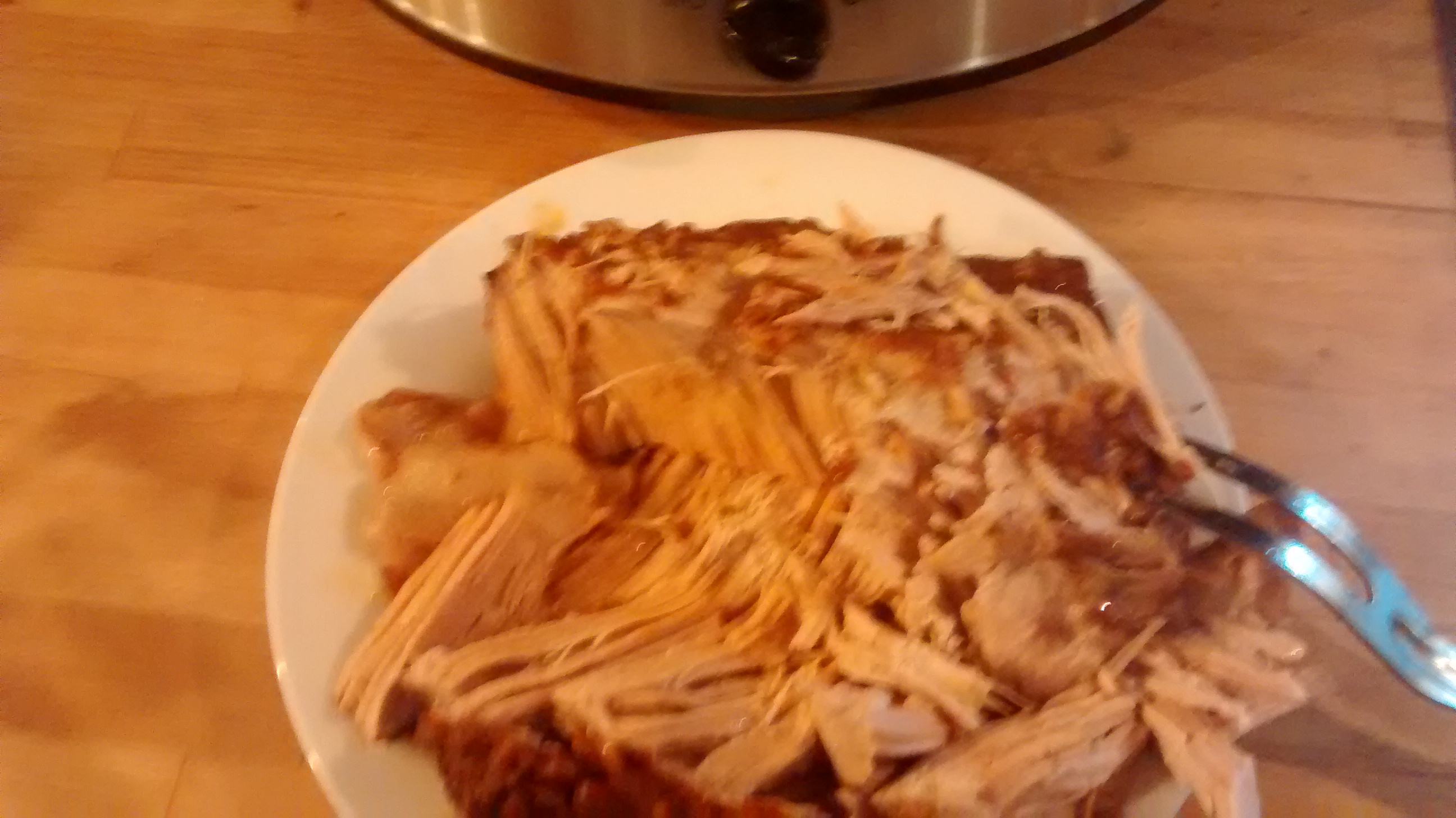
With garlic, ginger and Asian sauces this is a great take on slow cooked pulled pork and it goes great with Chinese steamed buns.
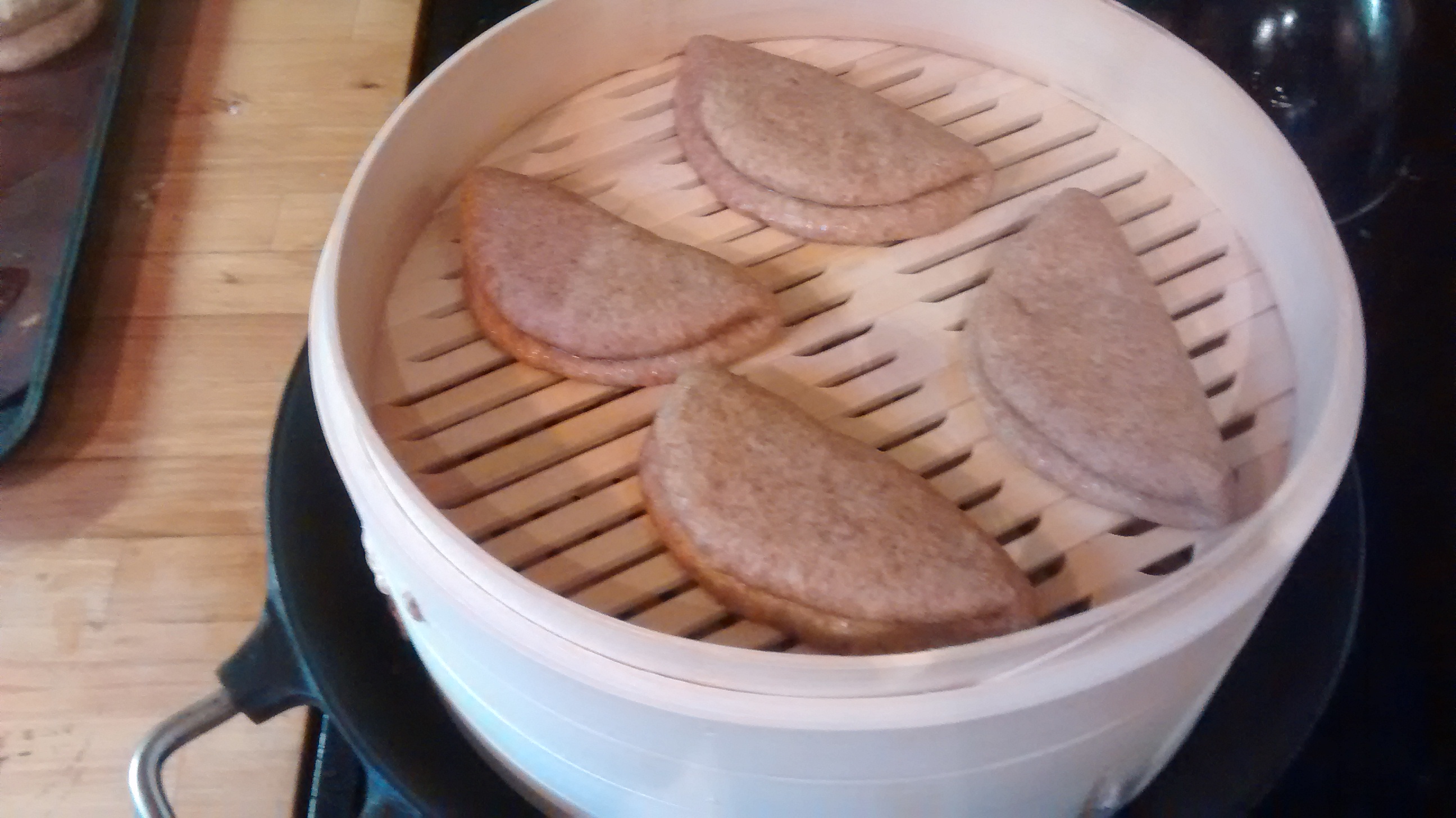
Sometimes it can be a challenge to get light and airy buns when baking with whole extraction whole wheat flour – but steaming makes it a breeze. These buns are the perfect thing to stuff with slow cooked pulled pork or other meat filling. Give them a try and you’ll be sure to add them to your baking repertoire on a regular basis.
Try to get the freshest whole wheat flour you can manage. Home ground is best but otherwise look for a supplier that can ensure the flour hasn’t been sitting around for a while. But, if you can pull off this recipe (and you can) you can build your own grain mill using these instructions.
Ahhhhh, Autumn. Leaves start turning and the peak of the harvest comes in. It’s a time of abundance – but translating this brief period abundance before winter sets in takes a bit of work – especially if that abundance truly is abundant.
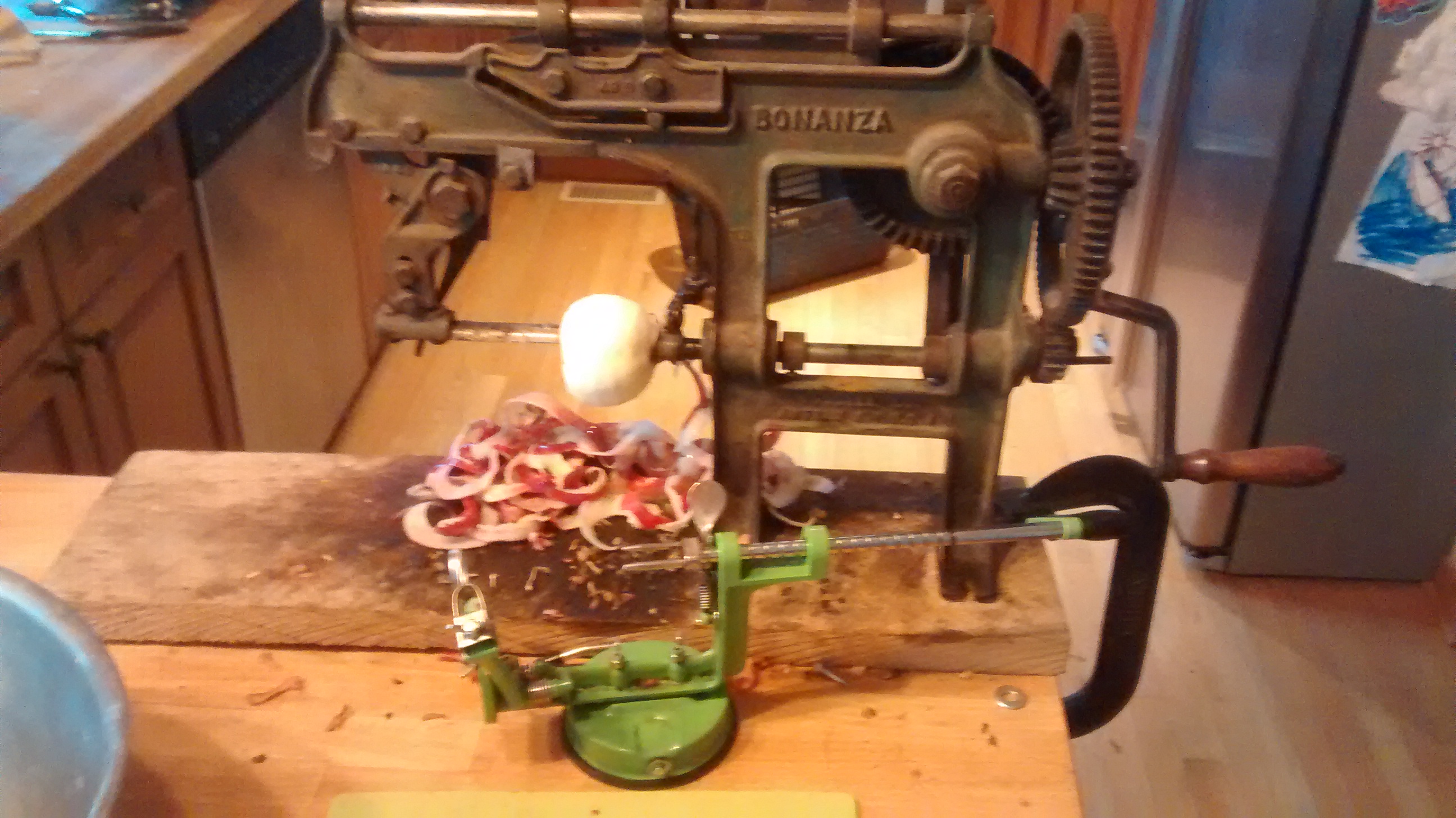
Old and New Apple Peelers
For our family apples play a big part of that fall harvest period – save for those years where a late frost kills the majority of the blossoms. We get apples not only from our own trees but from those of our neighbors, and in good years we get loads of apples. That was the case again this year, which is great since this is the second year in a row that there was a crop failure for blueberries around our cottage.
But, how do you get bushels of apples once picked from the bins into shape to last? Well, as with so many things efficiency is the key – and that translates into both strategy and tools.
Steamed apples ready for processing into apple sauce
From a strategy standpoint gleaned or home harvested apples aren’t the perfect orbs you see in the grocery store where a huge amount of culling has taken place. That means the apples you pick will include perfect ones as well as misshapen ones, bruised ones and tiny ones.
I save the best for fresh storage, the next grade of nicely sized ones get peeled and sliced to be frozen, dried, or canned as sliced apples. Next along the line are those apples which have a bit of decay which I’ve cut out, misshapen ones and small ones these end up going for sauce or cider. Cider and sauce is also the outlet for the better apples once I’ve filled the freezer and pantry shelves with sliced, dried and spiced apples.
Apple sauce from the Victorio food mill
You can do that by hand, but in any volume you’ll need some solid tools. An apple slicer is key here – now I love my Bonanza apple peeler which is in my opinion the apex of hand cranked apple peeler development, even if that apex was achieved a couple of generation ago. I started with a more modern hand cranked unit – and it’s a good stop gap – better I think than the Reading 76 I also have. The modern unit is low cost and is an investment that will pay off very quickly in improved efficiency.
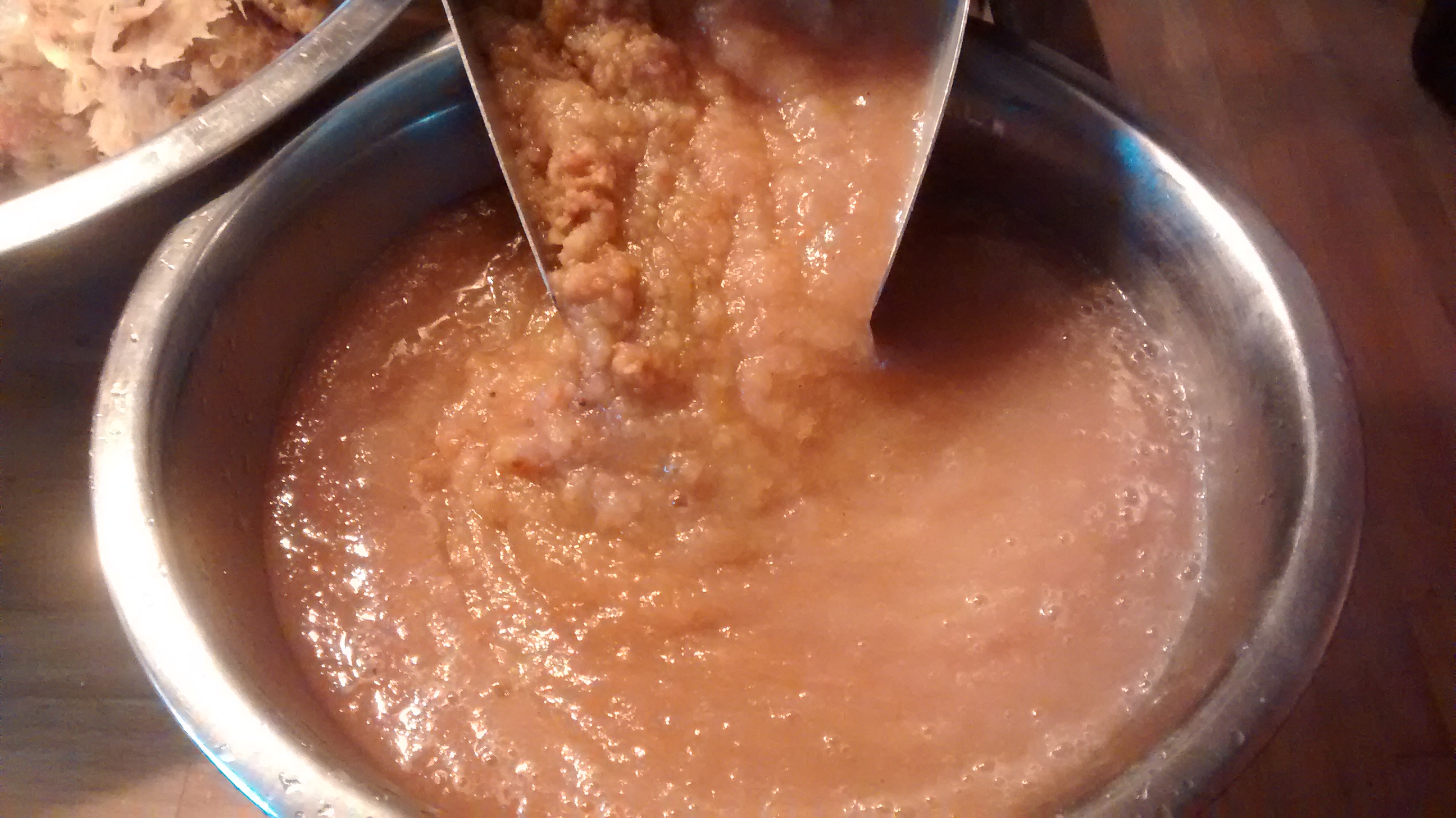
For apple sauce – my Victorio food mill is awesome – steam the apples until soft and the throughput is fantastic – and sauce makes great fruit leather!
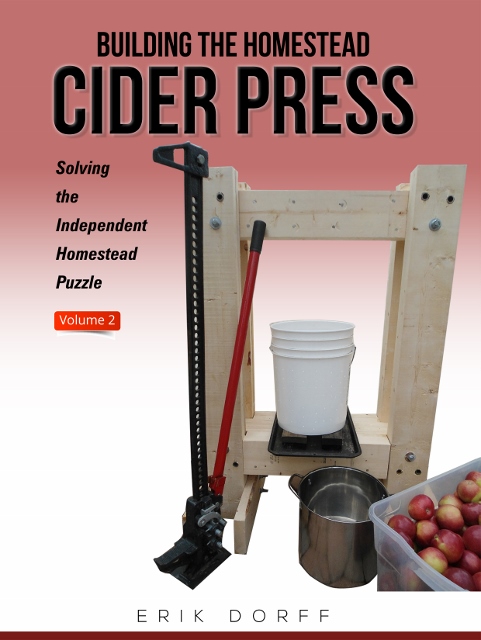
Apple cider – both fresh (and canned) and fermented to hard cider, is truly ambrosia, and apple cider syrup makes for a great addition to a lot of recipes. It’s also easy to make when you have a cider press – commercial ones can be pricey but homebuilt ones can be readily assembled and come at a low price point.
It’s a bit of work putting the harvest down – but the bounty will pay off through the year with readily available healthy food at the cost of the effort to put them down. It’s a pretty good deal in my opinion.
Many great styles of bread have fantastically chewy crusts which can seem difficult at first to replicate at home. The secret is steam. Commercial ovens use steam injection which home ovens lack.
Eco-mister
But there is a cheap and easy way to get those chewy crusts at home – air charged plant misters. Unlike the hand pumped sprayers and misters the air charged ones see you pump the air/water bladder with air and then when the trigger is pressed releases a large volume of fine mist. Compared to the hand pumped versions you get more volume and a finer spray.
There are a number of variants on the style, but the one I use and Iike is the Spraymate which I also see marketed as the Eco-Sprayer. It comes as the spray unit alone and sees you use a soda bottle as the reservoir. I picked it up from Princess Auto (the Canadian version of Harbor Freight), but it’s also available from Amazon for $11 or Lapond though I see it’s priced there for $14 which is about three times what I paid for mine.
To make those great chewy crusts I preheat the oven to temperature, charge up the mister, quickly open the door and quickly mist the interior of the oven. Then I allow a minute or two for the oven to come back to temperature open the door again slide in the sheet with the bread and do a second misting of the interior of the oven. While you could open up the oven later and mist again I usually don’t bother.
The result, awesome chewy crusts on things like baguettes and sourdough loaves every bit as good as that which you’d get from a professional bakery but for a fraction of the price and without ever having to leave home.
Publisher of high quality how-to books for homesteaders and preppers which help you gain the skills and tools needed to help empower your independence.