


By

Essential Power Tools – the table saw
We’re onto tool number five this week and that’s where the table saw fits in for me.  If you are working wood – and you should  – and are doing a lot of cutting or require a significant level of accuracy the table saw stands well above the circular saw that holds the number two spot on  the list.
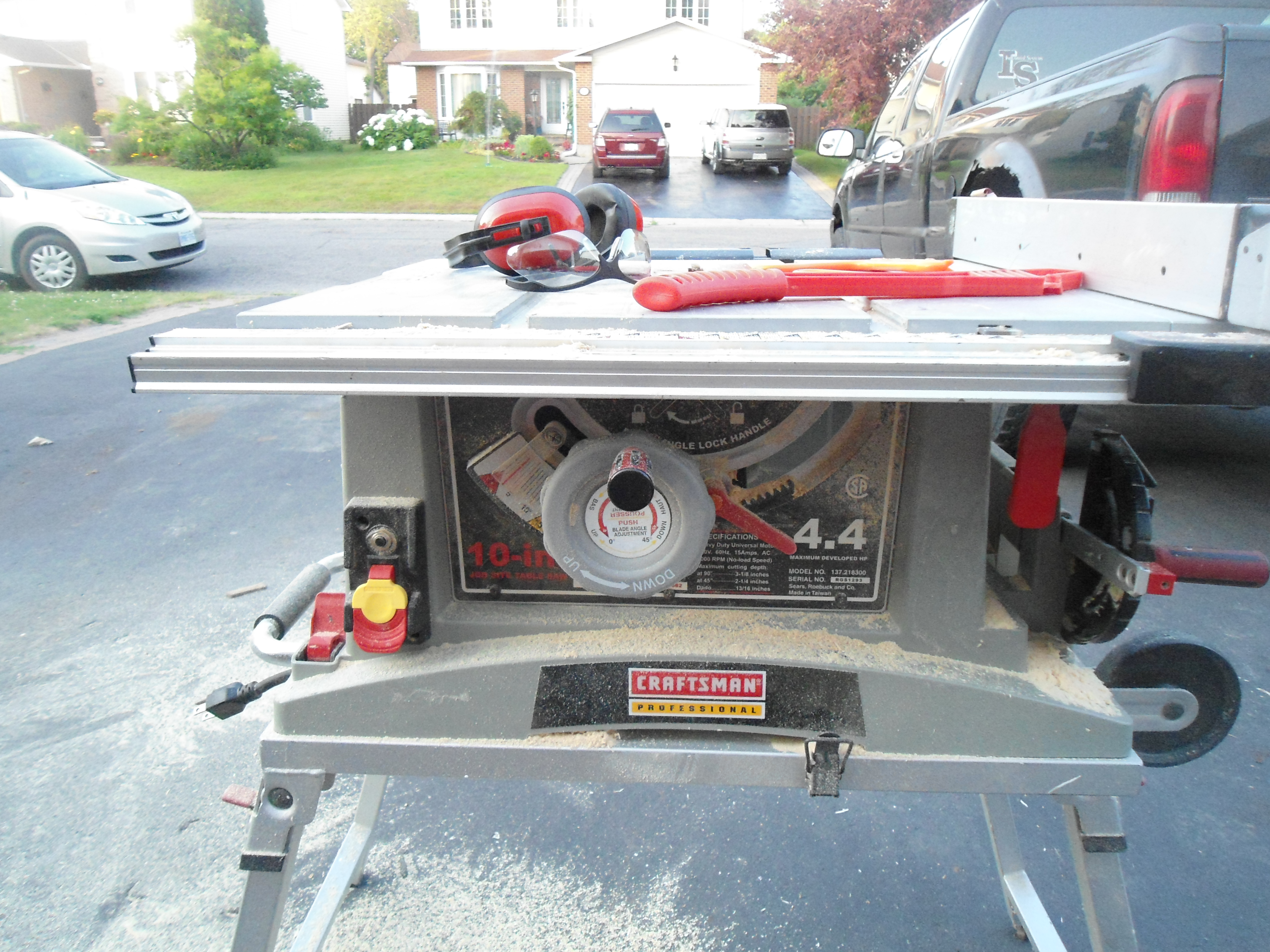
Craftsman contractor table saw

Craftsman contractor table saw

Now my table saw is a  craftsman contractor saw model.  Now, I chose the “semi” portability of the contractor saws because in the winter it sits in my basement workshop but as soon as the weather improves it gets moved into the garage – and when it’s getting used is placed in the driveway putting the dust outside.  It’s also been taken to projects at other homes.  I say semi-portability because it is awkward and is a good lift.  Now if you only need to roll it around on its wheels – it really is an easy move.  BUT, the heft does equate to some really solid construction – and that is key here.  DON’T bother cheaping out and getting a small wobbly table saw with a crappy fence – stick to your circular saw until you can afford to get a good saw.  As a reference point, the Craftsman I have runs something north of $400.  For my purposes it is the best compromise between accuracy, portability and price.
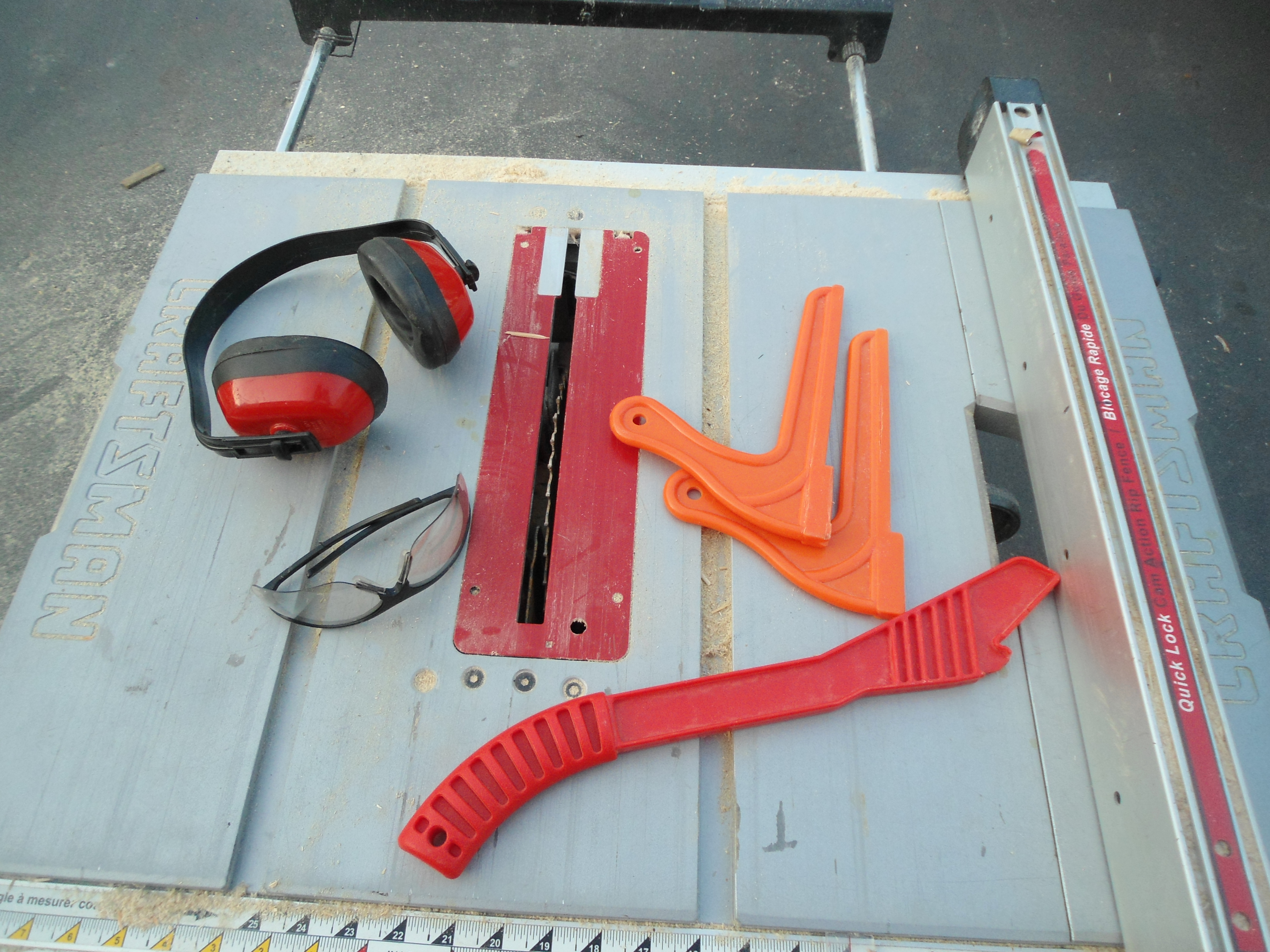
Push sticks, hearing and eye protection - not optional parts of your kit

Push sticks, hearing and eye protection – not optional parts of your kit

Now there are a few not so optional accessories you need along with the saw – the hearing and eye protection you should already have – but you will need some push sticks.  Push sticks are essential when you are working close to the blade.  You can cut these yourself, but purchased plastic ones are cheap and I particularly like the ones that have a grove in the lower surface which allows me to get better purchase on the material.

Now,  you’ll note that I don’t have the blade guard in place in the photo’s and videos.  Having an unguarded blade is a risk that I am willing to run – and it is a risk.  I run it in part because a significant amount of my work involves cutting blind groves in material.   That said, I am very careful around the saw, and don’t work with it when I might be tempted to be complacent or in a rush.  If you aren’t doing that type of work and prepared to accept the same elevated risk profile leave the blade guard in place.

Combination roller stand - a near necessity to go with your table saw

Combination roller stand – a near necessity to go with your table saw

If you are working with longer or larger materials – sheet goods or lumber you should probably get a roller stand that will allow you to avoid struggling with acquard material – and you don’t want to make a risky move around a saw blade.

My saw has found use building furniture, buildings and of late has seen a lot of work cutting materials to produce bee hive woodware.   It wasn’t cheap, but it certainly is a pleasure to use good tools – and it has paid for itself several times over.

If you don’t already have a table saw consider investing in one to add to your workshop as a means of empowering your independence.
By

The essential power tool – the corded hand drill

Welcome to “Tool Tuesdays”.  In an environment where everyone seems to have a top ten I thought I’d add my own – but since it’s tools we won’t be stopping at ten.

Without question I think the must have power tool – regardless of how much work you do – is the 3/8″ corded drill.  It’s really a slam dunk given how much use it is likely to find in anyone’s home, and how much effort it will save compared to doing the same job by hand.  At the same time a good unit is low cost – you are looking at less than $50 for a unit that should serve a home shop well for years – and on sale the price might fall to half that!

Now, what exactly do you need to accompany the drill to get the most out of it?

A twist drill bit set - note the reduced shank diameter on the 1/2" bit to fit the 3/8" drill chuck

A twist drill bit set – note the reduced shank diameter on the 1/2″ bit to fit the 3/8″ drill chuck

Well, for starters a set of regular twist drill bits.  Don’t go super discount here – they will just frustrate you.  You don’t need to buy pro grade bits but pretty good quality drill bit sets come on sale at attractive prices fairly frequently – pick one up.  Ideally you’ll be able to get a set with a range of sizes – which generally come with more of the small bits which break more frequently.  If you can only afford a set of bits with one of each size up to 3/8″ or 1/2″ (which if you have a 3/8″ drill will need to have a reduced diameter shank) get a package of 1/8″ drill bits which I find is the best all around pilot drill size.  Remember if you are drilling metal you’ll want to get a can of oil to lubricate and cool the bit while drilling.

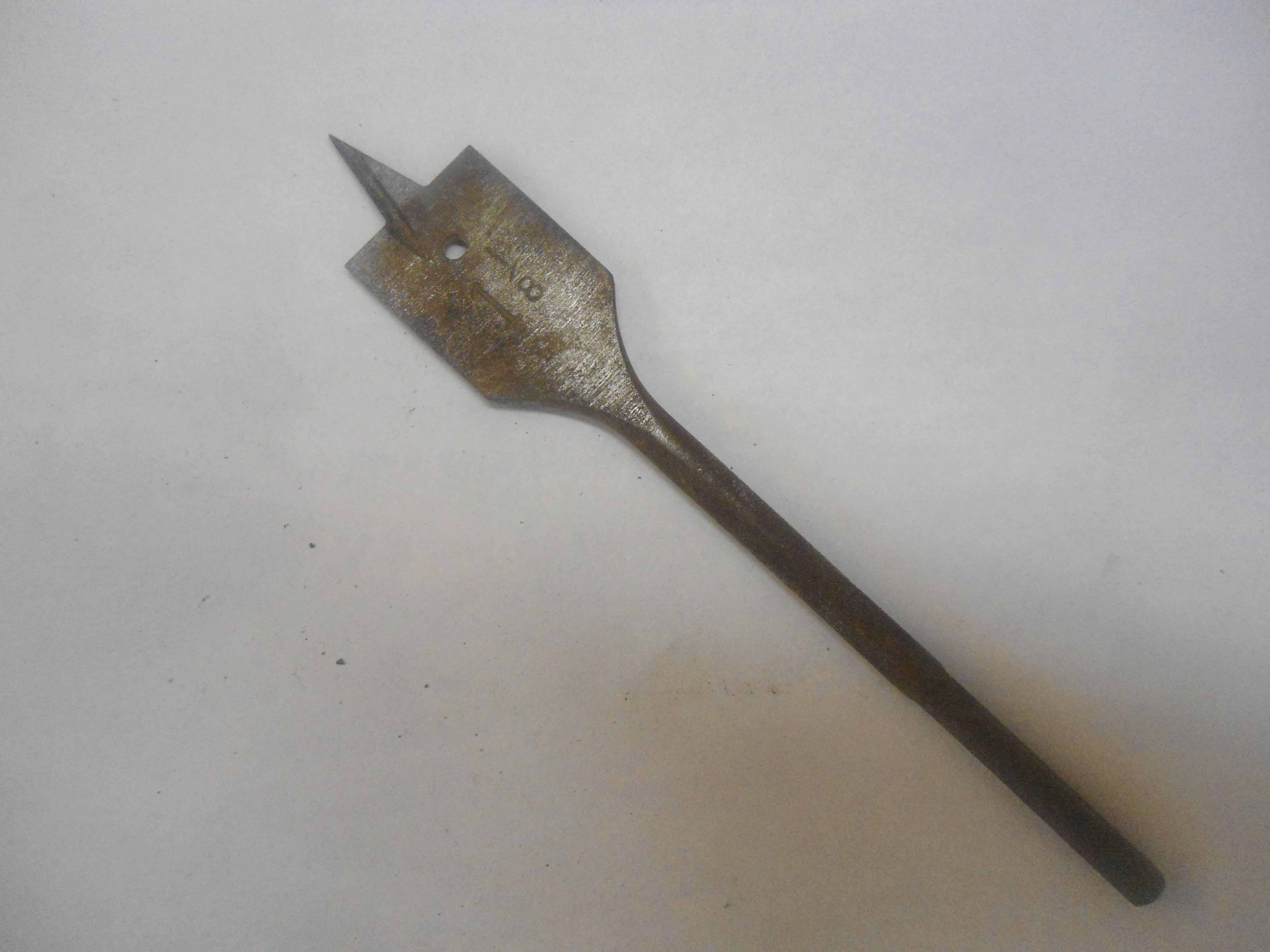
A spade bit

A spade bit

Twist drill bits will go up to 1/2″ in a hand drill without issue – larger twist bits are available but those really need a drill press or specialized drill.  Rather if you are working with wood there are a few more styles of drill bit.  Up to nearly 2″ there are spade bits – these are simple and cheap.  If you are drilling where you might hit a nail these are the bits to use.  An added advantage are the extensions available for this style of bit – need to drill through a foot of wood – as needed to be done with the homestead cider press – and this is the bit for you.

If you are doing much finer quality wood work requiring larger holes you’ll probably want to get forstner bits.  These cut around the periphery of the hole and chip out the central section and don’t tend to rip out wood as much as you would with the spade bit.

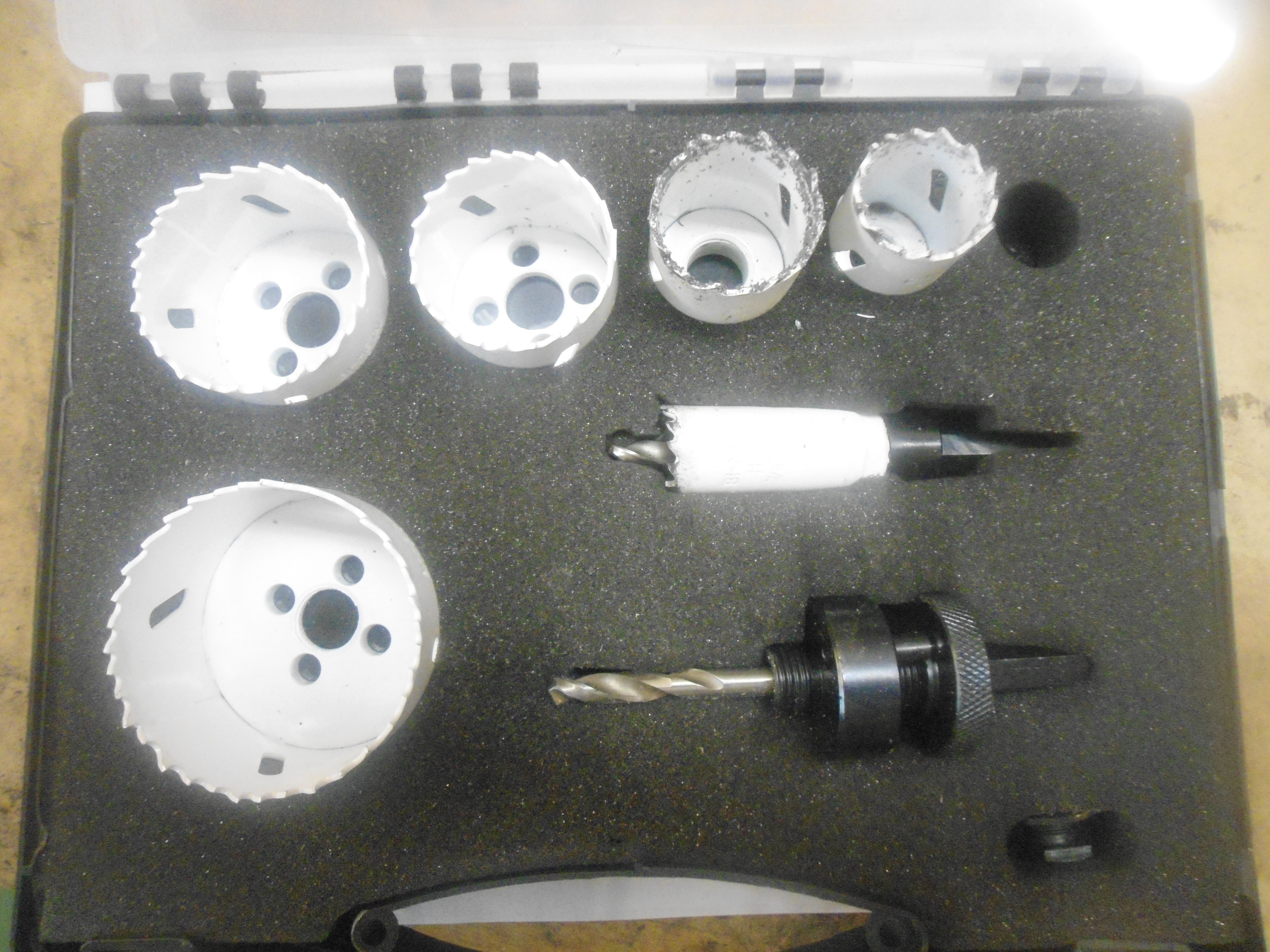
A hole saw set

A hole saw set

Larger holes in metal or wood can be accomplished with a hole saw.  Instead of cutting out all of the materials as the preceding bits have these only cut out a thin strip around the radius of the cutter.  This is allows you to cut a much bigger hole using less energy.  If you are cutting metal choose a bi-metal set.

While we covered a whole bunch of bits you might not need anything beyond a set of twist drills.  But you will want a set of power driver bits – these are bits with screw heads.  These make putting in and removing screws easy.  Remember you may need to drill a pilot hole for the screw first depending upon what you are doing.  Get a bunch you will find that these tend to wear out, even the really good ones.  Bulk packs are reasonably priced – pick up a set and you’ll love using screws.

A set of power drive bits make installing and removing screws easy

A set of power drive bits make installing and removing screws easy

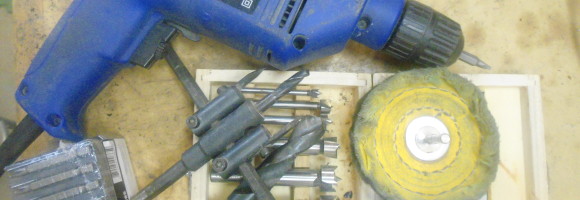
Finally, there are a bunch of tools that have a shank to fit into the drill chuck including wire brushes and shown here a buffing disk that was just used to polish the stainless steel on the homebuilt stainless wood pizza oven.

Why corded when cordless are available.  Well a few reasons – good cordless units that could compare with a corded one in terms of power are going to be expensive,  cheaper ones just don’t measure up for power or longevity of the batteries.  Plus these drills don’t use much power so you can easily use a light gauge long extension cord for a reasonable price.  As well, if you are going where you’ll only have your vehicle you can easily power these off of an inverter attached to your vehicle battery.

Hands  down you need at least one corded drill along with a twist drill bit set and driver bits in your home.