By

Low Hoop Houses in Snow

This year I decided to put the plastic up on the hoop houses late in the fall – partly to provide winter cover to extend the season and secondarily to get things going faster in the spring then would inevitably happen if I needed to dig the plastic out and fix it into place.

The question though…. would it stand up to the snow load?  Well, we’ve had some good snow (a couple of feet) and some good cold spells… and the hoops have bent a bit but nothing much – and that’s without ever brushing off the snow.

Well, today I went and knocked the frozen snow layers off – last week we had a mild spell and even a bit of drizzle.  The snow came off quickly and the hoops and plastic look great!

By

Harbor Freight Dehydrator – all things considered a good value

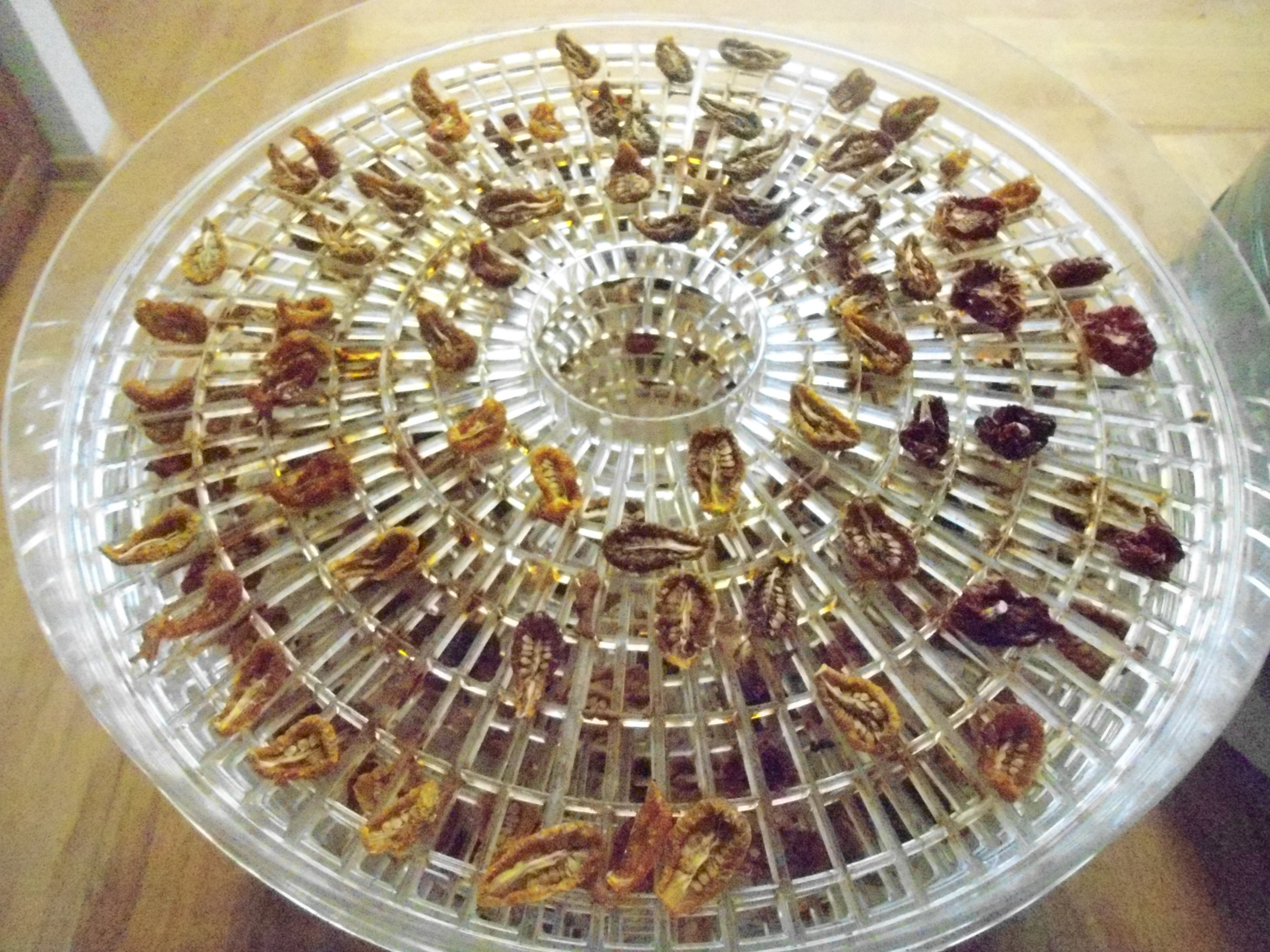
Dehydrator tray of tomatoes

Dehydrator tray of tomatoes

Among the food preservation techniques dehydration has to be one of the easiest, and that alone should merit it’s incorporation into your household, and the dehydrators sold by Harbor Freight offer a reasonable entry point to do just that.

I’ll say right now – these five tray units run about $20 when coupons and the frequent specials get figured in.  That’s cheap.  Now the current models aren’t anything fancy – just basically a 125 Watt heating element in the bottom, five plastic trays and a top.  The previous model which featured a fan and a turntable type setup for the trays was about the same price, but in my experience does and equally OK job.

Current HF dehydrator, and previous model (L & R)

Current HF dehydrator, and previous model (L & R)

Now, it appears some folks have received units that overheated pretty much at startup.  I’ve never had that happen but you’d probably do well to start it up for the first time during a period where you could observe it and if problems happen bring it back and swap it for another one.  The other issue has to do with the durability of the trays.  To be sure these trays are fragile – you have to treat them carefully or they will break.  BUT, this is a $20 dehydrator.  Spend five times as much and you can get the bottom of the line Excalabur… or you can build one easily enough, but even that approach is likely to run you more than $20 not factoring in your time.

I have a really big homebuild dehydrator – but it only really gets called out when we’re in prime harvest season.  Otherwise one or both of my Harbor Freight dehydrators are going to be doing the work for me.  During the summer that is often drying tomatoes or zucchini for fall soups and dressings.  In the fall and winter more often than not they are drying apple slices we’ve peeled, sliced and frozen or making apple leather from some of the apple sauce we’ve put down.  It doesn’t take much time to pay off the $20 investment when you are making dried fruit.

So if you don’t have a dehydrator or want another one consider the Harbor Freight units – they aren’t fancy, they aren’t really solid but the price factor means they possess significant value.

By

Medium Height Hoop House Experience so far

This past weekend, May 24th weekend, marks the safe planting date – the risk of frost, is in theory at least, has passed.
Now, we’ve had some really warm weather already, in the mid and upper 20c’s, but sure enough just last week there was a frost warning.

Hoop house one - the red are the already thinned several times R148 Amaranth for greens and grain.  Trays of sweet sorghum and paddy rice at the far end.

Hoop house one – the red are the already thinned several times R148 Amaranth for greens and grain. Trays of sweet sorghum and paddy rice at the far end.

So, as most folks here are just putting in their gardens where am I?
Well, the two medium hoophouses are going great, the tomatoes and tomatillos need to be staked and are growing wonderfully, the peppers and eggplants are happily pushing forth. The hardier stock, while not needing the higher temperatures has shown its appreciation by rewarding us with a salad again last night. Lettuce, radishes, and amaranth leaves. Lovely!

In my other beds that are uncovered the results are significantly less spectacular. There the tomatoes, peppers and herbs have established themselves nicely and started to grow, but the growth pales in comparison to those in the hoophouses, and we are still a couple of weeks away from adding rappini and sugar snap peas to the salads – if they manage to travel that far – and at least at the start of the season the best I can expect is that they will be detached from the plant before being gobbled down with relish.  I will truly know that our fresh fetish is at least partially satiated or overwhelmed when more item start to appear in the salad bowls but that won’t be for a while.

So for the time and energy invested I am definitely a fan of the medium hoop houses thus far.

Hoop House Two - Tomatoes and peppers and eggplant and greens and more - oh my!

Hoop House Two – Tomatoes and peppers and eggplant and greens and more – oh my!

Now, I have learned a few things about the construction of the hoop houses. The biggest lesson is that the opening and closing has been pretty tough on the frames. The corners really need to be reinforced with 4×4 blocks on the inside and steel brackets on the outside. I also thought I could get away with not screwing in the female side of the conduit. Sure they can’t move up, but they will move down! The last significant item for me to figure out is if I should switch from plastic to metal conduit straps as several of the plastic ones have broken- now that may be because the conduit slipped down and was pushed out as I opened the frame- which should be addressed by fixing the conduit in place on both ends – so I’ll take a wait and see attitude for now.

Right now I am planning on rolling up the plastic towards the middle to end of June depending upon the weather and the growth of the plants under cover.  Then it will probably be unrolled in mid-September to support the fall crops and eek out a few more months from the warm weather commodities.

By

Propagating hops by layering and rooting

So there are a few ways to produce additional hop plants.  You can divided the rhizomes (the root mass).  That’s easy and simple and great if you have enough established hop hills.  But… if you are just starting out you probably want to give your plants a bit of time to get established before you start engaging in serious division.  So I guess you could buy additional crowns… or you can use alternate means to multiply your own stock.

Fortunately hops want to root… you just need to present then with an opportunity to do so.

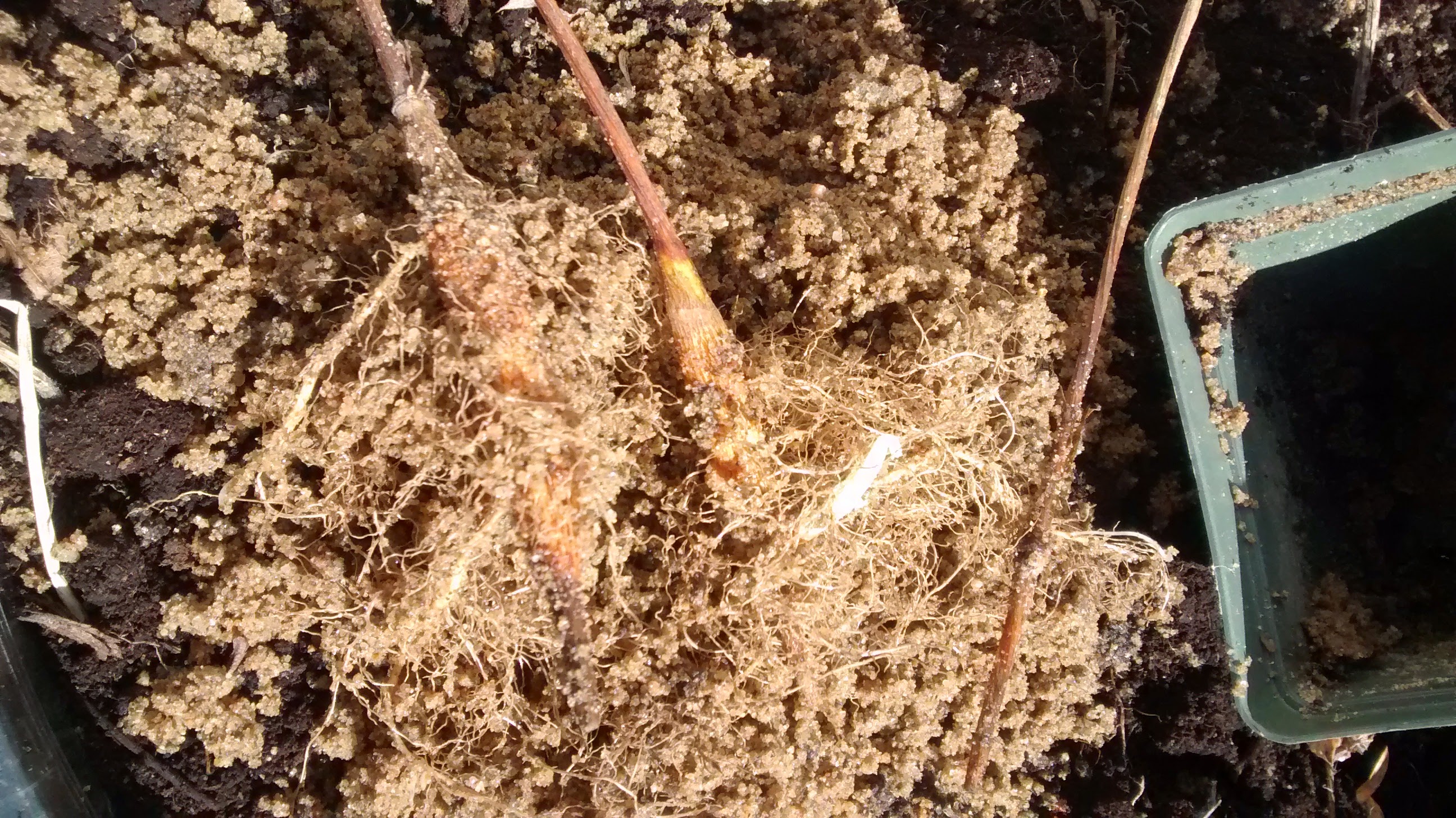
The new hop rhizome created by layering exposed

The new hop rhizome created by layering exposed

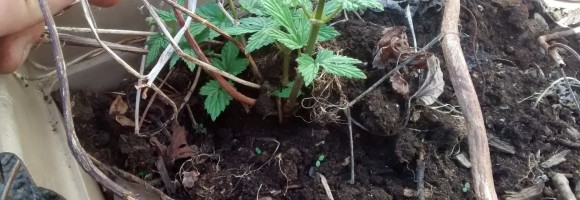
The easiest way to do this is by layering.  From a good crown you’ll get a bunch of bines – the first and strongest bunch train vertically for your production but additional bines can be run through soil in a large plant pot or window box  before being allowed to grow on or  trimmed.  The bines aren’t super flexible so think big curves not tight curves – which makes running them longitudinally in the window boxes a good option.  Keep the pots reasonably watered and the result should be about one crown per bine that was run through the pot.

But if you need to increase your stock even faster then you should probably considering rooting.  Last season I took a number of bine segments, dipped them in rooting hormone, stuck them in sand and had good success getting them to root in a home built mist propagation setup.  The setup was cheap and simple and while the layering method will result in one crown per bine the rooting method can take one bine and make a load of crowns – so if you are looking to rapidly increase your plant material it’s definitely worth the extra effort.

Hops rhizomes from rooted cuttings in sand - success for the two on the right

Hops rhizomes from rooted cuttings in sand – success for the two on the right

Exposed hop rhizomes created by rooting bine segments

Exposed hop rhizomes created by rooting bine segments

So, if you brew, buy crowns for your favorite hop varieties – they use vertical space so you can probably find a spot for them –  and multiply them to increase your own yard, share with friends or even offer for sale.

By

Rooted grape cuttings leafing out

The grape cuttings I started rooting earlier are coming along nicely and have leafed out.  While I have not yanked on them to check they appear to have rooted nicely so I haven’t bothered to trim the leaves to reduce transpiration as I have done when I’ve been rooting cuttings outdoors.

Rooted Grape Cuttings leafing out

Rooted Grape Cuttings leafing out

I’m rather pleased since going the cuttings route has allowed me to get varieties I would be hard pressed to find otherwise and it’s saved me a load of money.  The cuttings were $1 each rather than $7 to $10 if I’d been buying stock from a local nursery.

Along one side of my yard the previous owners planted some cedars up against the fence.  They add a nice bit of green and an additional bit of privacy to the yard.  BUT, I can’t eat cedars so I am planning to remove them and put in grapes trained vertically.

What really got me primed was the fassadengruen website from Germany which shows step by step how to train the grapes in this fashion.  It looks much easier than the other methods – and frankly the grapes I’ve grown in the past haven’t been very well trained – and should allow me to grow and edible privacy screen!

The quality of cuttings I received from Burt Dunn was excellent.  Thanks Burt!


By

Greenhouse vents from Harbor Freight

So last weekend a couple of nice medium high hoop houses went up.  The only item of any significance left to do to finish them off was to build and install vents so that the spaces wouldn’t overheat.

Harbor Freight greenhouse vent mounted to frame

Harbor Freight greenhouse vent mounted to frame

Often it is hard to remember that even when the outside is cool the solar gain in a cold frame or greenhouse can be significant.  Now before you’ve got plants growing I think it makes sense to limit air exchange so that you build up the thermal reserve in the soil – especially if that soil was frozen just a few weeks ago.  But once the soil is thawed and plants go in it becomes imperative to ensure that they aren’t baked.

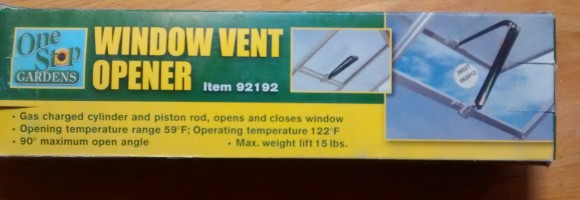
There are thermostatically controlled vents of course – but those rely on and use electricity.  When I had my solar greenhouse I came to really like the vents that rely on the expansion within in a cylinder pushing on a lever to open vents.  These have the advantage of being completely non electric and in my experience completely dependable.  They aren’t nearly as controllable as electro-mechanical systems would be but they are pretty fool proof, low cost and get the job done.

Now, they are limited in what they can lift – think plastics not glass.  If the bulk of your cold frame or greenhouse is glass just make your vents out of plastic material and you’ll be fine.

Vent frame in place with hoop house plastic attached

Vent frame in place with hoop house plastic attached

For my setup I made a frame to fit a couple of pieces of plexiglass that I was given when I purchases a pantograph from a sign shop in Montreal that had served Zellers stores but when that retailer shut down the sign company closed the associated shop. The owner offered me all the plastic offcuts – some of significant size – and professional paints and hardeners that I wanted.  With the pantograph on my trailer I piled the bed of my truck high with the free material.  As luck would have it I drove back through a massive police presence – escorts for a Hell’s Angels and Associates motorcycle ride that traveled along with me.

Heat activated hoop house vent open

Heat activated hoop house vent open

Anyway the frames were built from the remaining used pieces of 2×4 and some plywood offcuts.  The plexiglass pieces were hinged at the top, with the screws extending through the sheet into hardwood sections salvaged from hockey sticks.  The opener itself is fixed to the lower portion of the window frame and the action arm was bolted with the included bolts through holes drilled in the lower part of the plexiglass window.

By the afternoon the greenhouse was hot enough that the widow had opened, so now I have no more excuses to delay planting… maybe I’ll take that on tomorrow if it’s nice.

By

Assisted natural selection

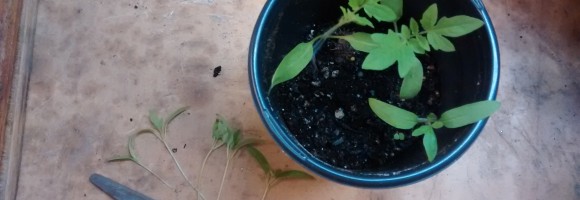
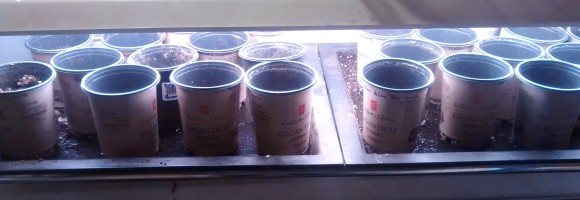
The seeds that were started a few weeks ago have now for the most part germinated.  In many cases the five or six seeds planted into each pot have germinated and are now in need of trimming.

This is especially true for the tomato seedling.  It won’t be long before the pots which were only filled a third of the way with potting mix need to have more mix added – giving an extra long rooting surface… but we aren’t there yet.  Today is the cull day.
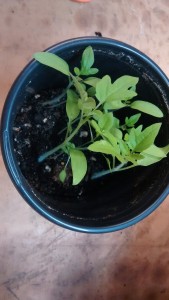
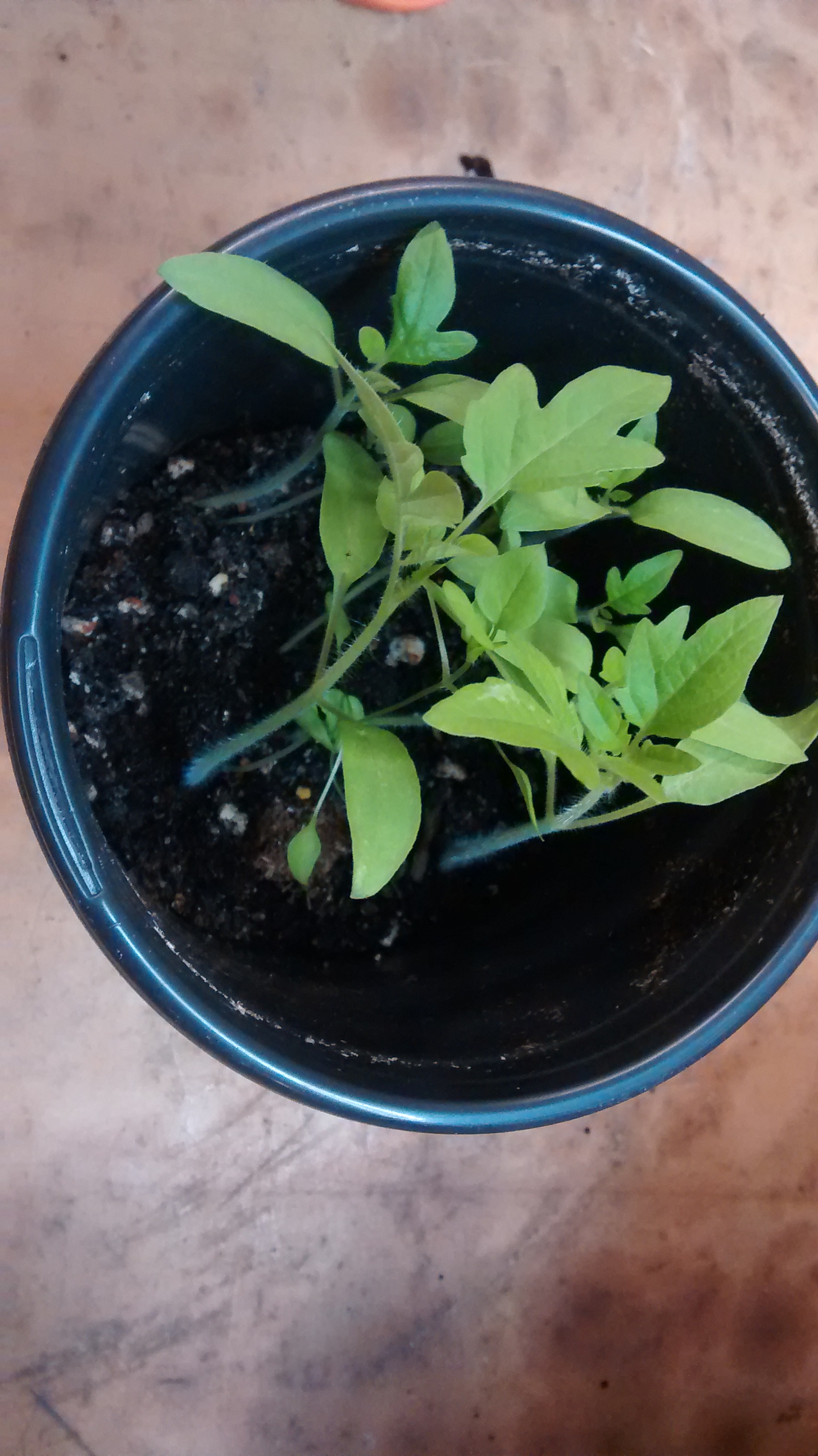
A crowded pot before the cull

A crowded pot before the cull


The start of process of selecting the traits I value in the plants.  At this point it’s all about vigor and health.  Fail to make the grade – and about two-thirds don’t and your traits are removed from the gene pool.  The scissors are swift.

As the season goes on, the cull rate will decline but the selection process continues. In the case of the tomatoes I look for strong healthy plants that not only start producing early but yield heavily and do so thought the season and as far into the fall as possible, at the same time I want them to have the taste profile I expect.  The wild tomatoes that the kids love need to be sweet, but for the rest I want really well balanced tomato flavor.

The winners whose fruit is selected to provide seed for next year aren’t necessarily the ones that excel in only one of these traits but rather the ones that provide the best combination of these traits.  That said, if a plant is exceptional in one regard and only one I’m going to keep seed – but I’ll keep it apart from the rest for further evaluation.

Of course what I am looking for is subjective.  I like pushing the season at either end, I garden intensively and don’t bother to try to control for plant diseases, I like indeterminate plants with their long season.  my flavor tastes are of course even more subjective.  Even my soil and growing conditions play a role in determining what does well, attracts my attention and gets selected to remain in the gene pool.

Now these traits might not always have what it takes to survive.  The ash tree that graced my front yard – a massive, strong and beautiful tree – whose limbs supported more that a few large machine tools being raised with a chain hoist either out of or into my truck bed – is gone, a victim of emerald ash borer that has now killed most of the ash trees of any size in the region.

Still, in the absence of radical selection pressures such as this one, my tomato gene pool evolved at a more leisurely pace, but it still moves in lock step with my actions driven by what I value in practice.

This of course is no different than any other aspect of our lives.  Who and what we are is driven by our true actions.  As with the evolution of my tomato populations the theory doesn’t matter – it’s all about the reality of actions (or inaction) that determines which way the gene pool moves.
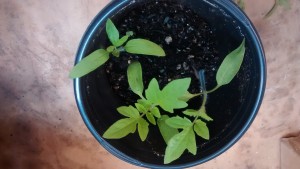
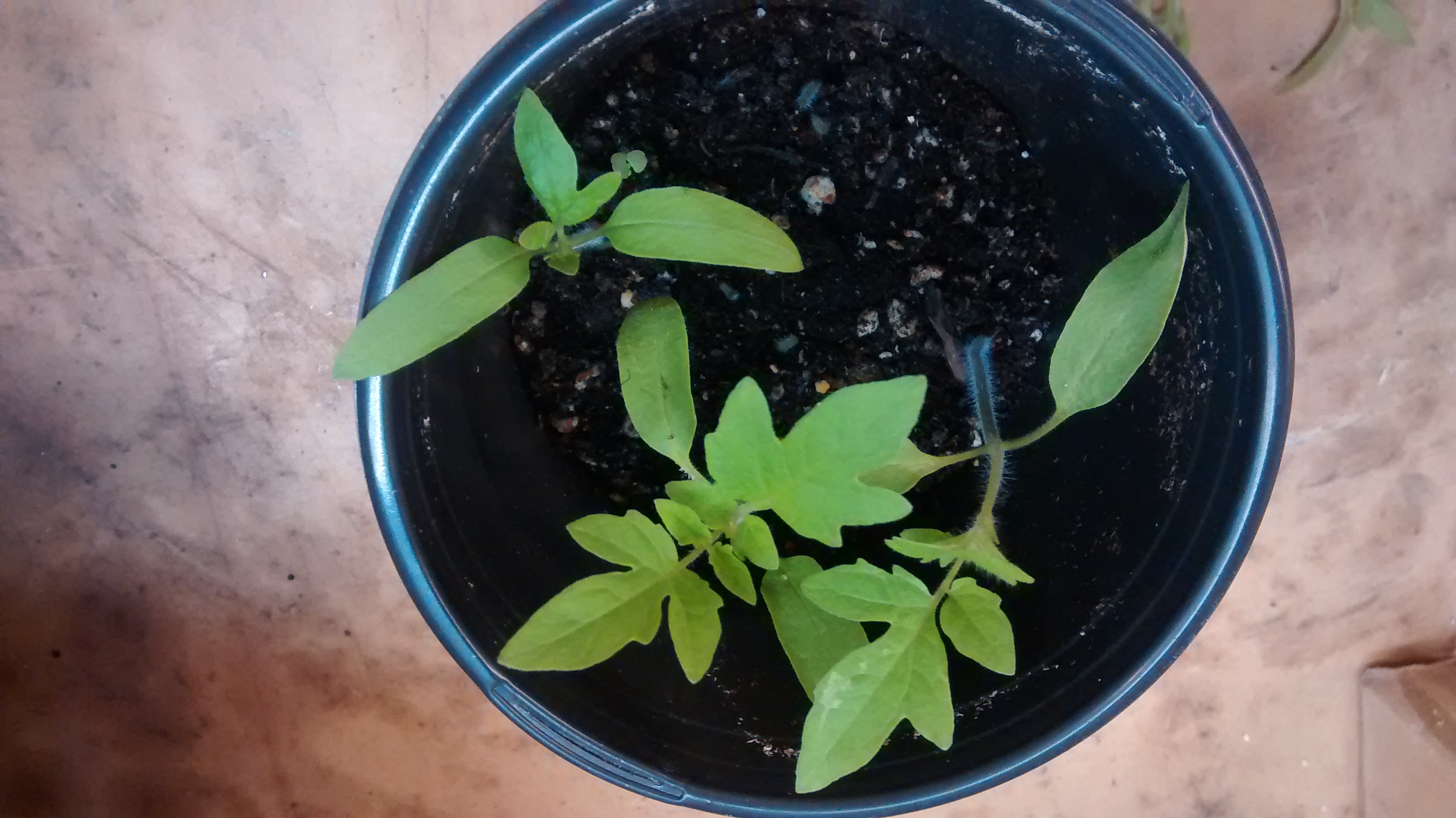
The strongest survive for further evaluation

The strongest survive for further evaluation

So today’s cull reflected not only the start of the selection for what I value in the tomatoes I grow this year, but in many ways a continuing selection within my own life for what I value – which includes the value I place on growing at least a portion of my family’s food and doing so in the most sustainable fashion possible.

So what are you selecting for?

 

By

Spring Fever – Seedlings being started

I know it might be popular in some corners to suggest that as humans we have removed ourselves from the influence of the pull of eons of evolution and somehow our brains have been able to eliminate the tug of natural forces. I think we are a bit closer to animals than folks would often like to admit, and that shows in part in the forces and rhythms which drive us.

For me at this time of year, as the rays of the sun grow in strength there is an unmistakable tug to plant, to get seeds started and prepare for spring and the last frost date.  Now, granted it’s not like I’m going to end up curled in the fetal position sweating in the corner if I don’t get my seeds planted – but it would feel decidedly odd.

Without a question I have a bit of an addiction to collecting, trialing, saving and improving plant material, and this time of year offers the start of a season of promise and discovery.

I am reasonably certain that my standby veggies whose seed I saved from last year will perform once again – the reisentraube and matina tomatoes – as well as the wild cherry tomatoes that drive the kids wild with their combination of marble sized fruit and high sugar content – fortunately they are as productive as they are loved.  On the pepper front there are the Peace Sweet peppers, along with the Hungarian hot wax, jalapeno and greek pepperocini peppers that I can count on.

But then there are the pots filled with the new varieties or ones which while grown a few years back didn’t stand out enough then to merit replanting.  Among those will I find a new favorite to add to the annual must have list?  Will the seductive descriptions in the seed catalogs  – Fedco is my favorite – live up to my expectations?

At some point I know I am going to have to turn from acquiring and saving seed to taking a more active role in breeding to obtain the characteristics I am looking for, but right now my fix is still met with saved and purchased seeds.

So, again this year I’ve wagered a bit of money on seed packets to compliment those I’ve saved and the natural roulette wheel has started its spin.  Will some of these win a place on the annual must plant list or be relegated to an also ran. In either case even the losers in this race get eaten, so regardless of the outcome I ‘m relatively sure I’m bound to win this gamble.

Starting Herb Seeds

Herb seeds sprouting

Matina tomato

Matina tomato sprouts – promising a season of great harvests