There are folks who revel in roughing it when they head into the bush. That’s not me. Now don’t get me wrong, I love the outdoors and think glamping is silly but while I am perfectly capable of living rough if need be, if I can make things more comfortable for myself I will. That includes food.
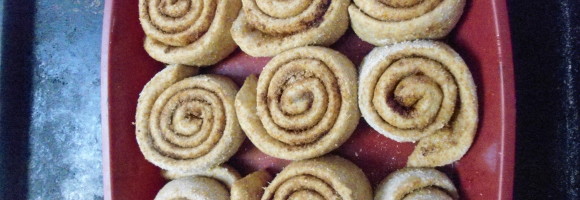
Cinnamon buns cooked over the campfire
Much of my camping is done by canoe – so even if there are portages the size and weight constraints aren’t that rigorous – which makes more diverse outdoor fare reasonable. These campfire cinnamon buns are a case in point. Having these with coffee in the morning while looking out over still waters with the mist rising off them is a pretty awesome experience.
Now most would expect to need a stove to bake cinnamon buns – or at the very least a reflector oven, but these are cooked in much the same way as you would the english muffins we already covered – as griddle cakes in a frypan – which makes them much more reasonable to produce.
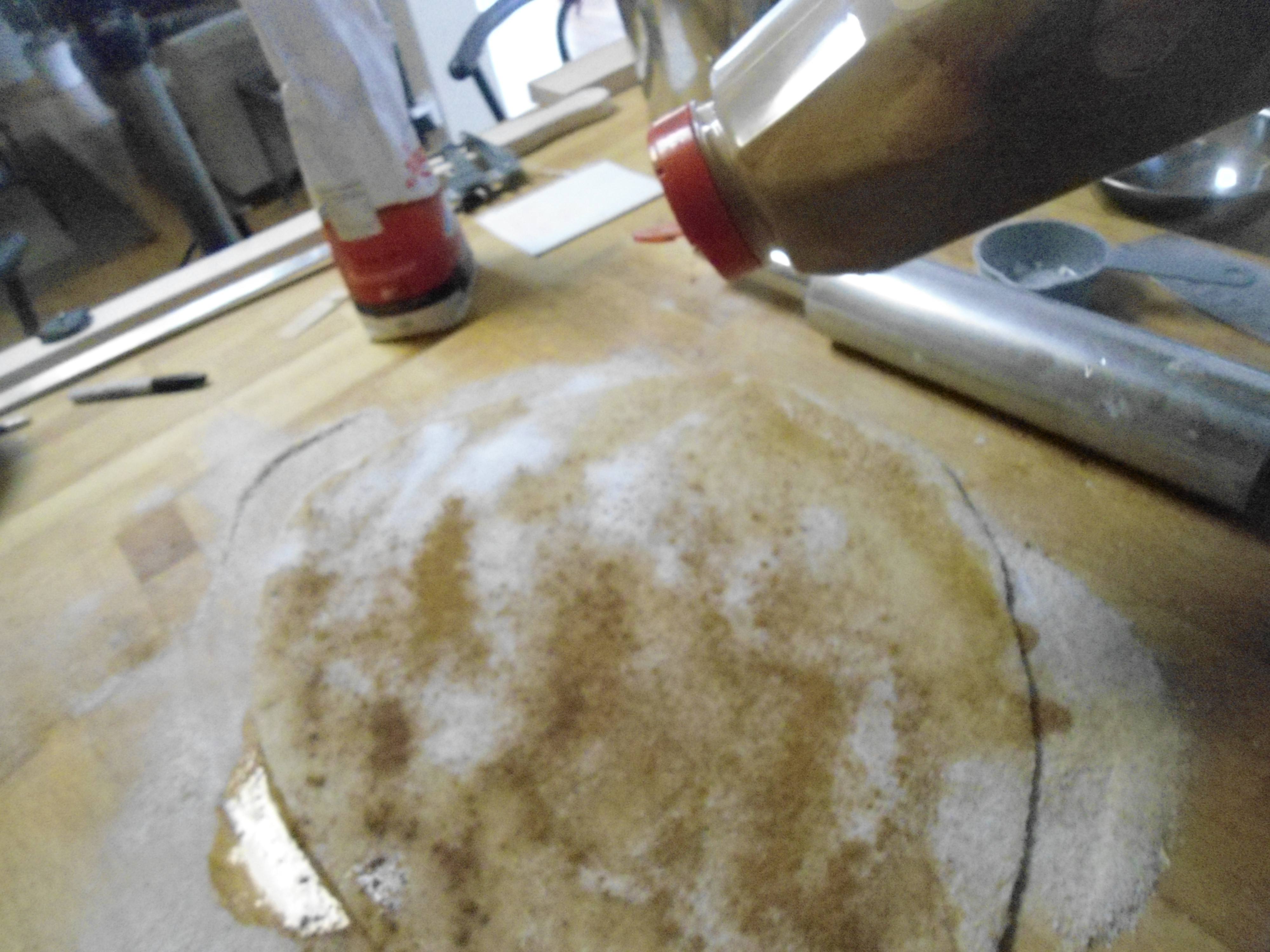
Dough rolled out ready for cinnamon and sugar
What I prefer to do is use an extra large ziplock bag – add flour – I prefer to use the whole wheat ground on the diy grain mill – add a pinch of salt, some yeast, a bit of sugar and then add water until you have a sticky dough. You can do an ok job of roughly kneading the dough while it remains in the ziplock bag. Since I generally do this step just before turning in for the night – I generally don’t do a second knead. Make sure the air is out of the bag and don’t get carried away and make too big a batch, and place the bag in a warm spot overnight.
Something spectacular to wake up to
In the morning open the bag, punch down the dough, pull out dough balls, flour roll out, and sprinkle sugar and cinnamon on the dough and then roll up and cut as you would with regular cinnamon rolls. Allow them to rise and then place them in an greased frying pan. I often just use a couple of pieces of bacon to provide the fat needed to render the surface non stick.
Cook over low heat on one side for a bit, then flip and cook on the other. Alternate sides until the buns are cooked through. Allow to cool slightly and serve with a bit of butter if you have any along. Enjoy.
Bread Dough rolled out, oiled and sprinkled with sugar and cinnamon and ready to be rolled up
It’s telling that a whole franchise – and a rather successful on at that – can be built on one very narrow product – cinnamon buns. I guess, upon further reflection I guess that isn’t so unique, but it may be a bit telling as to how easily many of us part with cash that we’d be willing to pay such a premium for what is really a very simple bread product.
If you haven’t made cinnamon buns at home you should. The process is really very simple – and the bread machine takes all of the real effort out of the process.
This is one more case where silicon bakeware really shines. Cleanup of any sugary “leakage” from the buns is easily snacked on or washed up.
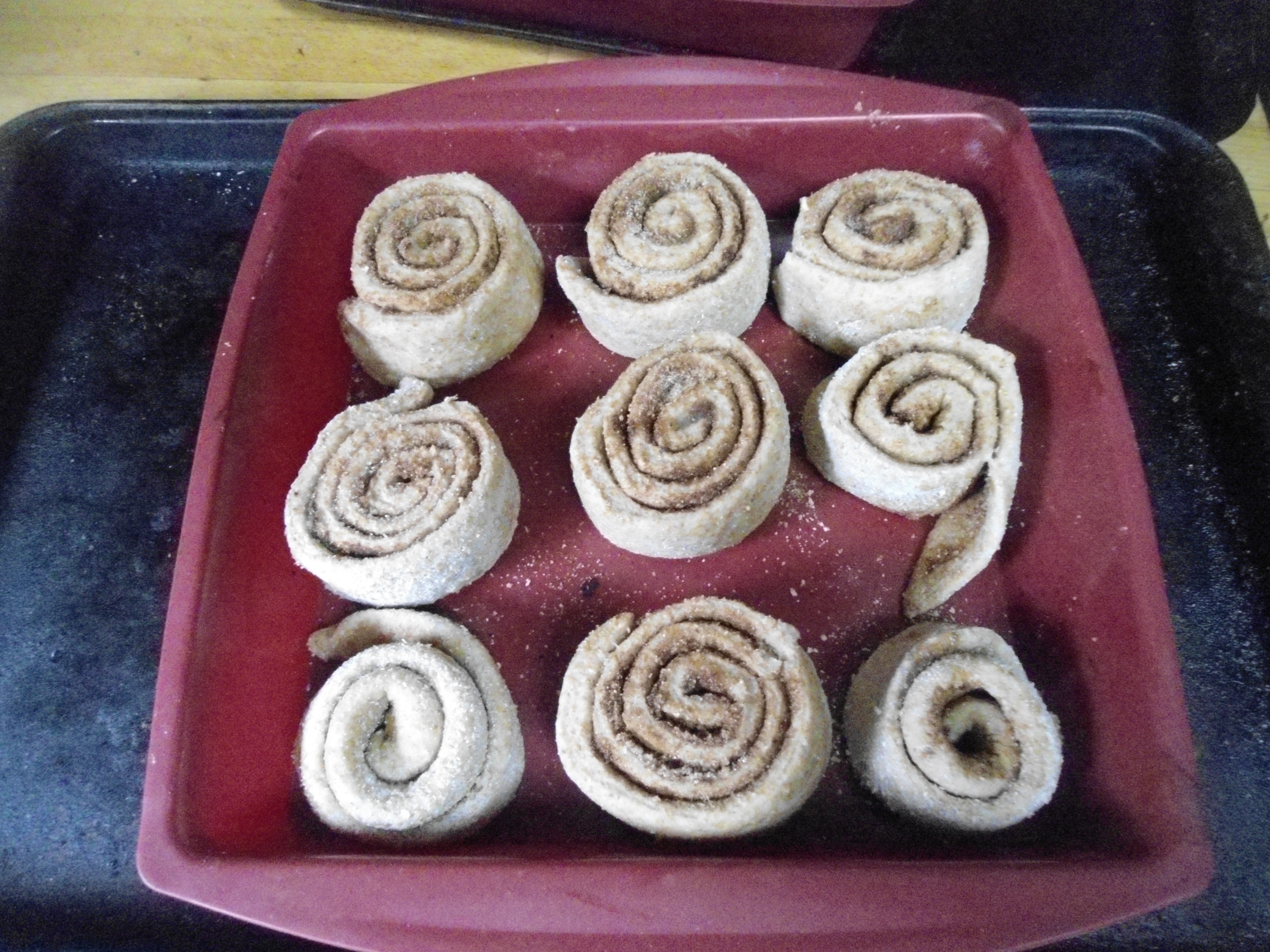
Cinnamon buns ready for second rise before going in the oven
For soft sided buns put the dough into a pan so that when doubled in bulk the buns contact each other, if you want harder outer crusts place them on a baking sheet with separation between the buns.
I always find it cool how changing even a single variable can significantly change the outcome. That is as true in baking as it is in many other domains.
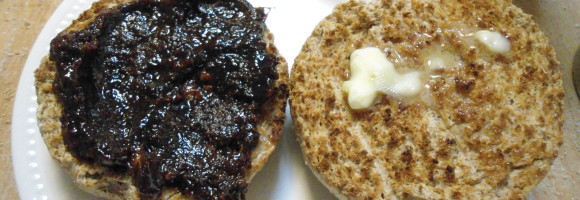
English muffins are a great example of this. They are just regular bread dough that is cooked on the griddle rather than baked in the oven… simple enough right – but would you have guessed how easy their preparation was before now?
Certainly they are sold in stores at a premium – but you can turn them out easily at home.
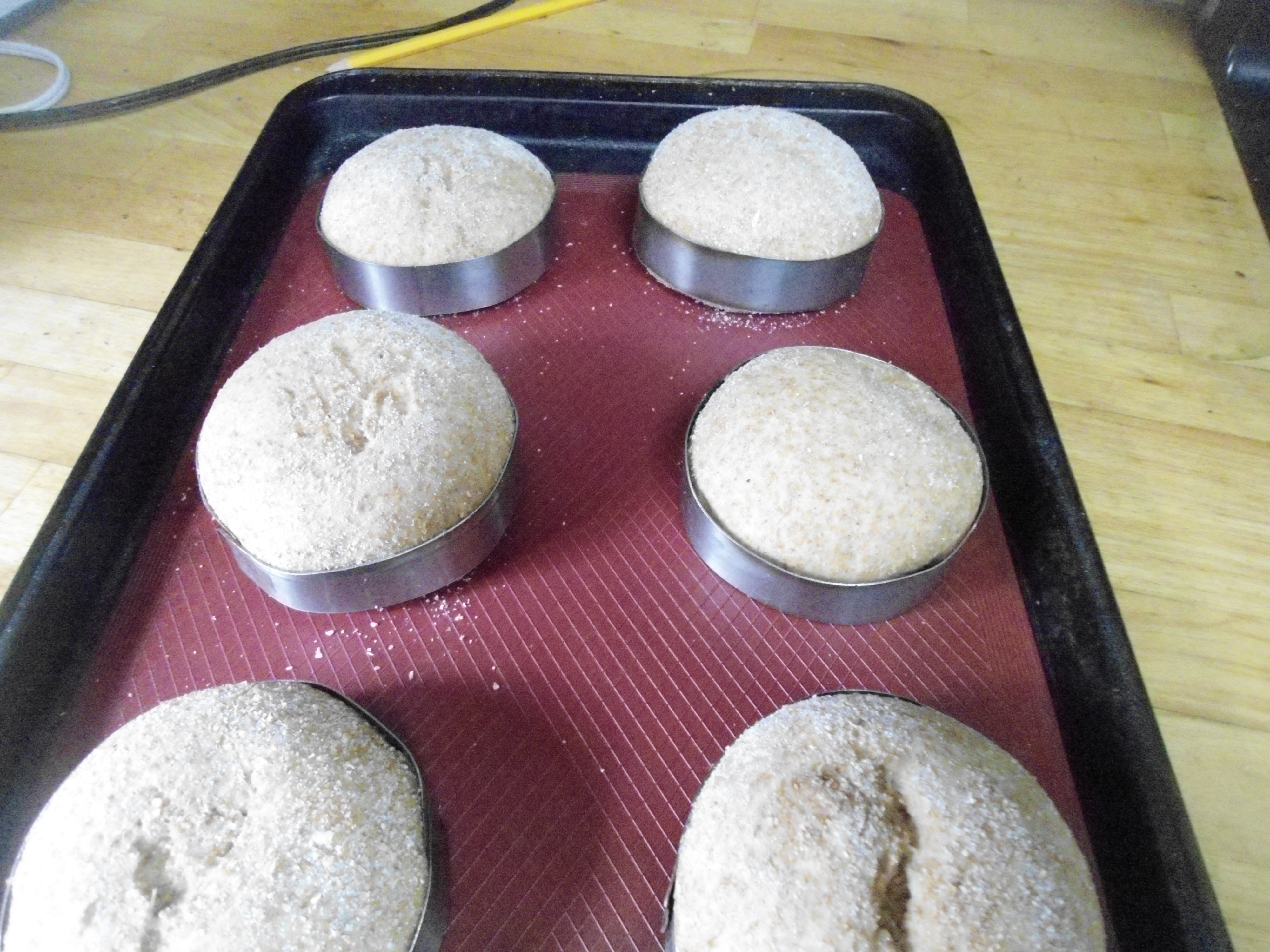
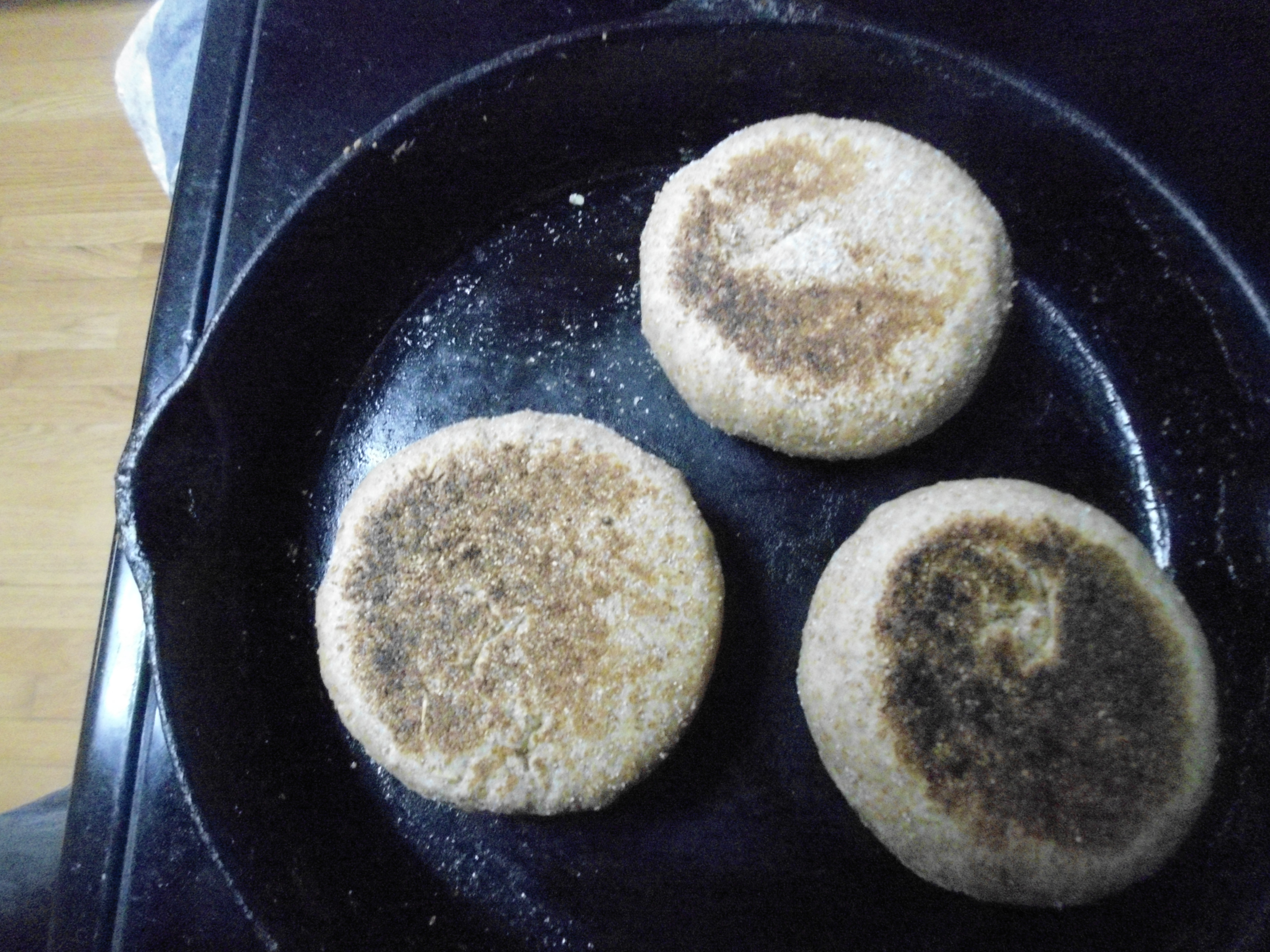
Whole wheat English Muffins in the frypan
English muffin rings are certainly not necessary, and personally I would never have purchased them. Rather I have two dozen that I made up from salvaged stainless steel sheets. They are nice in that they give uniform muffins, but the real reason I enjoy using them is that I get a kick out of having fabricated them myself from scrap.
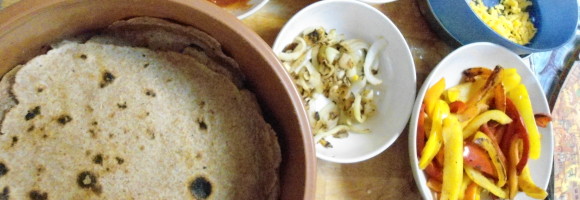
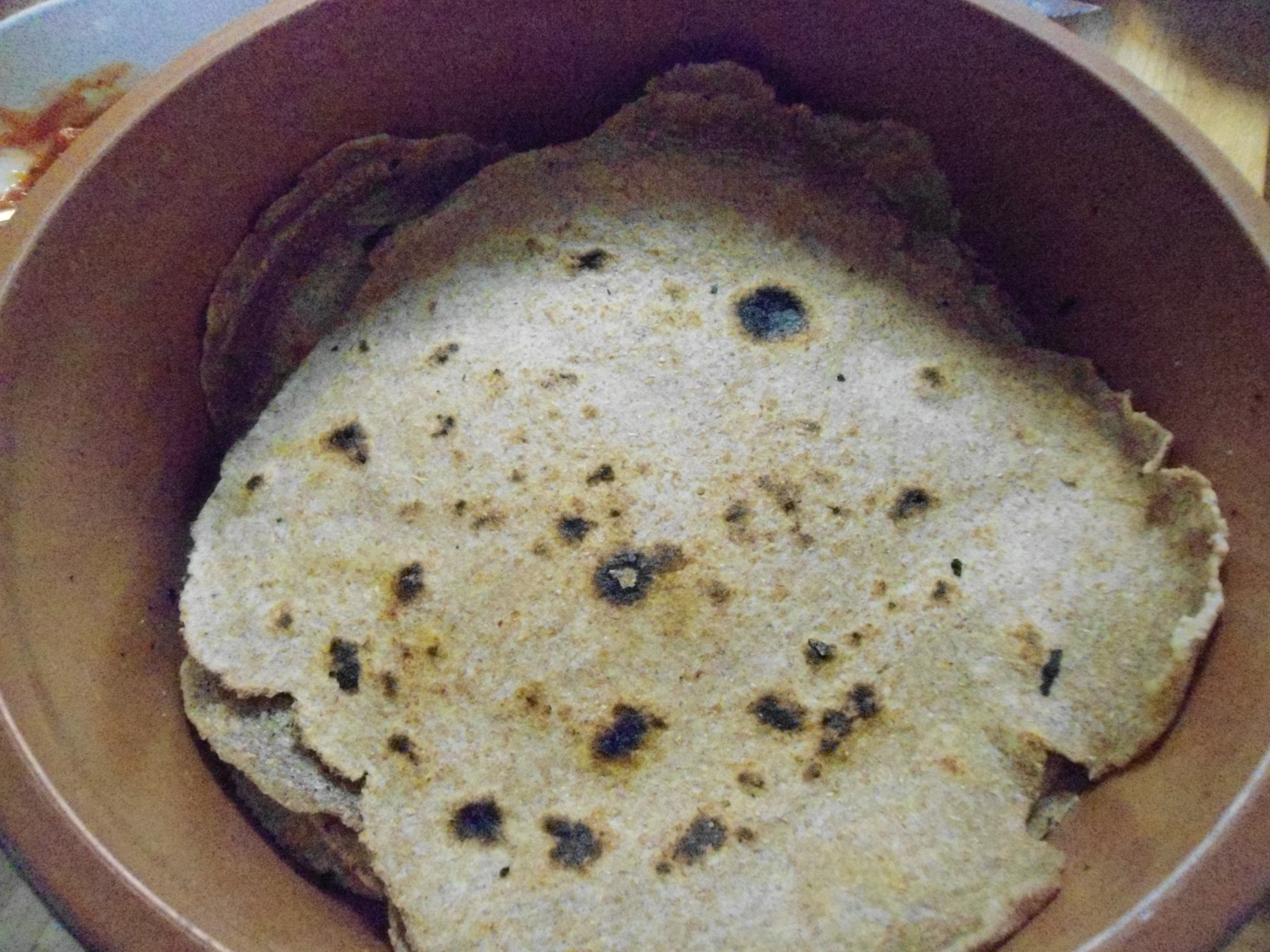
Whole Wheat tortillas are a snap to make at home. While I really enjoy corn tortillas in order to make them you really should have a good tortilla press – such as the homestead tortilla press you can build for yourself. Whole wheat tortillas don’t require a press – only a rolling pin.
Homemade Whole Wheat Tortillas
There are two “tricks” to making whole wheat tortillas;
Once you’ve kneaded the dough let the dough sit covered for at least a half hour
Don’t use a seasoned or greased cast iron skillet – it will smoke. I keep one cast iron skillet that is used just for the production of tortillas – corn and whole wheat.
It really is that simple to make great tortillas – and fresh tortillas are great in addition to being cheap to produce in your own home.
You might reject the idea of using whole wheat flour for pie shells and other sweet products. That would be short sighted. Whole grain flours add wonderful flavor that is missing from white flour where all the flavor has been removed.
A few amendments need to be made to account for the lesser ratio of gluten compared to recipes which feature white flour, but these are easily done.
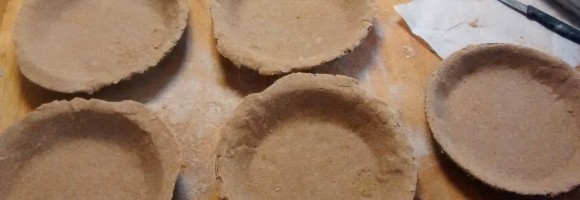
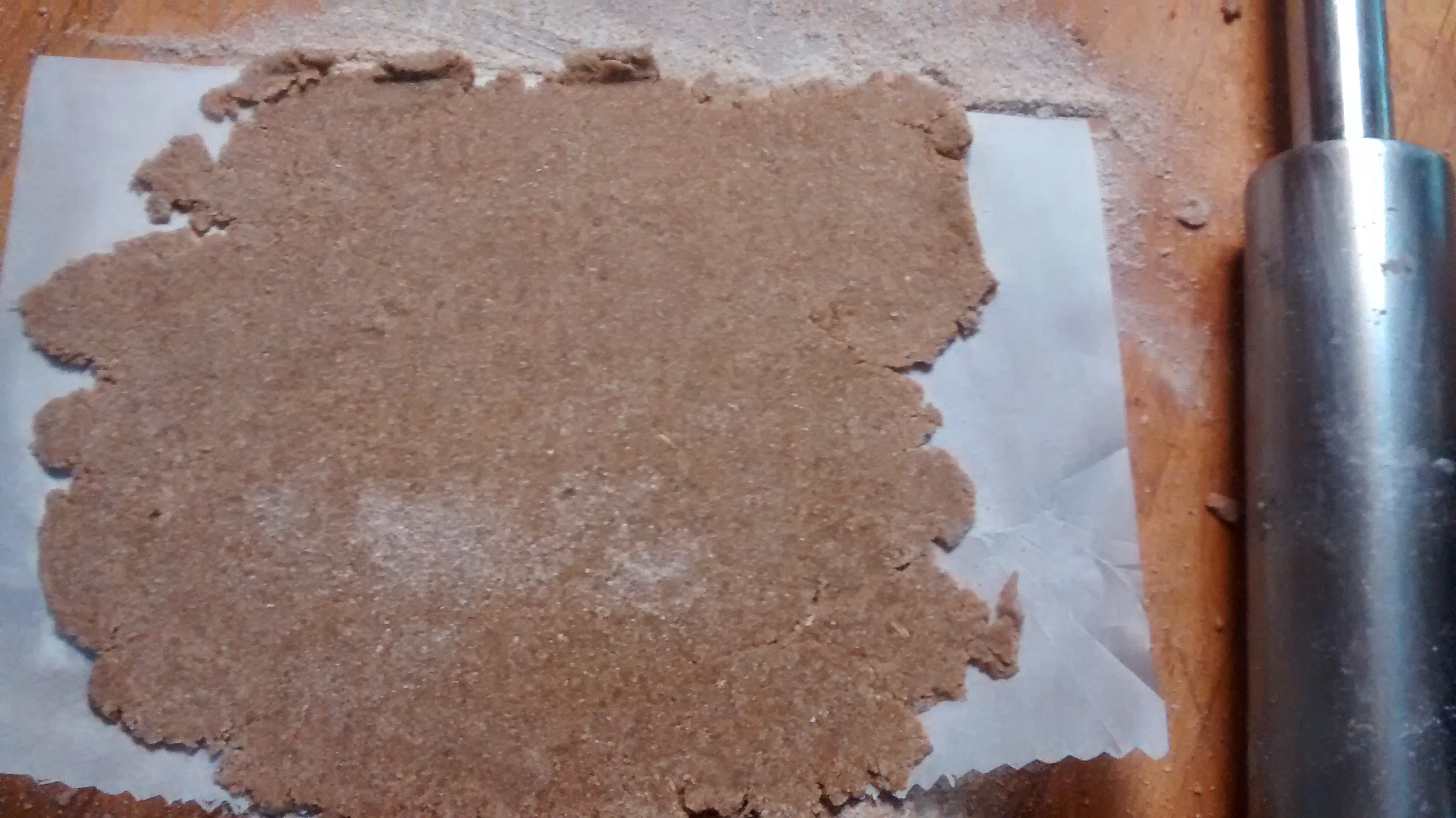
Whole wheat pie crust rolled out on parchment paper
I know a lot of folks are intimidated by the prospect of making pastry, and it can be a challenge to roll out and transfer the crust into the pie shell. While you can chill the dough to make it easier to roll out an even easier way to get the job done is to roll out the crust on parchment paper or a silicon baking sheet. Then place a pie tin on top of the crust, slip a hand under the parchment or silicon sheet and flip everything over, then gently peel the parchment from the crust.
If you have any breaks fix those by pressing the crust together with your fingers and trim the crust that overhangs the pie tin.
This recipe yields about five 9″ pie shells – if you make a double crust pie you’ll use two crusts.
Once you’ve tasted banana bread made with the rich taste of fresh whole wheat flour you won’t want to go back to the comparatively bland taste of loaves made with white four.
Whole Wheat Banana Bread – ready for lunch
As a quick bread this loaf is easy to pull together. Unlike many other banana breads I’ve tried that are sweetened enough to be deserts this rich load has less added sugar and relies more on the sweetness in the bananas combining with the nuttiness of the whole wheat flour to form a hearty snack or lunch loaf just begging to be combined with a few slices of aged cheddar.
Combined with cheese a couple of slices of this are a hit for lunches – adding healthy variety.
Publisher of high quality how-to books for homesteaders and preppers which help you gain the skills and tools needed to help empower your independence.